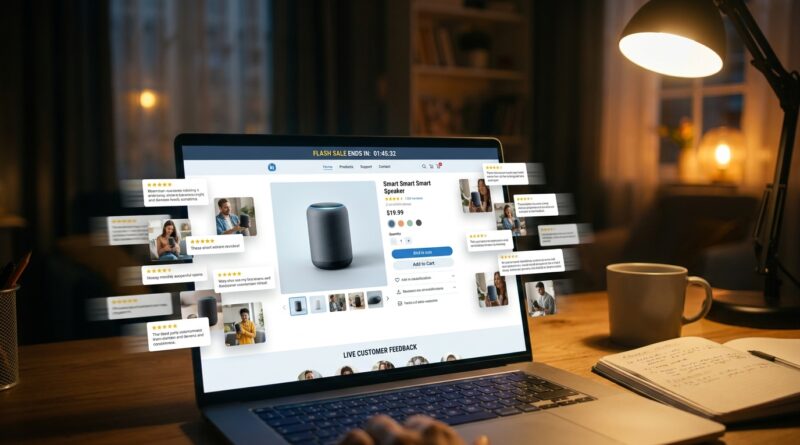
The ‘Social-Proof Swarm Flash’ Strategy: Turn Real-Time Reviews Into a 2-Hour Conversion Spike
You can feel the letdown coming. You spend days building a flash sale, tighten the pricing, write the emails, post the banners, and then watch people hover without buying. They click around, compare tabs, maybe add to cart, then disappear. That is frustrating, especially when you know the product is good. The real problem is often not price. It is trust. Shoppers in 2026 have seen too many fake countdowns, too many “only 3 left” warnings, and too many sales that look copied from every other store on the internet. A Social-Proof Swarm Flash is a cleaner fix. Instead of pushing harder on urgency, you flood the flash window with believable proof that real customers bought, liked, photographed, rated, and talked about your hero product. Done right, this ecommerce flash sale social proof strategy can turn a sleepy sale into a sharp 2-hour spike without making your brand look desperate or gimmicky.
⚡ In a Hurry? Key Takeaways
- A Social-Proof Swarm Flash works by stacking real reviews, ratings, photos, and buyer activity around one hero product during a short sale window.
- Start by pre-collecting strong customer proof before launch, then surface it on product pages, emails, SMS, and ads only during the flash.
- Do not fake urgency or invent customer activity. Trust is the whole point, and once you damage it, future sales get harder.
What a Social-Proof Swarm Flash actually is
Think of it as a flash sale built around visible confidence.
Instead of saying, “Hurry, the clock is ticking,” you say, “Here are 27 recent reviews, 14 customer photos, a 4.8-star rating, and people buying it right now.” That feels different because it is different. One pushes fear. The other reduces doubt.
The goal is not to make your whole store noisy. The goal is to focus attention on one hero product or one tight collection for about two hours, then surround that offer with credible proof.
This is why the ecommerce flash sale social proof strategy works better than the old red-banner approach. It answers the silent question every shopper has. “Can I trust this?”
Why standard flash sales are losing their punch
Most shoppers are trained now. They know the tricks. They have seen countdown timers that reset. They have seen “flash sales” run every weekend. They have seen generic pop-ups claiming someone in Denver just bought a blender.
After a while, urgency stops feeling exciting and starts feeling cheap.
That does not mean flash sales are dead. It means lazy flash sales are dead.
Short sales still work when they feel earned and believable. That is where social proof comes in. Reviews, UGC, repeat buyer comments, star ratings, product clips, and honest customer questions all lower the risk of buying. During a narrow sales window, that drop in risk can move people fast.
The core parts of a strong swarm
1. A hero product people can understand fast
Do not swarm ten products at once unless your store is very mature and your team is fast. Pick one hero item or a very tight bundle. The product should be easy to explain in a few seconds and easy to love visually.
2. Pre-seeded proof from past buyers
This is the foundation. Before the sale starts, gather your best existing reviews, short testimonials, customer photos, unboxing clips, and star ratings. Tag them by theme. Comfort. Fit. Durability. Fast results. Gift-worthy. Easy setup.
Then place them where they matter. Product page. Cart drawer. Exit-intent pop-up. Sale email. SMS. Retargeting ads. The same proof can be reused in different formats.
3. Real-time signals during the flash window
This is the “swarm” part. During the two-hour sale, pull in fresh signals that show the product is alive right now. Recent reviews. New customer story posts. Fresh Instagram tags. Live purchase counters, if they are real. Updated inventory, if it is real. Recent Q&A answers from your team. New five-star ratings landing during the window.
Not fake motion. Real motion.
4. A short, clear sale period
Two hours is powerful because it asks for a decision without dragging your audience through a day-long campaign. A short window also makes your proof feel concentrated. It is not there all week. It peaks when intent peaks.
How to set one up without making it feel staged
Step 1. Gather proof a week or two before launch
Email past buyers and ask simple, specific questions. What surprised you? What almost stopped you from buying? What would you tell a friend? Ask for photos and short clips. Offer a small store credit if needed, but be clear that you want honest feedback, not forced praise.
Good prompts beat broad requests. “Send us your thoughts” gets weak replies. “Show us how it looks on your desk” gets usable content.
Step 2. Build a proof bank
Create a simple folder or spreadsheet with categories. Five-star reviews. Objection-handling quotes. Before-and-after photos. Best lifestyle images. Fast-shipping comments. Quality comments. Gift reactions.
This lets you match proof to shopper hesitation. If someone is worried about sizing, show sizing feedback. If they are worried about quality, show durability comments.
Step 3. Design the flash page around confidence
Your hero page should not read like a screaming ad. It should feel like the shortest path to “yes.” Put the star rating near the top. Add two or three strong review snippets under the buy button. Use customer photos before polished studio images if the product benefits from realism. Put FAQ answers where doubt tends to happen.
If you want urgency, tie it to something true. “Bonus gift for orders placed before 4 PM.” “Flash price ends at 6 PM.” Keep it plain.
Step 4. Time your channels together
The trick is not just having proof. It is showing it everywhere at once. Your email should feature customer language. Your SMS should mention the rating or a short review. Your paid social creative should include UGC. Your site banner should send people straight to the hero product, not your homepage.
If you already use exclusivity tactics, this can pair nicely with The ‘Waitlist-Only Flash’ Strategy: Turn Your Warmest Fans Into a 90‑Minute Sellout Machine. A waitlist builds anticipation. The social-proof swarm closes the trust gap once people arrive.
Step 5. Keep feeding the page during the two-hour run
This matters more than most teams expect. Do not “launch and leave.” Have someone on duty to add fresh customer stories, repost tags, pin new reviews, answer product questions, and update stock messaging if needed. A swarm should feel active, not frozen.
What to show during the flash
You do not need every form of proof. You need the right mix.
Best options for most stores
Recent review snippets. Keep them short and specific.
Customer photos. Especially useful for apparel, home goods, beauty, fitness, and gifts.
Short UGC clips. Even a 10-second phone video can outperform polished creative if it feels real.
Aggregate ratings. Star count plus total review count helps fast.
Buyer Q&A. “Does this run small?” “Can it handle daily use?” These answers reduce hesitation.
Recent purchase activity. Only if it is accurate and not spammy.
What to avoid
Fake pop-ups. Stock-photo testimonials. Reviews with no details. Five claims in all caps. Constant alerts that block the screen. Anything that looks like it came from a sketchy drop-shipping site in 2019.
Why this strategy can protect your brand better than deeper discounts
Big discounts are tempting because they are easy to explain. Cut price. Send traffic. Hope for volume. But there is a hidden cost. If shoppers learn that your store discounts hard and often, they start waiting you out.
A Social-Proof Swarm Flash gives you another path. You can keep the offer tight, run it for less time, and still create momentum because the buying confidence is higher. That means you are not training your list to ignore full price all month and show up only when the coupon is huge.
Even better, the sale itself creates more assets. More reviews. More customer photos. More proof for the next launch. That is a healthier loop.
Simple metrics to watch
You do not need a giant analytics team to tell if this is working. Track a few practical numbers.
Before and during the flash
Conversion rate on the hero product. This is the big one.
Add-to-cart rate. Good for spotting whether trust improved before final purchase.
Review interaction rate. Are shoppers expanding reviews or clicking customer photos?
Email and SMS click rate. Especially on proof-led messages versus discount-led messages.
Revenue per session. Helpful when comparing one sale style to another.
After the flash
New reviews collected. The strategy should leave you with more proof than you started with.
Repeat purchase rate. Trust-first campaigns often improve this over time.
Refund or complaint rate. If proof is accurate, returns usually stay healthier than with hype-heavy promos.
Common mistakes that quietly kill the spike
Using weak or generic reviews
“Love it” is nice, but it does not sell. “I bought this for my small apartment and it fit under my counter perfectly” sells because it answers a real concern.
Trying to feature too many products
Swarm energy gets diluted fast. One hero product is easier to trust than a whole catalog yelling at once.
Launching without enough proof on page
If the social posts are strong but the product page still looks bare, people will click and stall.
Making urgency look fake
If the timer resets tomorrow, you lose. If the “low stock” warning stays up for three weeks, you lose again.
Not preparing customer support
A good flash sale creates questions fast. Shipping, fit, compatibility, gift timing. If support is slow, hesitation creeps back in.
Who should use this strategy first
This approach is especially useful for brands with some customer history already. If you have at least a base of reviews, a few willing past buyers, and one product customers talk about with enthusiasm, you are ready.
It works very well for beauty, apparel, supplements, gadgets, home goods, specialty food, pet products, and giftable items. It can also work for higher-ticket products if you use stronger proof, like detailed testimonials, comparison answers, and customer video.
If your list is small but engaged, combining a short warm-up with a trust-heavy flash can work surprisingly well.
At a Glance: Comparison
| Feature/Aspect | Details | Verdict |
|---|---|---|
| Traditional flash sale urgency | Relies on timers, banners, and discount pressure to force quick decisions. | Still useful in small doses, but weaker when shoppers already doubt the store. |
| Social-Proof Swarm Flash | Uses reviews, ratings, UGC, and live customer signals to reduce risk during a 2-hour offer. | Best choice when trust is the bottleneck and you want a cleaner brand feel. |
| Long sale with heavy markdowns | Can drive volume, but often trains customers to wait for future discounts. | Use carefully. Good for clearing stock, not always great for brand health. |
Conclusion
If your flash sales keep getting clicks but not commitment, the problem may not be the offer. It may be the missing proof. Shoppers in 2026 are numb to generic countdowns and bold red banners, but they still pay attention when they see real people buying and loving the product in front of them. A Social-Proof Swarm Flash helps because it focuses on trust, not tricks. You pre-seed reviews from past buyers, pull in fresh UGC and ratings around your hero product, and turn that proof up during the flash window. The result is a shorter, higher-intent sale that can produce a real revenue spike without training customers to hold out for endless markdowns. Better still, you finish the sale with more evergreen reviews and content than you started with. That is a much smarter kind of momentum.