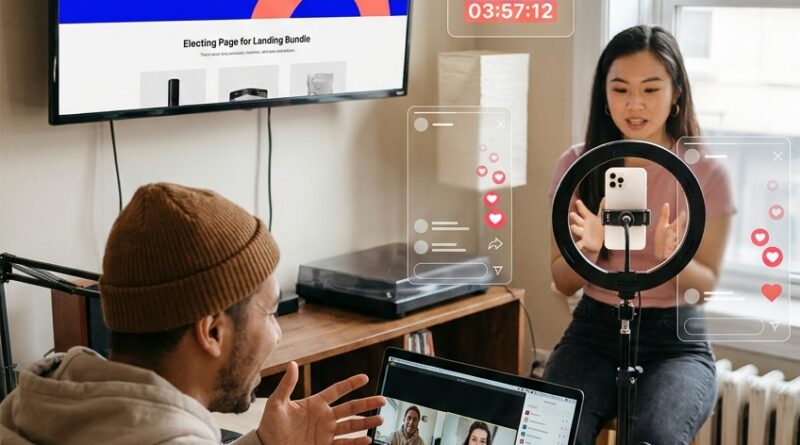
The ‘Creator Drop Flash’ Strategy: Turn One Micro‑Influencer Collab Into A 4‑Hour Sellout
Flash sales can feel downright demoralizing. You cut prices, pay more for ads, send the email blast, then sit there watching a trickle of orders while everyone else seems to be yelling the same discount into the same crowded room. That frustration is real. What’s especially annoying is seeing a small creator with a modest following mention a limited drop and sell out in a couple of hours. The difference usually is not magic, and it is not follower count. It is trust, timing and simplicity. A smart ecommerce flash sale influencer strategy takes one micro-influencer, one tight offer and one short buying window, then lines them up so the audience feels a genuine reason to act now. Done right, this can bring in a quick revenue bump without training your customers to wait around for endless markdowns or burning cash on colder traffic that barely converts.
⚡ In a Hurry? Key Takeaways
- A creator-led flash sale works best when you use one micro-influencer, one bundle and a short 2 to 4 hour sales window.
- Pick creators by audience action, like story taps, link clicks and past sell-through, not just follower count.
- Protect your margins by using a curated bundle or bonus-based offer instead of your deepest sitewide discount.
Why regular flash sales keep falling flat
Most brands run flash sales like a volume game. More products. More emails. More ad spend. Bigger discounts.
But shoppers are tired. Their inbox is full. Their social feeds are packed with “last chance” posts that do not feel urgent because there is always another one tomorrow.
That is why a plain promo often struggles. You are renting attention from people who may not know you, trust you or care right now.
A micro-influencer changes that starting point. Their audience already listens. If the creator genuinely likes the product and presents the offer as a one-time drop, the sale feels less like advertising and more like an invitation.
What the “Creator Drop Flash” strategy actually is
This ecommerce flash sale influencer strategy is pretty simple.
You partner with one micro-influencer. You create one curated offer. You send traffic to one dedicated landing page. Then you open the sale for just 2 to 4 hours while the creator actively posts during that same window.
That tight setup matters. It keeps the message clean and makes the audience feel that this is a real event, not just a coupon code floating around forever.
The core pieces
Here is the basic mix:
- One creator with a responsive audience
- One hero bundle or limited product drop
- One landing page with one clear call to action
- One short countdown window
- One coordinated burst of story posts, short video and onsite urgency
That is it. Fewer moving parts. Less confusion. Better odds that people actually buy.
Start with the right creator, not the biggest one
This is where many brands get it wrong. They chase reach. Reach looks nice in a spreadsheet, but it does not always move product.
You want a micro-influencer whose audience does things, not just watches.
What to look for
- Past story link taps or swipe-up performance
- Comments that show buying intent, not just compliments
- Previous brand collabs that sold out or drove strong engagement
- Audience fit with your product category
- A creator voice that feels personal, not scripted
If you sell skincare, a creator whose audience asks detailed routine questions is usually more useful than a larger lifestyle account with vague engagement. If you sell kitchen gear, a creator who regularly gets saves and clicks on recipe tools is likely a better fit than a broad entertainment account.
Questions to ask before you say yes
- What recent affiliate or sponsored post got the most clicks?
- How do their story frames usually perform over a 24-hour period?
- Have they sold limited products before?
- Will they appear on camera and explain why they picked this item?
You are not buying a face. You are buying trusted recommendation power.
Build an offer that feels special without wrecking your margins
The goal is not your biggest discount ever. The goal is the strongest perceived value.
That is a big difference.
A smart creator flash offer often works better as a bundle, a gift-with-purchase, early access set or exclusive colorway than a blunt 40 percent sitewide markdown.
Good offer formats
- A creator-picked bundle at 15 to 20 percent off
- Buy one core item, get a bonus add-on free
- Limited quantity set with exclusive packaging
- Small bundle only available during the drop window
If you want to push average order value higher, this is where bundling helps a lot. A useful companion read is The ‘Bundle-Flash Carousel’ Strategy: Turn One 20‑Minute Window Into Three Rising AOV Spikes, especially if your usual flash sale brings in bargain hunters who only grab the cheapest item.
Do the margin math first
Before the creator ever posts, know these numbers:
- Product cost
- Packaging and fulfillment cost
- Creator fee or commission
- Expected conversion rate on landing-page traffic
- Break-even order volume
If the offer only works when everything goes perfectly, it is too fragile. Build in room for lower-than-expected conversion.
Keep the landing page boring, clear and fast
This is not the moment for a clever homepage takeover with ten choices.
The creator should send people to a dedicated page with one purpose. Buy the drop.
What the page needs
- A headline naming the creator drop
- A product photo or short video at the top
- A visible countdown timer
- Exactly what is included
- Clear price and savings
- One buy button
- Mobile-first design
Cut anything that creates hesitation. Do not make shoppers hunt through navigation, compare six variants or wonder whether the code works at checkout.
If stock is genuinely limited, say so. If the sale ends in four hours, show the clock. Real scarcity works. Fake scarcity annoys people.
Timing is the whole game
The biggest miss in this strategy is poor coordination.
If the creator posts in the morning, your email goes out at lunch and the countdown starts at dinner, you lose momentum. The sale needs to feel like a live moment.
A simple rollout schedule
Here is a workable structure for a 4-hour drop:
- 24 hours before: teaser from creator and brand
- 2 hours before: waitlist reminder or SMS heads-up
- Minute 0: landing page goes live, countdown starts
- First 15 minutes: creator story sequence with direct link
- First 30 minutes: creator short-form video post goes live
- Hour 2: mid-drop reminder story with stock update
- Final 30 minutes: last-call reminder from creator and brand
This concentrated burst creates the feeling that something is happening right now. That is what gets people to stop scrolling and buy.
Give the creator a script, not a straitjacket
The best-performing creator content usually sounds like them, not like your marketing department.
So do not hand over stiff copy full of slogans. Give them a simple framework instead.
What they should cover
- Why they picked the product
- Who it is for
- What makes this drop different
- How long it is live
- Exactly where to tap to buy
Let them speak in their own voice. Audiences can smell forced sponsorship language a mile away.
Use one clear call to action everywhere
Do not mix messages.
If the creator says “shop my edit,” your site says “holiday flash event” and your email says “VIP early access,” people get confused. Confused shoppers wait. Waiting kills a short sale.
Pick one phrase and repeat it everywhere. For example:
“Shop the Creator Drop. Live for 4 hours only.”
Simple wins here.
What to measure after the drop
Do not judge success by revenue alone. A smaller drop can still be a big win if the economics make sense and you learn what this audience responds to.
Track these numbers
- Landing page conversion rate
- Revenue per visitor
- Average order value
- Sell-through rate by hour
- Creator link click-through rate
- New customer percentage
- Refund rate
You may find that one creator with 18,000 followers drives more profitable sales than another with 90,000. That is useful. It helps you build a repeatable playbook instead of guessing next time.
Common mistakes to avoid
Making the offer too broad
If the creator is sending people to a whole catalog, the urgency gets diluted. Keep the focus tight.
Running the sale too long
An all-day “flash” sale is usually not a flash sale. Four hours feels special. Twenty-four hours feels normal.
Choosing based on vanity metrics
Likes are nice. Link clicks pay the bills.
Using a weak landing page
If mobile load time is slow or the buy button is buried, you are wasting the creator’s attention spike.
Discounting too deeply
You want a fast cash bump, not a habit where customers only buy when prices crash.
At a Glance: Comparison
| Feature/Aspect | Details | Verdict |
|---|---|---|
| Creator selection | Prioritize creators with strong story clicks, trusted recommendations and past product sell-through. | Best choice for a profitable, lower-risk campaign. |
| Offer structure | Use one curated bundle or exclusive drop instead of a broad sitewide discount. | Better for urgency, clarity and margin protection. |
| Timing and delivery | Coordinate creator stories, short video, countdown page and reminders inside a 2 to 4 hour window. | Strongest setup for creating real momentum and fast sales. |
Conclusion
If your usual flash sale feels like shouting into traffic, that is a sign to get narrower, not louder. Right now ad costs are climbing, inboxes are crowded and generic discounts are easy to ignore. A creator-led drop gives smaller ecommerce brands another path. You borrow trust instead of just buying impressions. Keep it tight. One micro-influencer. One curated bundle. One landing page. One short 2 to 4 hour window. When the creator’s story posts, short video and your onsite countdown all hit at the same time, the sale feels like an event instead of another coupon. That helps create genuine scarcity, keeps your margins healthier and can bring in a fast cash injection without teaching customers to expect permanent markdowns. Start small, measure everything and refine from there. You do not need a giant influencer or a massive discount to make this work. You need a believable voice, a clean offer and timing that does not waste the attention you worked so hard to earn.