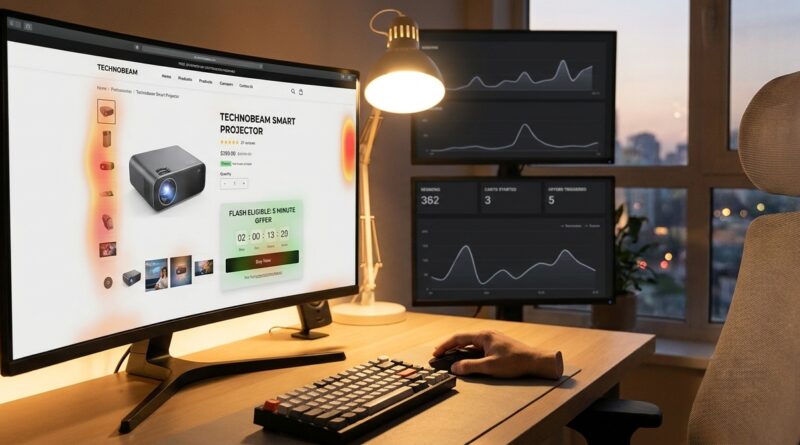
The ‘Real-Time Intent Flash’ Strategy: Turn Live Browsing Signals Into Your Highest-ROI Sale Of The Month
You can feel the problem in your profit report. You send one big flash sale to everyone, orders come in, and then the sinking feeling starts. Too many buyers would have purchased with a much smaller incentive. Meanwhile, the bargain hunters scoop up your deepest discount, your margins get thinner, and your email list learns to wait for the next sitewide markdown. That gets old fast. If your store already has traffic, the real issue is not attention. It is timing. A real time intent flash sale strategy ecommerce brands can use is simple at its core. Watch for shoppers who are acting like they are close to buying right now, then give only those people a short, smart offer. Not everyone. Not all day. Just the warmest visitors in the last 15 to 30 minutes. That small shift can turn a wasteful promotion into your highest-ROI sale of the month.
⚡ In a Hurry? Key Takeaways
- A real-time intent flash works best when you show a short offer only to shoppers showing clear buying signals in the last 15 to 30 minutes.
- Start with 2 to 4 intent triggers, like repeat product views, cart activity, or checking shipping info, then send a small, time-limited incentive.
- This protects margin and reduces list fatigue because you stop blasting deep discounts to people who were never close to buying.
Why broad flash sales stop working
Blanket promotions look easy. One code. One email. One timer at the top of the site. Done.
But easy can get expensive.
When everyone gets the same deal, you treat three very different groups like they are identical. First, you discount for people who were already ready to buy. Second, you annoy people who are not interested yet. Third, you reward discount chasers who may never buy at full price.
That is why the usual “weekend only” sale often feels busy but disappointing. Revenue might spike, but profit quality drops.
What a real-time intent flash actually is
Think of it as a last-mile offer. You are not trying to wake up your whole audience. You are trying to help a shopper who is already leaning forward.
A real-time intent flash sale strategy ecommerce teams use usually has three parts.
1. A recent behavior window
You look at what someone did in the last 15 to 30 minutes, not last week.
2. A clear sign of buying intent
Examples include viewing the same product multiple times, adding to cart, starting checkout, checking shipping costs, opening the size guide, or visiting your returns page right before leaving.
3. A small, fast expiring offer
This could be free shipping for 20 minutes, a 10 percent code on the viewed item, a gift with purchase, or priority access to a limited bundle.
The point is not to bribe everyone. The point is to remove the last bit of hesitation for the right shopper.
Why this usually beats a sitewide discount
The big win is efficiency.
If someone just viewed one product four times, added it to cart, and hovered on checkout, they do not need a giant 30 percent off blast. They may just need free shipping, a small bonus, or reassurance that now is a good time to buy.
That means:
- Higher conversion from warmer traffic
- Less margin damage
- Fewer “train the list to wait” problems
- Better email and SMS engagement because you send less junk
And if you want to raise order value at the same time, this pairs nicely with The ‘One-Hour Bundle Flash’ Strategy: Turn Quiet Traffic Spikes Into Your Highest AOV Of The Week, which focuses on getting more items into the cart instead of just cutting price.
The signals that matter most
You do not need a fancy data science team to start. You just need to watch for behaviors that suggest real purchase intent.
Strong signals
- Added to cart in the current session
- Started checkout but did not finish
- Viewed the same product page 2 to 3 times in a short window
- Visited shipping, returns, FAQ, or reviews before exit
- Came back to the site from an abandoned cart email or SMS
Medium signals
- Spent several minutes on a product page
- Viewed multiple products in the same category
- Used on-site search with specific product terms
- Clicked product images, sizing info, or delivery dates
Weak signals
- Landed on the homepage and bounced
- Opened an email but did nothing on site
- Browsed blog content only
The trick is to build your flash around strong and medium signals together. One weak signal alone should not trigger a discount.
How to build your first real-time intent flash
Pick one goal
Do you want more completed checkouts, more first purchases, or more movement on high-margin products? Choose one. If you chase all three at once, your test gets muddy.
Create a simple trigger rule
Here is a starter rule that is easy to understand:
If a shopper views the same product twice within 20 minutes and adds it to cart, but has not checked out after 10 minutes, show a 20-minute offer.
Choose the gentlest effective incentive
Start smaller than your instincts tell you.
- Free shipping
- 10 percent off one item
- Free add-on sample
- Bonus loyalty points
You can always increase later. It is much harder to walk customers back from deep discounts once they get used to them.
Set a short expiry
Fifteen to thirty minutes works well because it matches the moment. You are responding to live intent, not creating a sale that hangs around all day and becomes background noise.
Limit frequency
This matters a lot. A shopper should not see three “urgent” offers in one week. Cap the number of flashes per user so the tactic stays special.
Where to deliver the offer
You have options. Keep it simple and use the channel closest to the action.
On-site pop-up or slide-in
Best when someone is still browsing. Good for cart and product-page hesitation.
SMS
Fast and effective for opted-in shoppers, especially after cart activity. Keep it short.
Still useful, but slower. Best when paired with a clear subject line and a direct link back to cart.
Retargeting audiences
If your ad platform updates quickly enough, you can build short-lived audiences around recent intent. This is useful, but it is not as immediate as on-site or SMS.
What the offer should say
Do not write like a robot. Write like a helpful store associate.
Good example:
“Still thinking it over? Your cart qualifies for free shipping for the next 20 minutes.”
Another good one:
“You were close. Complete your order in the next 15 minutes and enjoy 10% off this item.”
Notice what is missing. No screaming caps. No fake scarcity. No six red countdown banners. Just a timely nudge.
Common mistakes that ruin the strategy
Giving the same offer every time
If every visitor learns that hovering near checkout unlocks a coupon, you have built a discount vending machine.
Using old signals
A product view from four days ago is not real-time intent. It is stale interest.
Going too deep on discount
If free shipping can close the sale, do not give 25 percent off.
Triggering too early
Someone who landed on one product page for 12 seconds is browsing, not buying.
Ignoring margin by product
Your best-selling high-margin line can support a smarter nudge. Your low-margin items may need a bonus gift instead of a price cut.
How to measure whether it is really working
Do not judge this only by conversion rate. Look at the full picture.
- Incremental revenue, not just attributed revenue
- Gross margin after discount
- Average order value
- Offer redemption rate
- Repeat purchase rate from people who received the flash
- Unsubscribe rates and SMS opt-out rates
The real question is simple. Did this offer create profitable orders that would not have happened otherwise?
A practical starter setup for smaller stores
If you run a lean team, do not overcomplicate this.
- Choose one product category with healthy margin.
- Set one trigger, such as cart started plus no checkout after 10 minutes.
- Offer free shipping or a modest item-specific discount.
- Keep the timer to 20 minutes.
- Show it on-site first.
- Review results weekly.
That alone can teach you a lot about shopper behavior without blowing up your pricing strategy.
At a Glance: Comparison
| Feature/Aspect | Details | Verdict |
|---|---|---|
| Audience targeting | Real-time intent flash targets shoppers showing recent buying signals instead of your full list. | Much better for relevance and margin control. |
| Discount depth | Usually works with smaller incentives like free shipping, a light discount, or a bonus gift. | Safer than jumping straight to sitewide 30 percent off. |
| Customer experience | The offer appears when it feels helpful, not random, and can be frequency-capped. | Less list fatigue and less promo blindness. |
Conclusion
You do not need more noise. You need better timing. Right now, everyone is running broad Black Friday style flash sales and training their entire list to only move at 30 percent off, which is brutal for margin and deliverability. A real-time intent flash lets you reserve your best offers for the people who are actually behaving like buyers in the last 15 to 30 minutes, which means higher conversion, less list fatigue and far less revenue left on the table from shoppers who just needed a gentle nudge, not a sitewide fire sale. Start small, keep the rules clear, and protect your margin like it matters, because it does.