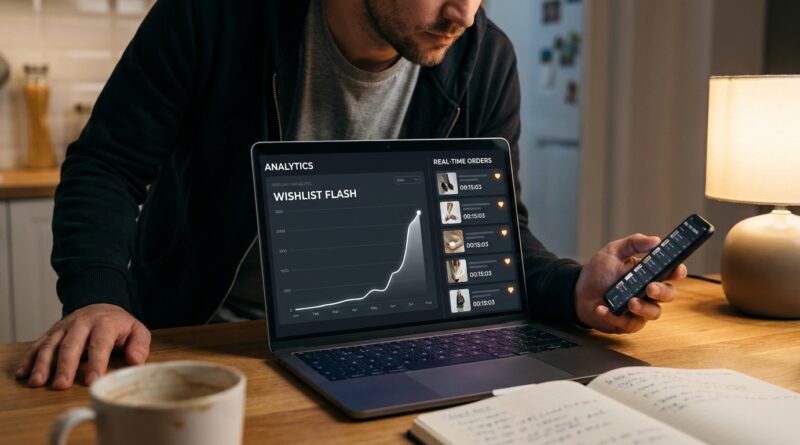
The ‘Wishlist-Trigger Flash’ Strategy: Turn Saved Items Into Your Highest-Converting 90-Minute Sale
You can feel the waste when a flash sale goes live and half the discount lands on products nobody was waiting to buy. That is the frustrating part. You slash prices across the whole store, inboxes fill up, traffic jumps for a minute, and then profit gets thin fast. Meanwhile, the people most likely to convert are sitting quietly on wishlists, favorites, and save-for-later buttons, basically telling you what they want without saying a word. A wishlist flash sale strategy ecommerce teams can run in 90 minutes fixes that mismatch. Instead of begging cold traffic to care, you give a short, focused offer to shoppers who already raised their hand. That means fewer sends, better timing, and less damage to margin. For a small team, this is one of the rare tactics that feels simple and smart at the same time. It narrows the sale to where buyer intent already lives.
⚡ In a Hurry? Key Takeaways
- A wishlist-triggered flash sale targets shoppers who already showed buying intent, so it often converts better than a sitewide sale.
- Start with saved-item segments, pick a tight 90-minute window, and discount only those products or closely related bundles.
- Keep the offer limited and clear so you protect margin and avoid training your whole audience to wait for constant discounts.
Why sitewide flash sales so often disappoint
Most flash sales are too wide and too loud.
You send the same message to everyone. New visitors, bargain hunters, loyal buyers, people who clicked once three months ago. That sounds efficient, but it is actually messy. It treats curiosity and purchase intent like they are the same thing.
They are not.
When someone adds an item to a wishlist, they are doing something useful for you. They are saying, “Not yet, but I am interested.” That is a much stronger signal than a random product page view.
If you ignore that signal and run another blanket sale, you create two problems. First, you waste discount on people who needed no push at all. Second, you teach your broader audience to wait for the next sale. That chips away at urgency over time.
What a wishlist-triggered flash actually is
Think of it as a focused nudge, not a storewide event.
You pull a list of shoppers who saved specific products. Then you run a short sale, usually 60 to 90 minutes, aimed only at those saved items or a small group of related products. The message is simple: the item you wanted is briefly on offer, and the clock is already ticking.
That is the magic here. The sale feels personal because it matches something the shopper already did.
You are not creating demand from scratch. You are helping a pending decision cross the line.
Why this works so well right now
Younger shoppers use wishlists as a decision buffer
For a lot of shoppers, especially younger ones, a wishlist is not just a dream board. It is a holding area. They use it to compare options, wait for payday, think through a purchase, or drop hints for later.
That means wishlists are packed with delayed intent.
Stores are drowning in nonstop discounts
Customers are numb to “20 percent off everything” emails. They have seen them. They expect them. Some barely even register them.
A wishlist-triggered offer cuts through because it is narrower. It feels more relevant. It also gives you a cleaner reason for the message.
If you liked the idea of separating warm intent from casual browsing, you should also read The ‘Warm‑Up Wallet’ Flash Strategy: Turn Pre‑Sale Browsing Data Into Your Highest‑Intent Buyers. It tackles a similar problem from the browsing side, while wishlist campaigns start with even stronger signals.
How to run a 90-minute wishlist flash without fancy tools
You do not need an enterprise stack for this. Most ecommerce platforms, email tools, and loyalty apps can get you close enough.
Step 1: Pull your saved-item audience
Start with anyone who has:
- Added products to a wishlist
- Used “save for later” in cart
- Favorited products in an app or member account
If your setup is basic, even a segment based on “added to wishlist in last 30 days” is enough to start.
Step 2: Keep the product pool tight
Do not include your whole catalog. Pick one of these:
- A single category with strong margins
- Products with enough stock to handle a spike
- Saved items above a certain price point where a small discount helps decision-making
The narrower the set, the clearer the message.
Step 3: Choose a modest discount
This is not the time for a reckless markdown.
Often 10 to 15 percent works better than you think, especially when paired with timing and relevance. In some cases, free shipping or a bundle add-on is enough. The point is to create movement, not panic.
Step 4: Make the window truly short
90 minutes works because it is long enough for people to act and short enough to feel real. Four-hour “flash” sales often lose their edge. Twenty-four-hour ones just become another promo.
Step 5: Write like a human
Your message should sound direct, not theatrical.
Something like this works:
“You saved this for later. For the next 90 minutes, it is 15% off.”
That is enough. No shouting. No fake drama. Just relevance and a clock.
Step 6: Add one smart upsell
If you want to lift average order value, pair each wishlist item with:
- A matching accessory
- A higher-margin add-on
- A buy-more-save-more option inside the same family
This works because the shopper already did the hard part. They picked the main item.
What to send in email and SMS
Use the product image. Name the item. Put the timer near the top. Keep the copy short.
A good subject line could be:
- Your saved item just went on sale for 90 minutes
- Quick heads-up. That item on your wishlist is now discounted
- 90-minute offer on something you saved
SMS
SMS is great here because the time window is short. Just do not overdo it. One message at launch and maybe one near the end is plenty.
Example:
“Your saved item is 15% off for the next 90 mins. Shop now: [link]”
The metrics that matter most
Do not judge this campaign by raw send volume. That misses the point.
Watch these instead:
- Conversion rate from wishlist segment
- Average order value
- Revenue per recipient
- Gross margin after discount
- Sell-through on featured saved items
If this strategy is working, your audience size may be smaller than a sitewide blast, but your efficiency should look a lot better.
Common mistakes to avoid
Discounting too much
If shoppers with strong intent need 30 percent off to move, something else may be wrong. Price may not be the real blocker. Stock confidence, shipping cost, or weak product pages could be the issue.
Including stale wishlist data forever
A saved item from nine months ago is not always useful. Start with recent signals, such as the last 14, 30, or 45 days.
Running it too often
If every saved item becomes a sale in a few days, customers will learn to wait. Protect the tactic by using it selectively.
Forgetting inventory reality
Never spotlight products with shaky stock unless scarcity is part of the plan and you can support the customer experience after the sale.
Who should try this first
This is especially useful for:
- Small ecommerce teams with limited ad budgets
- Brands with a decent number of logged-in shoppers or loyalty members
- Stores that already have wishlist or save-for-later data but barely use it
- Merchants tired of sitewide discounts eating margin
If your list is small, that is fine. A small, high-intent segment can still outperform a broad campaign that mostly catches people who were never close to buying.
At a Glance: Comparison
| Feature/Aspect | Details | Verdict |
|---|---|---|
| Audience targeting | Wishlist-triggered sales focus on people who already saved products, instead of your full email list. | Much stronger intent |
| Margin impact | Discount applies to a narrower product set and a smaller audience, reducing unnecessary markdowns. | Safer for profit |
| Operational effort | Can often be run with existing ecommerce, email, and SMS tools if you already track saved items. | Very practical for small teams |
Conclusion
Two big trends are colliding right now. Younger shoppers are using wishlists as a holding pen before they decide, and ecommerce teams are stuck in a cycle of nonstop discounts that kill margin and attention. A wishlist flash sale strategy ecommerce brands can run in 90 minutes offers a better path. It is practical, does not need expensive tech, and works by narrowing the offer instead of widening it. You are talking to people who already showed interest, not pleading with cold traffic to suddenly care. That usually means lower send volume, higher conversion rate, better average order value, and less waste. Most of all, you keep your discount powder dry for when it matters. For a scrappy store trying to outsmart bigger competitors, that is a real edge.