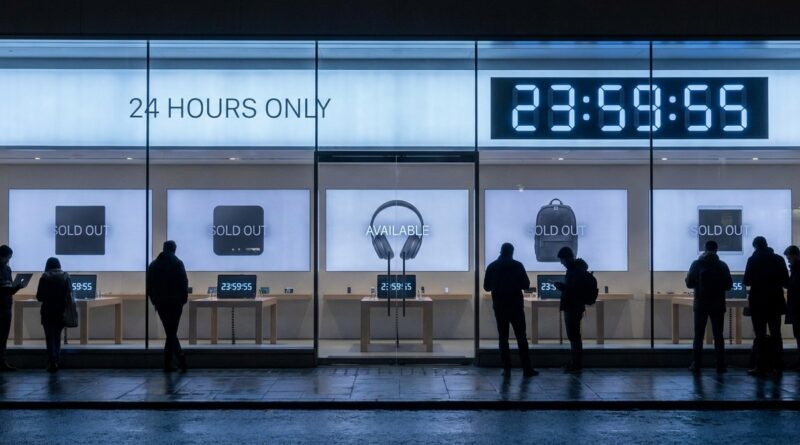
The ‘Honest-Timer Flash’ Strategy: Turn One Real Deadline Into Your Most Trusted 24‑Hour Sale
You can feel the problem, even before you open your analytics. The countdown timer is ticking. The “last chance” email went out. Maybe the site banner says stock is almost gone. And still, shoppers hesitate because they have seen this movie before. The sale “ends tonight,” then somehow comes back tomorrow with a fresh clock. That does not just hurt one campaign. It trains customers not to believe you.
The fix is not a fancier timer. It is an honest one. A real 24-hour flash sale, with a clear start and stop time, can rebuild urgency without making your brand feel slippery. The trick is simple. Pick one deadline you can actually keep. Make the offer good enough to matter. Then end it for real, and show proof the next morning that the deal is over. That last part matters more than most brands realize. When shoppers see you mean it, your next promotion gets stronger before it even starts.
⚡ In a Hurry? Key Takeaways
- Use one real 24-hour sale window and make sure it actually ends when the timer hits zero.
- Show proof the next day by removing the discount, changing the banner, and sending a “sale is over” message.
- This approach protects trust. You may lose a few late sales today, but you build a much stronger response for future campaigns.
Why fake urgency stopped working
Shoppers are not clueless. They notice when “ends tonight” quietly rolls into another day. They notice when “only 2 left” appears on every product page, every week. After a while, your urgency stops creating action and starts creating eye rolls.
This is why the honest countdown timer flash sale strategy works. It does not try to out-shout customer skepticism. It works around it by being believable.
Think of it like a store in the real world. If the owner says the doors close at 8 p.m. and keeps serving people until 9:30, nobody rushes next time. Online sales work the same way. The first deadline teaches people what your future deadlines mean.
What the “Honest-Timer Flash” strategy actually is
At its core, this strategy is very plain:
- You run a real 24-hour sale.
- You use a visible countdown timer.
- You offer a meaningful deal on selected products or sitewide.
- You end the offer exactly when promised.
- You prove it ended.
That final step is the difference between a gimmick and a trust-building system. If shoppers wake up the next morning and see the same prices, the whole thing falls apart. If they wake up and the deal is gone, the lesson sticks.
How to set it up without overcomplicating it
1. Pick a deadline you can keep
Do not choose a time just because it sounds dramatic. Pick one your team can support. Midnight local time is common, but 8 p.m. or 10 p.m. can work too if that is when you can reliably switch the sale off.
The worst version of this strategy is promising a hard stop, then extending it because someone forgot to change the site.
2. Keep the offer simple
Complicated deals kill momentum. “24 hours only. 20% off bestsellers.” That works. “Discount applies to selected items excluding bundles, preorders, gift cards, low-stock colors, and products from six brands.” That gets messy fast.
Your customer should understand the deal in seconds.
3. Use one timer, not twenty
A single, clear sitewide timer is enough. You do not need popups, sticky bars, floating widgets, product-page clocks, and exit-intent warnings all fighting for attention.
Too many timers make the whole thing feel fake, even if the sale is real.
4. Say when the sale ends in plain English
Do not rely on the timer alone. Add the actual date and time next to it. For example: “Ends tonight at 11:59 p.m. EST.”
This helps customers trust what they are seeing. It also prevents confusion across time zones.
5. End it everywhere at once
When the sale expires, update the product pages, collection pages, homepage banner, cart, checkout, email creative, and paid ads as quickly as possible. If some pages still show the old price, shoppers will think the deadline was never real.
The part most stores skip: proof the next morning
This is where the strategy earns its reputation. Once the sale ends, do not go quiet. Show that it ended.
Here are easy ways to do that:
- Replace the sale banner with “Yesterday’s flash sale has ended.”
- Restore regular pricing on the same product pages shoppers visited.
- Send a short follow-up email saying the deal is now closed.
- Post an Instagram Story or site note that thanks shoppers and confirms the promotion has ended.
You are not trying to rub it in. You are sending a signal. Deadlines here are real.
Why this can increase future conversions
It sounds backward at first. Why would ending a sale sharply help later sales?
Because trust compounds. When customers believe your deadline, they stop waiting for the “secret extension.” Your next flash sale starts with credibility already built in. That can lift conversions before you change anything else about creative, ad spend, or product mix.
In other words, a real deadline does not just move inventory once. It trains your list to take you seriously.
What to say in your emails and on-site copy
You do not need hype. You need clarity.
Good examples
- “24-hour flash sale. Starts now. Ends Friday at 11:59 p.m.”
- “One-day pricing on our top three bundles. No extension.”
- “When the timer ends, prices return to normal.”
What to avoid
- “Final final final chance” three times in one week
- “Only 2 left” if that is not verifiably true
- “Extended by popular demand” right after promising no extension
Customers can forgive a boring email. They do not forgive a dishonest one as easily.
Make it work even better with a preview period
If your flash sales tend to underperform because shoppers arrive cold, pair this with a preview phase. Let people browse the featured products before the 24-hour window opens, save favorites, and come in ready to buy.
That idea fits nicely with The ‘VIP-Preview Flash’ Strategy: Turn 24 Hours Of Silent Browsing Into Your Highest-Converting Sale Day. An honest deadline works even better when customers have already had time to choose size, color, and product before the clock starts.
Common mistakes that ruin the strategy
Making the discount too small
If the offer barely beats your usual promo, the timer will not save it. Honest urgency still needs a reason to act.
Running flash sales too often
If every weekend is a “special” 24-hour event, it stops feeling special. Keep some breathing room between flashes so they keep their punch.
Extending the sale privately
Even a quiet extension to a support inbox or VIP segment can get screenshotted and shared. If the public promise was firm, keep it firm.
Forgetting the after-sale cleanup
If discount codes still work, banners stay live, or abandoned-cart emails mention expired pricing, trust takes a hit. Build a checklist before launch.
A simple rollout plan for your next sale
If you want to test the honest countdown timer flash sale strategy without rebuilding your whole promo calendar, start here:
- Choose 3 to 10 products with healthy margin or seasonal pressure.
- Set one 24-hour window with a real stop time.
- Create one homepage banner and one clear timer.
- Write two emails. One at launch, one 4 to 6 hours before close.
- Prepare the next-morning proof. New banner, regular prices, and a short “sale ended” message.
- Measure not just revenue, but click-through rate, conversion rate, and customer replies. Trust often shows up there first.
This is a small test with a bigger upside than it appears. You are not just measuring one sales day. You are testing whether credibility itself can become a performance advantage.
At a Glance: Comparison
| Feature/Aspect | Details | Verdict |
|---|---|---|
| Countdown timer use | One visible timer tied to a real 24-hour deadline, with the exact end time stated in text. | Best for trust and clarity |
| After-sale handling | Prices revert, banners change, and shoppers can see the offer truly ended the next morning. | Essential. Do not skip it |
| Long-term brand impact | May sacrifice a few late conversions today, but builds stronger urgency response in future campaigns. | High long-term value |
Conclusion
You do not need louder urgency. You need believable urgency. Right now, everyone is hammering shoppers with recycled timers, endless “last chance” emails and TikTok flash banners that never really expire, so people have built immunity to urgency. A simple, honest 24-hour flash that truly ends, backed by proof the next morning, cuts through that fatigue and gives your next sale a built-in conversion lift because customers finally believe your deadlines again.