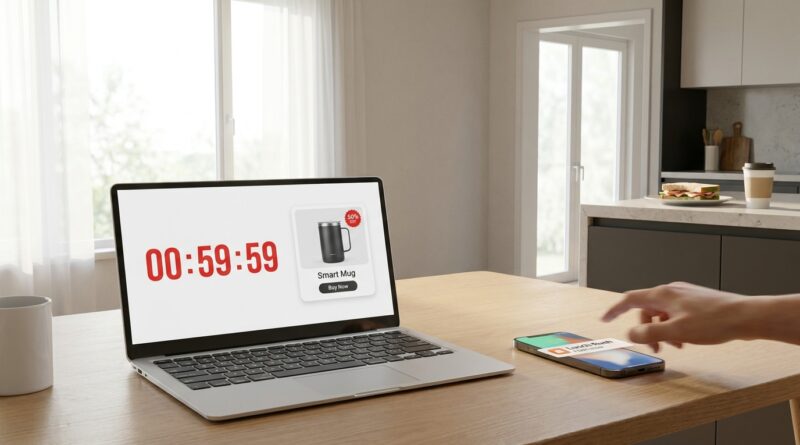
The ‘Lunch-Rush Flash’ Strategy: Turn One Power Hour Into Your Highest-Converting Daily Sale
Running a sale all day sounds smart until it quietly fades into the background. That is the frustrating part. You mark products down for 24 hours, post it everywhere, send the email, and still the response feels flat. Shoppers get distracted. They tell themselves they will come back later. Later never comes. A better move is often smaller, tighter, and easier for people to remember. The ecommerce lunch flash sale strategy is built around one predictable power hour, usually around midday, when people are already checking their phones, taking a break, and more open to a quick buy. Instead of spreading attention thin across the whole day, you stack it into one short burst. That creates a real deadline, a stronger habit, and a cleaner daily sales rhythm. For smaller brands especially, this can turn a forgettable promo into the one moment customers actually wait for.
⚡ In a Hurry? Key Takeaways
- Use a fixed daily lunch-hour sale window to create real urgency and better conversion than an all-day discount.
- Start with the same time each day, one clear offer, and simple reminders 15 to 30 minutes before it begins.
- Keep the offer profitable. A short flash should train buying behavior, not eat your margins or confuse shoppers.
Why all-day promos often underperform
When a deal lasts from midnight to midnight, there is no real pressure to act. Customers feel like they have time. They open the email, mean to browse later, then get pulled into meetings, errands, messages, and everything else.
That is why so many brands see decent traffic but disappointing conversion. Interest exists. Action does not.
The problem is not always the discount. It is the weak urgency.
What the lunch-rush flash strategy actually is
The idea is simple. Pick one consistent hour each day, often around 12 p.m. to 1 p.m. in your audience’s local time, and make that your brand’s mini event.
Not a random promo. A routine.
Customers begin to learn that if they want the best deal, bonus, limited bundle, or restock-first access, lunch is the moment to check in.
That is what makes the ecommerce lunch flash sale strategy work. It is not just about urgency. It is about habit.
Why lunch works so well
People are already in a checking mode
Midday is one of the few times many people naturally pause. They scroll during lunch, glance at emails, and catch up on messages. You are not fighting for attention at 8 a.m. when everyone is rushing, or late at night when they are tired.
Short windows force clearer choices
If a customer knows a deal ends in 47 minutes, that pushes a decision. If it ends tonight, it feels optional.
It gives your brand a repeatable rhythm
Consistency matters. A lunchtime flash at the same hour every weekday is easier to remember than occasional surprise promos that people miss.
How concentrated demand helps smaller brands
Big retailers can afford to shout all day. Smaller brands usually cannot. They do better when they create a moment instead of trying to own the entire day.
A one-hour flash concentrates clicks, carts, and checkouts into a sharper burst. That can make your store look busier, move inventory faster, and lift conversion rates because shoppers see a deadline they believe.
It also helps your marketing. Instead of writing five vague reminders across the day, you can build one clear campaign around one clear slot.
How to set up your own lunch-rush flash
1. Pick one time and stick to it
Do not keep moving the sale window. The habit only forms if customers know when to show up. Start with the same hour for at least two to four weeks before judging results.
2. Keep the offer simple
One product category. One discount. One bonus gift. One bundle. The tighter the message, the better it converts.
Examples:
- 20% off one featured collection from 12 p.m. to 1 p.m.
- Buy one, get one half off on lunch-hour only
- Free shipping plus bonus sample for the first 100 orders
3. Tell people before the hour starts
You need a warm-up. Send an email or text 15 to 30 minutes before launch. Post a countdown on social. Add a site banner earlier in the morning.
The sale itself is short. The reminder cycle should do the heavy lifting.
4. Make checkout easy
This is not the time for messy coupon steps or confusing exclusions. If customers have to stop and figure things out, the urgency breaks.
Auto-apply the discount if possible. Keep product pages clean. Make the cart total obvious.
5. Measure more than raw revenue
Look at conversion rate, average order value, repeat visits, SMS signups, and how many people return at the same hour over time. A lunch flash can become stronger after customers learn the pattern.
What to avoid
Making the sale too long
If your “flash” quietly stretches to three or four hours, it loses its edge. Short means short.
Discounting everything
You do not need a store-wide markdown every day. That can train customers to avoid full-price buying. Use featured products, selected categories, or limited bundles instead.
Changing the rules constantly
If one day it is 20% off, the next day it is mystery pricing, then members only, then category exclusions, shoppers get tired. Keep the pattern familiar.
When this strategy works best
This approach is especially useful for brands with repeat buyers, impulse-friendly price points, limited drops, or products people can understand fast.
It also works well if your audience is mobile-heavy. Lunch-hour shopping is often quick and phone-based, so fast pages and smooth checkout matter a lot.
If you sell across regions, timing gets trickier. In that case, it is worth looking at The ‘Geo-Surge Flash’ Strategy: Turn Local Time Zones Into A 24‑Hour Revenue Chain, which shows how to run flash timing around local time zones instead of forcing everyone into one schedule.
A simple weekly test plan
If you are curious but not fully sold, do a small test.
- Week 1: Run your usual all-day promo
- Week 2: Run the same offer as a one-hour lunch flash
- Keep traffic sources, creative style, and featured products as similar as possible
- Compare conversion rate, cart completion, and revenue per visitor
This gives you a fair read. You are not guessing. You are comparing structure against structure.
At a Glance: Comparison
| Feature/Aspect | Details | Verdict |
|---|---|---|
| Urgency | A one-hour lunch window creates a believable deadline, while all-day sales feel easy to postpone. | Lunch flash usually wins |
| Customer habit | A fixed midday schedule trains shoppers to check in at the same time each day. | Strong long-term value |
| Margin control | Short, focused offers let you limit discount exposure instead of cutting prices all day. | Better for smaller brands |
Conclusion
If your current promos feel noisy but oddly weak, you are not imagining it. Attention is scattered, and generic 24-hour deals are easy to ignore. A tight daily lunch-rush flash gives people a clear moment to act. Over time, it trains them to check in at the same hour, concentrates demand into a burst that can lift conversion, and gives smaller brands a realistic way to compete. You do not need to outshout the biggest stores all day. You just need to own one power hour well.