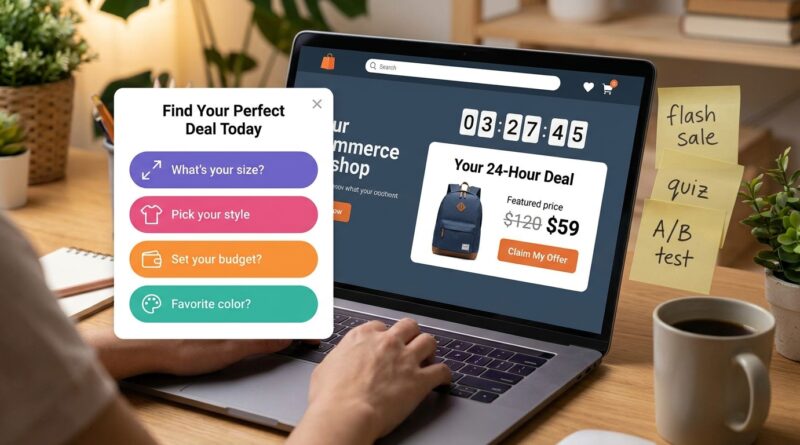
The ‘Micro-Commit Flash’ Strategy: Turn Tiny On-Site Quizzes Into A 24-Hour Buyer Stampede
Flash sales can be maddening. You do the prep, line up the promo, push traffic from email and social, and then watch people click in, browse for a minute, and disappear. The problem usually is not the discount. It is that the offer feels broad, generic, and easy to ignore. A Micro-Commit Flash fixes that by slowing shoppers down for just a moment. Before they see the deal, they answer 3 to 5 quick questions. Nothing heavy. Think style, goal, budget, or who they are shopping for. That tiny step changes the mood from casual scrolling to active choosing. It also gives you enough info to show a discount, bundle, or product set that actually feels relevant. In a noisy sale window, that can be the difference between a bounce and a checkout. For smaller brands, it is also a smart way to feel personal without building a giant personalization system.
⚡ In a Hurry? Key Takeaways
- A personalized flash sale strategy quiz can turn passive browsers into higher-intent shoppers before they ever see the discount.
- Keep the quiz short, 3 to 5 fun questions, and use the answers to show a tailored product pick, bundle, or offer right away.
- You do not need a huge tech stack. Even simple quiz tools plus basic segmentation can make a smaller brand feel much smarter and more useful.
Why regular flash sales often stall
Most flash sales ask shoppers to care before giving them a reason to.
The banner says 20 percent off. The email says today only. The homepage says hurry. But your visitor is still thinking one thing. Is this actually for me?
If the answer is not obvious within a few seconds, they drift. They open another tab. They check Instagram. They decide they will come back later, which usually means never.
This is why so many brands get traffic but not action. The sale creates attention, but not enough personal relevance.
What a Micro-Commit Flash actually is
A Micro-Commit Flash is a flash sale wrapped around a tiny on-site quiz. The quiz comes first. The discount comes second.
That order matters.
Instead of dropping every visitor onto the same sale page, you guide them through a few quick choices. Then you reveal a tailored offer based on what they picked.
What the quiz should ask
Keep it light. Good examples include:
- What are you shopping for today?
- Which style fits you best?
- What is your budget range?
- Are you buying for yourself or as a gift?
- What matters most: price, speed, premium quality, or simplicity?
This is not a survey. It is a guided path to a better deal page.
Why tiny commitments increase buying intent
People value what they help create. Even if all they do is answer four easy questions, they feel a small sense of ownership over the result.
That is the heart of the strategy.
Once someone has clicked through a few answers, they are no longer just lurking. They are participating. They have invested a few seconds. They want to see the outcome. And when the result feels tailored, it lands with more force than a plain sitewide discount.
You are not tricking people. You are helping them sort through noise.
Why this works especially well during busy sale periods
During big promo days, every brand sounds the same. Same urgency. Same countdown. Same tired graphics.
A personalized flash sale strategy quiz breaks that pattern.
It gives the shopper something to do, not just something to look at. That interaction buys you attention at the exact moment when attention is most expensive and shortest in supply.
It also lets you collect just enough data to make the next step better. Not creepy data. Useful data. The kind a shopper willingly gives because it improves the experience immediately.
How to set one up without making it complicated
This is where people overthink it. You do not need an enterprise personalization platform to start.
Step 1: Pick one sale goal
Do you want to move gift bundles, clear seasonal stock, raise average order value, or improve conversion on a hero category? Start with one.
Step 2: Build 3 to 5 questions
Shorter is better. Each question should help route people toward an offer. If a question will not change the result, cut it.
Step 3: Create 3 to 6 outcome pages or offer states
Each result should feel clearly different. For example:
- Budget-friendly picks with a modest discount
- Premium bundle with a stronger value story
- Gift-ready set with free wrap or bonus item
- Best seller starter pack for first-time buyers
Step 4: Reveal the offer immediately
Do not make people answer questions and then ask for an email before showing the result. That is too much friction. Show the tailored result first. If you want the email, ask after the match is revealed.
Step 5: Track the right numbers
Watch quiz start rate, quiz completion rate, click-through to product, add-to-cart rate, conversion rate, and average order value. Compare those to your normal flash sale traffic.
What makes the quiz feel fun instead of annoying
The tone matters more than many brands realize.
If the quiz feels like homework, people bail. If it feels playful and useful, they stay.
Good quiz habits
- Use plain language
- Show progress, like Question 2 of 4
- Use visual answer buttons when possible
- Keep each question focused on one idea
- Make the result feel rewarding
Bad quiz habits
- Asking for too much personal info too early
- Using 10 or more questions
- Showing generic results that feel fake
- Sending everyone to the same product page anyway
What smaller brands get right with this strategy
Big retailers often win on reach. Smaller brands can win on feel.
A Micro-Commit Flash helps you seem thoughtful, guided, and personal. That matters because shoppers do not always want the biggest store. They want the easiest confident decision.
If your site can say, “Answer four quick questions and we will show you your best deal,” that already feels more helpful than a wall of random discounted products.
If you want to push the idea even further, take a look at The ‘AI Deal Match Flash Sale’ Strategy: Let Shoppers Ask For Their Own Discount. It pairs nicely with this approach because both strategies make the shopper feel involved in getting the offer.
Common mistakes that sink results
There are a few easy ways to mess this up.
Making the offer too broad
If every quiz path ends in “Here is 15 percent off sitewide,” the personalization feels empty. The result needs to look earned and specific.
Hiding the best products
Do not send quiz takers to weak inventory just because you need to move it. Give them a real match first. You can still mix in overstock, but the page has to feel valuable.
Adding too many steps before checkout
The quiz should simplify the journey, not stretch it. Reveal result, show products, make checkout easy.
Ignoring mobile
Most flash sale traffic is mobile-heavy. If the quiz is clunky on a phone, the strategy falls apart fast.
Best use cases for a personalized flash sale strategy quiz
This works especially well for brands with lots of choice or shoppers who need a little guidance.
- Beauty and skincare
- Fashion and accessories
- Home goods and gifting
- Supplements and wellness
- Food and beverage bundles
- Subscription products with multiple entry points
It can also work for B2B-lite offers, especially when buyers need help choosing a package or plan.
At a Glance: Comparison
| Feature/Aspect | Details | Verdict |
|---|---|---|
| Standard flash sale page | Shows the same banner and deal to everyone, which is easy to launch but easy to ignore. | Good for speed, weak for relevance. |
| Micro-Commit Flash quiz | Uses 3 to 5 quick questions to build intent and route shoppers to a tailored offer. | Best balance of personalization, simplicity, and conversion lift. |
| Heavy personalization stack | Can be powerful, but often costs more, takes longer, and needs more setup and data. | Useful later, but not required to start. |
Conclusion
If your flash sales get attention but not enough purchases, the fix may be simpler than you think. Right now, everyone is blasting generic flash sale banners and fighting for attention on social and email at the same time. A Micro-Commit Flash cuts through the noise by getting visitors to answer 3 to 5 fun, low-friction questions before they ever see a discount. That tiny commitment does two things: it builds intent and gives you just enough data to show a tailored offer, which dramatically improves click-through and conversion on a day when CPMs and distractions are sky high. It also gives smaller brands a way to look far more smart and personal than big-box competitors without needing a huge tech stack. Start small. One quiz. One sale. One cleaner path to “yes.”