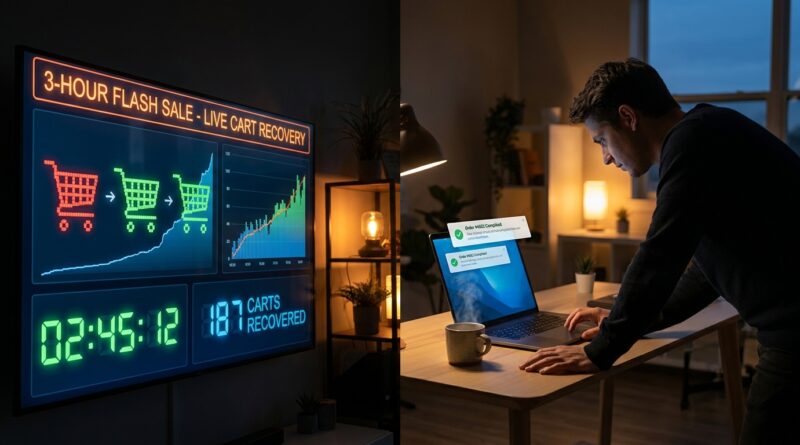
The ‘Rolling-Cart Flash’ Strategy: Turn Abandoned Checkouts Into A 3‑Hour Revenue Surge
You pay for the click, build the product page, set up the sale, and then the strangest part happens. People add items to cart and vanish. No purchase. No clear reason. Just a neat little pile of abandoned checkouts while your ad budget keeps draining. That is frustrating, especially during a flash sale when every hour matters.
The good news is you do not need to discount your whole store again to wake people up. A smart abandoned cart flash sale strategy focuses only on shoppers who already raised their hand. They clicked, browsed, and got close enough to start checkout. That makes them far warmer than your average visitor. Instead of blasting everyone with another generic 24-hour promo, you create a short, cart-only offer that runs for about three hours. It feels urgent, stays targeted, and can pull in fast revenue without teaching your full audience to wait around for markdowns every weekend.
⚡ In a Hurry? Key Takeaways
- A cart-only flash sale works best when it targets shoppers who already started checkout, not your entire list.
- Keep the offer short, about three hours, and send it through abandoned cart email and SMS flows with a clear deadline.
- This approach protects margins, reduces list fatigue, and avoids training customers to expect storewide discounts.
What the rolling-cart flash strategy actually is
The idea is simple. You do not run one giant public sale. You trigger a short flash offer only for people who abandoned checkout within a recent window, usually the last few hours.
Think of it like a moving pocket of urgency. As new shoppers abandon cart, they enter the offer flow. As older carts age out, they leave it. That is why it is a rolling-cart flash.
Instead of saying, “Everything is 20% off until midnight,” you say, “Your cart is reserved for the next 3 hours. Complete checkout and use this private code.”
That small change matters more than it sounds.
Why this works better than another loud storewide sale
It targets buyers who are already close
These shoppers are not cold traffic. They already did the hard part. They showed intent. A focused nudge often works better than trying to drag brand-new visitors through the whole funnel in one afternoon.
It feels personal, not desperate
A public sale can feel routine. A cart-only offer feels specific. It reads like a reminder with a benefit, not a megaphone blast to everyone on your list.
It helps protect your margins
You are discounting a smaller group, not your whole audience. That means less revenue left on the table and less risk of teaching regular shoppers to hold off for the next markdown.
It is easier on your email program
If you keep sending broad “last chance” messages to your full list, people stop opening them. Some unsubscribe. Some mark them as spam. A targeted abandoned cart flash sale strategy limits send volume and keeps your sender reputation healthier.
How to set up a 3-hour revenue surge
1. Pick the right audience
Start with people who:
- Added items to cart or started checkout
- Did not complete purchase
- Abandoned within the last 1 to 24 hours
- Are not already in a post-purchase flow
If you can segment further, even better. Exclude chronic discount hunters, recent returners, and customers who just bought at full price in the last day or two.
2. Make the offer small but meaningful
You do not always need a big discount. Often one of these is enough:
- 10% off checkout completion
- Free shipping for 3 hours
- A low-cost gift with purchase
- Bonus loyalty points if you have a rewards program
The goal is not to slash price until it hurts. The goal is to remove the hesitation that stopped the sale.
3. Put a real deadline on it
Three hours works because it is short enough to create urgency, but not so short that people miss it entirely. Be honest about the timer. If the code works for 24 hours behind the scenes, customers eventually catch on.
4. Use two channels if you have permission
Email should do the explaining. SMS should do the nudging.
A simple flow might look like this:
- At 30 to 60 minutes after abandonment: reminder email
- At 90 minutes: SMS with the private offer
- At 2 hours 30 minutes: final email, offer ending soon
If you only have email, that is fine. Just keep the messages short and useful.
What to say in the messages
Email 1: Gentle reminder
Subject: You left something behind
Body: Show the cart items. Include one clear checkout button. Mention that the cart is still available.
Email 2 or SMS: Private flash offer
Subject: Complete your order in the next 3 hours
Body: “Your cart is still waiting. Use code CART10 in the next 3 hours for 10% off.”
Final reminder
Subject: Last call for your cart
Body: Repeat the deadline. Repeat the benefit. Keep it clean.
This is not the place for long brand storytelling. They already know what they wanted. Your job is to help them finish.
Common reasons carts get abandoned, and the fix
Shipping cost shock
If people reach checkout and leave when shipping appears, test a free shipping flash instead of a discount code.
Decision fatigue
Too many variants, bundles, or upsells can stall buyers. In your cart email, keep the path back to checkout simple.
They got distracted
This is more common than most merchants think. A child cried. A meeting started. Their phone died. A short reminder can recover these buyers quickly.
They were comparing options
A time-limited, cart-only incentive can tip the balance without forcing a public sale across your whole catalog.
When this strategy works best
The rolling-cart flash works especially well when:
- Your traffic is already strong from paid ads
- You are in a promotional period but want to avoid another sitewide discount
- Your average order value can support a small incentive
- You have enough checkout volume to segment recent abandoners
Smaller brands can use this well because it is focused. You do not need a huge list. You need a handful of buyers who were already almost there.
When to avoid it
Do not run this every single day with the same audience. People learn fast. If they realize abandoning cart always gets them a discount, you have trained the wrong behavior.
Also be careful if your margins are already razor-thin. In that case, try free shipping, a gift, or faster support before offering money off.
How this fits with your other sale tactics
This strategy works nicely alongside broader list-building and launch campaigns. For example, if you want to warm up demand before a bigger event, The ‘VIP-Waitlist Flash’ Strategy: Turn Your Quiet Email List Into A Lined‑Up‑Outside 24‑Hour Sale is a smart companion read. That approach gets people excited before the sale. The rolling-cart flash helps catch the ones who still hesitate at checkout.
Metrics to watch
Recovery rate
How many abandoned carts turned into purchases after entering the flash flow?
Margin by recovered order
Recovered revenue is nice. Profitable recovered revenue is better. Track net impact, not just topline sales.
Time to conversion
Did buyers come back within the 3-hour window, or later? This helps you see if your timing is working.
List health
Watch unsubscribe rate, spam complaints, and SMS opt-outs. A good abandoned cart flash sale strategy should improve revenue without burning trust.
Easy mistakes that can kill the result
- Offering too much discount too soon
- Sending the same message to everyone
- Using a fake timer
- Forgetting to exclude people who already purchased
- Making shoppers re-build their cart from scratch
- Sending too many reminders in too little time
The last point matters. Urgent is good. Annoying is not.
At a Glance: Comparison
| Feature/Aspect | Details | Verdict |
|---|---|---|
| Audience scope | Targets only recent cart or checkout abandoners instead of your full list | Best for efficiency and less list fatigue |
| Offer timing | Runs on a short 3-hour window tied to the individual shopper’s abandonment time | Strong urgency without needing a public sale |
| Margin impact | Discount is used on high-intent shoppers only, often with a modest incentive like free shipping or 10% off | Safer than repeated sitewide markdowns |
Conclusion
If your checkout goes quiet right when your ads are doing their job, do not assume you need a louder sale. A better move is often a narrower one. A focused, cart-only flash sale turns existing attention into fast cash without training your entire audience to wait for markdowns. It protects your margins, keeps your sender reputation safer, and gives smaller brands a repeatable way to pull real revenue from the buyers who were already closest to saying yes. Start small, keep the window tight, and make the offer feel earned. That is usually where the lift comes from.