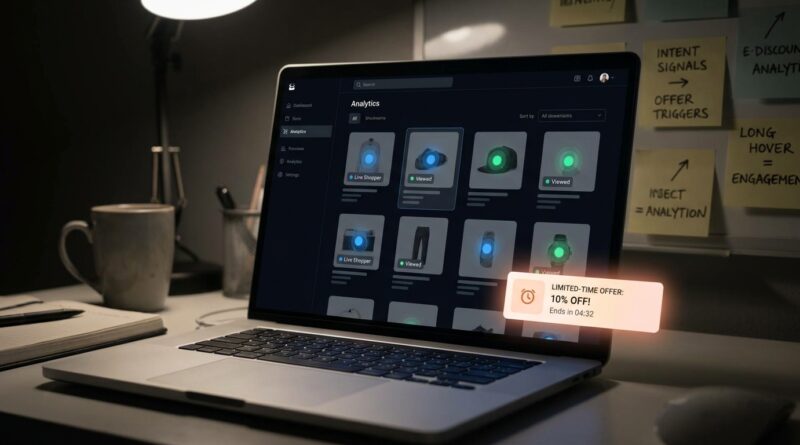
The ‘Intent‑Trigger Flash’ Strategy: Turn Live Shopper Behavior Into Just‑In‑Time Offers
Flash sales can feel like shouting into a crowded room. You slap a timer on the site, send one big discount to everyone, and hope the right shoppers see it before they leave. Then the numbers come in. Plenty of traffic. Plenty of cart activity. Not nearly enough finished orders. That is frustrating, especially when every discount chips away at margin and trains people to wait for the next promo. The smarter move is simpler than it sounds. Instead of showing the same deal to every visitor, you watch for buying signals and trigger a small, timely offer only when someone looks close to saying yes. That is the heart of ecommerce flash sale intent based offers. It is not about being pushy. It is about being relevant. If someone has viewed the same product three times, stalled at checkout, or come back with items still in the cart, that is your cue to make the offer count.
⚡ In a Hurry? Key Takeaways
- Intent-trigger flash offers show discounts only to shoppers showing real buying signals, not to everyone.
- Start with simple triggers like repeat product views, cart return visits, or checkout stalling, then match each with a small, time-limited offer.
- This protects margin, cuts discount waste, and avoids teaching your whole audience to wait for site-wide sales.
What an Intent-Trigger Flash Actually Is
Think of it as a flash sale with better timing.
Traditional flash sales are broad. Everybody gets the same banner, the same countdown, and the same percent off. An intent-trigger flash is narrower. It waits for behavior that suggests a shopper is close to buying, then delivers a just-in-time nudge.
That nudge could be a pop-up, an on-site message, an SMS, or an email with a short expiry. The key is that it appears because the shopper did something meaningful.
Examples include:
- Viewing the same product page two or three times in one week
- Adding an item to cart, then sitting idle at checkout for several minutes
- Returning to the site with an existing cart
- Browsing a high-intent collection repeatedly
- Clicking shipping info, returns, or sizing details before leaving
These are not random actions. They are clues.
Why This Works Better Than a Blanket Flash Sale
Not every visitor needs a discount. Some are just browsing. Some are comparison shopping. Some were going to buy anyway.
If you offer 20 or 25 percent off to all of them, you burn money fast.
Intent-based offers fix that. You save the incentive for the people who need a final push. That means your flash sale budget goes to the shoppers most likely to convert, not to casual traffic.
This also helps with a problem a lot of smaller stores know too well. Discount fatigue. Once customers expect constant site-wide sales, full-price selling gets harder. A targeted flash offer feels more like a timely nudge and less like a storewide habit.
The Three Best Triggers to Start With
1. Repeat Product Views
If someone keeps coming back to the same item, they are interested. Maybe they are waiting for payday. Maybe they are comparing options. Maybe they just need one last reason to act.
A good first test is this: if a shopper views the same product three times in seven days, show a limited offer for that product only.
Keep it modest. You do not always need a big discount. Free shipping, 10 percent off, or a small bonus item can be enough.
2. Checkout Stalling
This is one of the strongest signals out there. A shopper has already done the hard part. They picked the item. They entered checkout. Then they stopped.
That pause often means friction, not a lack of interest.
Maybe shipping felt too expensive. Maybe they got distracted. Maybe they want reassurance.
Try a trigger like this: if a shopper sits at checkout for more than three minutes without completing purchase, show a short expiry offer or reassurance message. Sometimes “Complete your order in the next 15 minutes for free shipping” works better than a bigger discount.
3. Returning Visitors With Cart Items
This group is gold. They already raised their hand.
If someone comes back and still has products in the cart, do not waste that visit with a generic homepage hero banner. Show a cart-specific message.
Something like, “Your cart is waiting. Finish checkout in the next hour and get 10% off.” That feels timely because it is.
How to Build It With Tools You Probably Already Have
This is the good news. You do not need enterprise software to start using ecommerce flash sale intent based offers.
Most smaller stores can build a basic version with three pieces:
- Event tracking, through Shopify apps, GA4 events, Meta pixel events, or your ecommerce platform’s built-in analytics
- A discount app or native coupon tool
- Simple automation logic, through your email, SMS, pop-up, or on-site personalization tool
Your setup can be very plain at first.
For example:
- Trigger: Product viewed 3 times in 7 days
- Action: Show pop-up with 10% off that product for 30 minutes
- Limit: One use per customer
Or:
- Trigger: Customer returns with cart after 24 hours
- Action: Send email or SMS with free shipping code valid for 2 hours
That is enough to learn a lot very quickly.
Keep the Offer Small, Specific, and Time-Limited
This part matters more than many brands realize.
If your triggered flash looks like a giant open-ended sale, you lose the benefit. The goal is not to mimic a clearance event. The goal is to remove hesitation for one shopper at one moment.
Good intent-trigger offers usually have three traits:
- Small. Start with the lightest incentive likely to work.
- Specific. Tie it to the product, cart, or behavior.
- Time-limited. Give a clear reason to act now.
Examples:
- Free shipping for the next 20 minutes
- 10% off this item only, expires tonight
- Free gift with checkout completion in the next hour
You are not trying to bribe every visitor. You are trying to remove the last bit of friction.
What to Watch So You Do Not Hurt Your Margins
Targeted offers can be smart. They can also get sloppy if nobody checks the numbers.
Watch these metrics:
- Conversion rate for triggered users versus non-triggered users
- Average order value after the offer
- Discount cost as a percent of revenue
- How many shoppers would likely have converted without the offer
- Repeat purchase rate from customers who used the triggered offer
The biggest mistake is making every trigger too generous. If a repeat viewer gets 20 percent off every time, people learn the system fast.
Start lower than feels comfortable. You can always increase later.
Common Mistakes to Avoid
Using Too Many Triggers at Once
If every action causes a pop-up, your site starts to feel needy. Pick one or two strong signals first.
Offering Site-Wide Discounts by Default
If the shopper is showing intent on one product, do not discount your entire store unless there is a clear reason.
Ignoring Message Timing
A perfect offer sent six hours late may not matter. Fast response is part of why this works.
Forgetting the Non-Discount Option
Sometimes shoppers do not need money off. They need confidence. Test messages around shipping speed, low stock, easy returns, or customer reviews.
When This Pairs Well With Traffic Surges
Intent triggers are especially useful when traffic spikes but conversions lag behind expectations. Maybe an influencer mentioned your product. Maybe an ad suddenly catches fire. Maybe a post takes off.
That is where this strategy can work hand in hand with broader real-time selling tactics. If you want the bigger picture on turning sudden visitor spikes into revenue, it is worth reading The ‘Signal Flash’ Strategy: Turn Real-Time Traffic Surges Into Instant, Profitable Sales. The two ideas fit together nicely. One reacts to the crowd. The other reacts to the individual shopper inside that crowd.
A Simple Starter Plan for This Week
If you want to test this without overcomplicating it, do this:
- Pick one product or one collection with decent traffic.
- Choose one trigger, like three product views in seven days.
- Create one modest offer, like 10% off or free shipping.
- Set a short expiry, like 30 minutes or 2 hours.
- Limit redemptions so the same person cannot trigger it endlessly.
- Measure conversion lift against a similar group that did not get the offer.
That is enough to tell you if the idea deserves a bigger rollout.
At a Glance: Comparison
| Feature/Aspect | Details | Verdict |
|---|---|---|
| Traditional flash sale | Same timer and discount shown to nearly everyone, regardless of buying intent. | Easy to launch, but often wasteful and margin-hungry. |
| Intent-trigger flash offer | Offer appears only after behaviors like repeat views, checkout stalls, or cart returns. | Smarter targeting and better margin protection. |
| Setup complexity | Needs event tracking, a discount tool, and simple automation logic, but not huge enterprise systems. | Very doable for smaller stores if you start simple. |
Conclusion
When ad costs are high and shoppers are numb to endless promo noise, blasting 25 percent off to everybody is not a strategy. It is a panic button. An intent-trigger flash is a more practical move. You use the tools you already have, basic tracking, a discount app, and a few sensible rules based on behavior. Then you give serious buyers one timely reason to finish what they already started. That helps protect your margins, keeps your store from becoming a permanent coupon machine, and gives smaller brands a real shot at competing with bigger players. Start with one trigger, one offer, and one test. You do not need a giant sales event. You just need better timing.