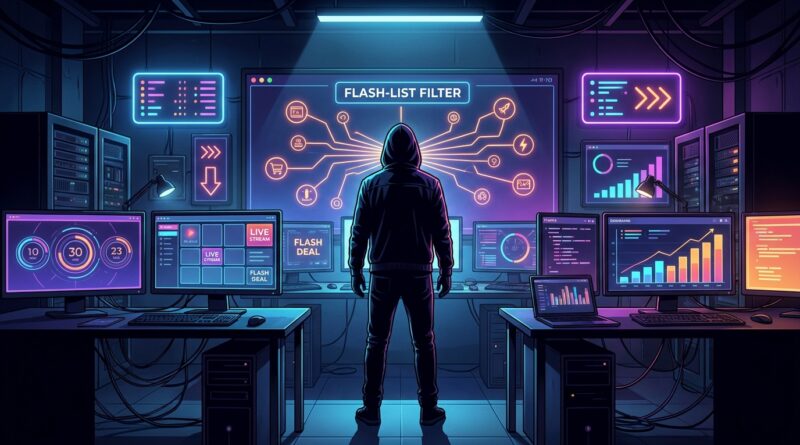
The ‘Flash-List Filter’ Strategy: Turn Random Deal Hunters Into Daily Repeat Buyers
Flash sales can feel exciting and disappointing at the same time. You get the spike. Views jump. Orders come in. Then the timer ends and the crowd disappears back into TikTok Shop, Shopee, Lazada, or wherever they came from. If that sounds familiar, you are not doing anything wrong. Most sellers were taught to chase the burst, not keep the buyer. That is the real gap. A smart ecommerce flash sale email list building strategy does not treat a sale as a one-time event. It treats each flash sale like a sorting tool. Who clicked? Who bought? Who wanted skincare deals, gadget deals, or bundle deals? That is your flash-list filter. Instead of collecting random traffic, you start building small, high-intent groups you can message again tomorrow, next week, and during the next launch. That is how chaotic deal traffic turns into daily repeat buyers you actually own.
⚡ In a Hurry? Key Takeaways
- Use every flash sale to collect and tag buyers by interest, not just to clear stock fast.
- Create one simple opt-in path tied to the deal so you can follow up after the countdown ends.
- This helps you rely less on platform algorithms and grow repeat sales without always cutting prices deeper.
Why flash sales bring traffic but not stability
Flash sales are built for urgency. That is why they work. But urgency also attracts messy traffic. Some people only want the deepest discount. Some are curious. Some are loyal buyers who happened to catch the event. If you treat them all the same, your follow-up gets weak fast.
The problem is not the flash sale itself. The problem is what happens after. Too many sellers let the platform own the relationship. TikTok Shop sends the traffic. Shopee drives discovery. Lazada pushes visibility. Your site might capture some checkout data, but often not enough useful intent data to shape the next offer.
That is where a flash-list filter changes things. You are not just asking, “Did this sale convert?” You are asking, “What kind of buyer did this sale reveal?”
What the ‘Flash-List Filter’ strategy actually is
The idea is simple. Every flash event should feed a list segment. Not one giant list. A filtered list.
Think of it like this. Your flash sale is the magnet. Your list filter is the tray underneath that sorts what came in.
Here is the basic flow
Run a flash sale around one clear hook. Maybe it is “under $20 beauty,” “weekend home gadgets,” or “buy two get one snack bundles.” Then capture shoppers into a matching list or tag based on what pulled them in.
That can happen through:
- Email sign-up for early access
- SMS sign-up for restock alerts
- Messenger or WhatsApp opt-in for future drops
- On-site pop-up tied to the flash theme
- Post-purchase checkbox for similar deals
The key is this. The opt-in must match the sale theme. If the offer was kitchen storage, do not dump those buyers into a generic “newsletter” list. Tag them as kitchen-storage deal shoppers. That sounds small, but it changes everything later.
Why this works better than blasting one big list
Big lists look nice in a dashboard. They often perform badly in real life.
When people join because of one sharp reason, they respond better to the next message that fits that reason. Open rates improve. Click rates improve. Repeat purchase rates improve. You do not need to guess as much.
It also protects your list from burnout. If you send every deal to everyone, people tune out. Fast. That is why list quality matters more than list size.
If your current sale plan is built around short bursts, it also helps to read The ‘Super-Burst Flash’ Strategy: Turn 3‑Hour Ad Windows Into A Sellout Without Torching Your List. It pairs well with this idea because both approaches focus on getting more from a tight sale window without annoying the audience you worked hard to collect.
How to set up a simple ecommerce flash sale email list building strategy
1. Pick one deal angle per flash event
Do not make the sale about everything in the store. That feels bigger, but it gives you weaker data. One angle creates a cleaner signal.
Examples:
- “48-hour hair repair deal”
- “Back-to-school desk setup flash sale”
- “Midnight protein bundle drop”
When the theme is tight, the people who respond are easier to sort and easier to sell to again.
2. Give shoppers a reason to join before the sale starts
Do not wait until checkout. Add an early-access hook.
Good examples:
- Get the link 30 minutes early
- See bundle stock before public launch
- Unlock the bonus gift only through email
- Get first notice if the deal returns tomorrow
This turns anonymous interest into owned contact data before the rush begins.
3. Tag by interest, not just by purchase
This is the part many shops skip. Buyers matter, of course. But non-buyers with clear intent matter too.
If someone clicked three times on pet accessories but did not buy, that is still useful. Tag them. Build a pet-deal segment. The next offer might land better with a lower price, stronger bundle, or better timing.
4. Follow up after the timer ends
Most sellers go quiet the second a flash sale closes. Big mistake.
Your best follow-up window is right after the event, while attention is still warm. Send one of these:
- “Missed it? Join the waitlist for the next drop.”
- “Sold out fast. Want first dibs next time?”
- “You looked at these. Here is a smaller bundle for today only.”
- “Thanks for buying. Want matching deals this week?”
That is where repeat buying starts. Not weeks later. Right then.
The four list buckets that make this strategy work
You do not need a complex CRM setup to start. Four simple buckets are enough for most sellers.
1. Early-access joiners
These people opted in before the sale. They like anticipation. They are often great for launches, VIP drops, and restock alerts.
2. Clickers who did not buy
They showed interest but hit friction. Price, timing, trust, shipping, or distraction. They are ideal for second-chance offers and better bundles.
3. Buyers by category
Do not just tag someone as “customer.” Tag them by what they bought during the flash event. That is what fuels smarter cross-sells later.
4. High-speed buyers
These are the people who buy in the first minutes or first hour. They are your strongest deal responders. Treat them like insiders. They are likely to buy again during future drops.
How this looks across TikTok Shop, Shopee, Lazada, and your own store
Each platform is a little different, but the principle stays the same. Use the platform for discovery. Use your list for retention.
TikTok Shop
TikTok is great at impulse traffic. It is not great at giving you stable control. So your job is to move attention into an owned channel with a reason that feels natural. Early access, restock notice, bundle alert, or VIP code all work.
Shopee and Lazada
Marketplace buyers often behave like deal hunters. That does not mean they are low value forever. It means you need clearer sorting. Category-specific follow-up matters more here because generic promos get ignored quickly.
Your own store
This is where the flash-list filter gets strongest. You can control pop-ups, tags, landing pages, checkout boxes, post-purchase flows, and email timing. Even if most discovery starts elsewhere, your store should be the place where list ownership gets stronger over time.
Common mistakes that ruin flash-sale list building
Using one generic sign-up form
If every flash event feeds the same “subscribe for updates” form, you lose the intent signal that makes follow-up useful.
Only rewarding buyers
Non-buyers who showed strong interest are often your next conversion. Do not ignore them.
Sending too many messages after the event
You want momentum, not spam. One or two sharp follow-ups beat a week of desperate reminders.
Discounting deeper instead of segmenting better
When results are weak, many sellers cut prices more. Often the real fix is better filtering. Better matching beats deeper discounting.
A practical 3-message follow-up sequence
If you want a quick starting point, try this after your next flash event.
Message 1: Right after the sale
“That flash deal moved fast. Want first access to the next [category] drop?”
Message 2: Next day
“You checked out our [category] sale. Here are 3 similar picks picked for you.”
Message 3: Two or three days later
“VIP list gets the next drop 30 minutes early. Join here.”
Simple. Direct. No fancy wording needed.
What success should look like
Do not judge this strategy only by one sale’s revenue. Watch these numbers too:
- Opt-in rate during the flash event
- Tagged list growth by category
- Repeat purchase rate from flash buyers
- Revenue from post-sale follow-up
- Open and click rates by segment
If those improve, your sale machine is getting healthier even before the next big spike.
At a Glance: Comparison
| Feature/Aspect | Details | Verdict |
|---|---|---|
| One-off flash sale | Drives a short traffic spike but leaves little usable audience data after the timer ends. | Good for quick revenue, weak for long-term growth. |
| Flash-list filter approach | Captures and tags shoppers by interest, click behavior, and purchase category for later follow-up. | Best choice if you want repeat buyers and more control. |
| Deeper discounting as the main fix | May lift conversion for one event, but can shrink margins and train buyers to wait for bigger cuts. | Use carefully. Segmentation usually gives better long-term value. |
Conclusion
Flash sales are not going away. They are everywhere now across TikTok Shop, Shopee, Lazada, and brand sites. But most sellers still treat them like one-off fireworks. Bright for a moment, then gone. The smarter move is to turn each sale into a list-building engine. A focused flash-list filter helps you grow an audience you actually control, rely less on shaky algorithms, and make more from each sale window without always dropping prices further. Start small. Pick one flash theme. Add one matching opt-in. Tag the response. Then do it again next time. That is how random deal hunters become daily repeat buyers.