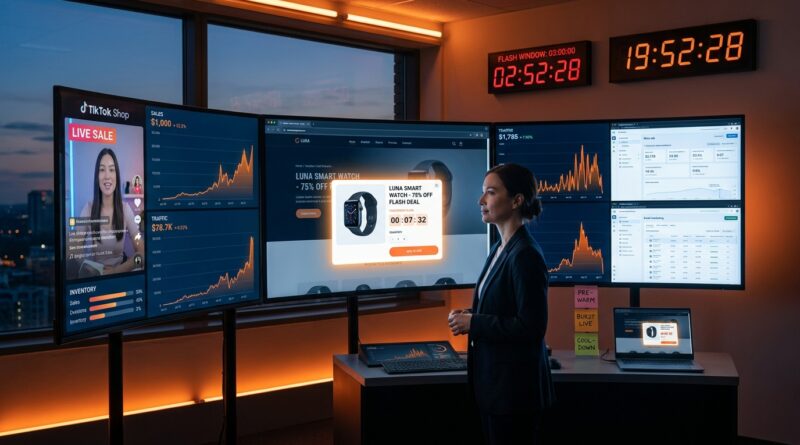
The ‘Super-Burst Flash’ Strategy: Turn 3‑Hour Ad Windows Into A Sellout Without Torching Your List
You can feel the trap here. Every major platform now wants your sale to happen faster, louder, and in a tighter window. So you crank up ads, slap on a discount, send three emails, and hope people rush in before the clock runs out. Then the wrong sizes sell first, your best-margin items get wiped out, tracking gets messy, and your subscribers start rolling their eyes at yet another “last chance” timer. That is why a smart ecommerce flash sale super burst strategy matters. The goal is not more noise. It is tighter control. You pick one short window, usually around three hours, line up one clear offer, make sure stock can handle the rush, and sync your ads, email, SMS, and homepage so everything points to the same moment. Done right, you get the urgency the platforms reward, without training your audience to ignore you the rest of the week.
⚡ In a Hurry? Key Takeaways
- Use a single 3-hour sale window with one offer and one landing experience, instead of stretching discounts across several days.
- Warm your audience 24 hours before the event, then switch ads, email, SMS, and homepage creatives live at the same time.
- Protect profit and trust by limiting sale items, capping inventory, and never using fake countdowns or sloppy stock numbers.
What a super-burst sale really is
A super-burst sale is a short, concentrated push. Think three hours, maybe six at most. Not a week-long “flash” sale that somehow lasts until Sunday night.
The point is simple. Platforms like Meta, TikTok Shop, and Amazon are increasingly favoring intense spikes of shopper activity. They want events. They want velocity. They want lots of people showing up at once.
That means your job is not to keep discounting all week. Your job is to build a clean, believable event that sends buyers to the right products at the right moment.
Why random discounts usually backfire
Small shops often react the same way when they see a sudden promo slot or a chance to boost traffic. They raise ad spend, toss in a coupon, and blast the whole list.
That causes three problems fast.
1. You sell out the wrong products
If your best-selling size or color runs out in the first hour, the rest of the traffic sees disappointment instead of urgency. That kills conversion.
2. You wreck your margins
Blanket discounts are lazy. They often hit products that were already selling fine at full price. So you pay more for traffic and make less per order. Bad combo.
3. You burn audience trust
If every week has a “today only” timer, people stop believing you. Then when you run a real event, it lands with a thud.
The better plan: a weekly super-burst routine
A good ecommerce flash sale super burst strategy is less about being dramatic and more about being organized. You do the same simple routine each time, so the event feels sharp and your team is not scrambling.
Step 1: Pick one goal
Do not try to clear old stock, launch a new product, grow AOV, and acquire new customers all in the same three-hour window.
Pick one main goal, such as:
- Move one hero product
- Lift conversion on a bundle
- Clear a limited pool of seasonal inventory
- Drive repeat buyers back for a members-only drop
If the goal is fuzzy, the sale will be fuzzy too.
Step 2: Choose the right inventory, not just the obvious inventory
This is where many stores get sloppy. The best product for a super-burst is not always the one with the biggest discount potential.
Look for products with:
- Reliable stock depth
- Healthy margin even after the offer
- Clear appeal in one sentence
- Low return risk
- Sizes or variants that can survive a spike
If your product is complex, highly customized, or often backordered, it is a bad fit for a hard traffic spike.
Step 3: Warm the audience for 24 hours
This part matters more than people think. A flash sale works better when shoppers know it is coming. Not the full details, just enough to get attention.
Your warm-up can be simple:
- Email teaser 24 hours before
- Instagram story countdown
- SMS heads-up to VIP buyers
- Homepage banner saying when the event starts
- Retargeting ad creative that hints at the drop
You are not trying to close the sale early. You are building a queue.
Step 4: Flip one scene live everywhere
When the sale starts, every touchpoint should tell the same story. Same offer. Same timing. Same product focus. Same visual style.
That means:
- Ad creative matches the landing page
- Email subject line matches the homepage banner
- SMS links to the exact same sale page
- Countdown timers match across channels
If your ad says “3 hours only” but the website still looks like a normal Tuesday, shoppers get hesitant. Hesitation kills flash-sale momentum.
What to send during the 3-hour window
You do not need ten messages. You need a few well-timed ones.
- Send 1: Sale is live
- Send 2: Mid-window reminder, only if the first email performed decently
- Send 3: Final hour, only to non-openers or clickers who did not buy
SMS
- One message at launch
- One final reminder in the last 30 to 45 minutes, only if your list is used to urgent drops
Ads
Do not start learning from scratch during the event. Have warm retargeting pools ready before launch. The burst is for conversion, not for teaching cold traffic who you are.
How to avoid torching your email list
This is the fear, and honestly it is a fair one. People unsubscribe when every message sounds like a siren.
The fix is not to stop promoting. The fix is to make your promotions feel earned.
Use clear rules
If you run a super-burst weekly, make it predictable. For example, Thursday at 6 p.m. for VIPs. People hate fake urgency. They are fine with scheduled urgency.
Segment aggressively
Do not send every sale to everyone. Past buyers, high-intent browsers, loyalty members, and cold subscribers should not all get the same treatment.
Alternate value and promotion
If every email asks for money, fatigue is guaranteed. Mix in useful content, product education, customer stories, and rest days. Your list should not feel like a discount vending machine.
Protect your margins before the sale starts
Urgency is exciting. Margin mistakes are not.
Before you launch, answer these questions:
- What is the minimum gross margin I can accept?
- Do I really need a discount, or would a bundle or gift work better?
- Should shipping thresholds change during the window?
- Are some variants excluded to protect stock?
Sometimes the best flash offer is not 25 percent off. It might be a limited bundle, early access, free gift with purchase, or bonus loyalty points. Those can preserve margin much better while still feeling special.
The homepage matters more than brands think
Your ad can be brilliant and your email can be perfect, but if shoppers click through to a generic homepage, the whole thing softens.
During the burst window, your site should act like an event page. Put the offer front and center. Remove distractions. Feature the exact products in the promo. Make mobile checkout easy. Keep the countdown honest.
This is where many small stores lose the advantage. They buy the traffic but do not stage the room.
Watch these numbers during and after the burst
You do not need a giant analytics team. You just need to watch a few numbers that tell the truth.
Before the sale
- Stock depth by top variants
- Landing page load speed
- UTM and pixel checks
- Email and SMS link testing
During the sale
- Conversion rate
- Revenue per session
- Top variant sell-through
- Cart abandonment spikes
- Ad frequency and CPA
After the sale
- Margin by product sold
- New vs repeat customer mix
- Unsubscribe and opt-out rates
- Refund and return rate
- Did the timer and inventory claims match reality?
That last one matters. If your sale says “only 20 left” and somehow it says the same thing all afternoon, customers notice.
A simple example of a 24-hour super-burst timeline
Day before
- 10 a.m. Confirm inventory and sale page
- 1 p.m. Queue teaser email
- 4 p.m. Start warm-up social posts and retargeting creative
- 8 p.m. Add homepage teaser banner
Sale day
- 9 a.m. Final tracking and checkout test
- 11:45 a.m. Staff ready for support and stock checks
- 12 p.m. Sale goes live across ads, email, SMS, and homepage
- 1:30 p.m. Mid-window reminder if conversion is strong and stock is holding
- 2:30 p.m. Final hour push to engaged non-buyers
- 3 p.m. Sale ends cleanly everywhere
Common mistakes to avoid
- Discounting too many SKUs at once
- Sending the whole list the same message
- Forgetting to update the homepage and product pages
- Using fake countdowns that reset later
- Ignoring support coverage during the burst
- Letting ads continue after the offer has ended
- Not planning what happens if one size or color sells out early
When this strategy works best
This approach is great for stores that already have some audience attention but need a cleaner way to turn that attention into a short conversion spike.
It works especially well for:
- DTC brands with repeat buyers
- Shops with one or two hero products
- Seasonal or event-driven campaigns
- Pre-BFCM testing
- Prime-style competitive windows
If your store is brand new and nobody knows you yet, a super-burst alone will not fix that. You still need demand generation and trust-building first.
At a Glance: Comparison
| Feature/Aspect | Details | Verdict |
|---|---|---|
| Sale length | A 3-hour window creates real urgency and cleaner tracking than a 3-day “flash” sale. | Best for focus and credibility |
| Offer structure | A limited hero offer, bundle, or gated discount usually protects margin better than sitewide markdowns. | Safer for profit |
| Audience messaging | A 24-hour warm-up plus synchronized launch across ads, email, SMS, and homepage feels intentional instead of spammy. | Best for conversion and list health |
Conclusion
The big shift here is simple. Stop thinking of flash sales as random discounts and start treating them like short, coordinated events. That is what the platforms are rewarding right now. Meta’s new Super Burst placements and TikTok’s official flash sale slots are pushing brands toward concentrated traffic spikes, not slow drips of promo noise. If you just throw more budget at the problem, you can easily end up with oversold sizes, broken tracking, thin margins, and an audience that no longer trusts your timers. A basic weekly super-burst routine gives smaller shops a much better option. Keep the right inventory ready, warm people up for 24 hours, then switch one clear story live across ads, email, SMS, and your homepage. You get stronger conversion in those peak hours, less list fatigue, and a repeatable playbook you can use again for BFCM, Prime-style event periods, and your own product drops.