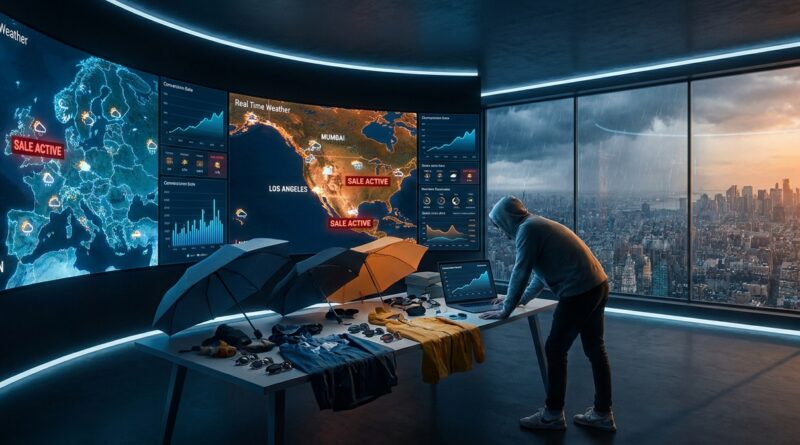
The ‘Storm-Window Flash’ Strategy: Turn Real‑Time Weather Spikes Into One‑Day Sellouts
Flash sales are frustrating when they feel like a coin toss. You line up the discount, send the emails, pay for the ads, and then watch shoppers shrug because they have seen the same “weekend deal” ten times already. That is the real problem with most promo calendars. They are easy for brands to plan, but not always tied to what people actually need right now. A weather triggered ecommerce flash sale strategy fixes that by matching the offer to the moment. If rain is about to hit Chicago, push umbrellas, waterproof boots, and jacket covers there for one day. If an unexpected heatwave lands in Atlanta, switch on SPF, portable fans, and linen shirts for that city only. The point is simple. You are not discounting for the sake of noise. You are responding to a real-life problem at the exact moment buying intent jumps.
⚡ In a Hurry? Key Takeaways
- A weather triggered ecommerce flash sale strategy uses forecast changes to start short, city-specific promotions when demand is most likely to spike.
- Start with one simple rule, like rain probability above 70 percent, and connect it to a matching product collection, ad set, and email or SMS flow.
- This approach can protect margin better than random discounting because offers only run when customer need is obvious and time-sensitive.
Why the usual flash sale calendar is getting tired
Most merchants still run promos on habit. Payday. Friday. End of month. Holiday weekend. Those dates are easy to schedule, but they are also crowded. Your customers get hit from every direction. Every inbox looks the same. Every ad feed is full of “limited-time” deals that do not feel limited at all.
That creates two problems. First, shoppers stop reacting. Second, you train them to wait for the next coupon. Neither one helps cash flow.
A weather-based trigger is different because it is rooted in context. It feels timely because it is timely. Nobody needs to be convinced that rain boots matter when the forecast just turned ugly. The need has already arrived.
What the “storm-window flash” strategy actually is
Think of it as a simple if-this-then-that rule for commerce.
The basic formula
If a specific weather condition appears in a specific city, then a matching product collection goes into flash-sale mode for a short window.
For example:
- If rain probability goes above 70 percent in Seattle, run a 12-hour sale on umbrellas, waterproof shoes, and rain jackets.
- If temperature jumps above 90 degrees earlier than normal in Dallas, run a same-day sale on SPF, breathable bedding, and summer apparel.
- If snow is forecast in Denver, promote home-office gear, coffee bundles, blankets, and indoor activity products.
The trigger matters. The category match matters even more.
Why this works
Good flash sales catch intent at the moment it wakes up. Weather is one of the cleanest signals for that because it changes routines fast. People suddenly realize they are missing something. That missing item becomes urgent. Your job is to be there before a competitor is.
Why a weather triggered ecommerce flash sale strategy can outperform generic discounts
This is not magic. It is just better timing.
It feels genuinely urgent
“Today only” means more when the reason is obvious. Rain is coming. Heat is here. Snow starts tonight. That kind of urgency makes sense to shoppers. You do not have to manufacture it with too much marketing copy.
It can waste less ad spend
Instead of pushing a broad sale to everyone, you spend against the places where intent is likely to jump. That usually means tighter geography, smaller audiences, and cleaner creative.
It can protect margin
You are not discounting your whole catalog. You are discounting a narrow set of products for a short period in selected markets. That is much easier to control.
It cuts promo fatigue
Your list does not need another “surprise sale” every week. But it may respond well to a message that says, “Storm moving in. 20% off rain essentials until 8 PM.” One sounds lazy. The other sounds useful.
How to set it up without turning your team into a weather station
The good news is that this can start small. You do not need a giant data team.
Step 1: Pick one weather trigger
Do not begin with ten conditions across fifty cities. Start with one.
Good starter triggers include:
- Rain probability above 70 percent
- Temperature above a set threshold
- First frost or snow alert
- Air quality or pollen spikes, if relevant to your products
Step 2: Match it to one product family
This is where many brands overcomplicate things. Keep the link obvious.
- Rain: umbrellas, waterproof bags, boots, outerwear
- Heat: SPF, hats, fans, cooling bedding, hydration products
- Cold or snow: blankets, heaters, home-office gear, indoor essentials
If a shopper has to think too hard about why the offer exists, the fit is weak.
Step 3: Limit the geography
Do it city by city or region by region. Weather is local. Your campaign should be too.
A heatwave in Phoenix is not the same thing as an unusual 88-degree day in Boston. One is normal. The other changes behavior.
Step 4: Build the flash assets in advance
Create the collection pages, ad creative, email templates, and SMS copy before the trigger ever fires. That is the whole trick. You do the work once, then let the rule switch it on.
Have these ready:
- A city-aware landing page or collection
- Paid social and search ads
- Email and SMS templates
- Site banner copy
- Automatic shutoff rules
Step 5: Set an end time
This part matters. A storm-window sale should stop when the opportunity passes. If the weather event ends and the discount stays up another two days, you lose the point.
What tools you need in plain English
You need three basic parts working together.
A weather data source
This can be a weather API or a no-code tool that pulls forecast data by city. The key is reliable, current forecast info.
Your marketing automation platform
This is what listens for the trigger and starts the campaign. It can activate emails, texts, audiences, site banners, or all of them.
Your store or product feed rules
This controls what collection goes live, what discount applies, and when the campaign turns off again.
If your stack already handles segmented campaigns and timed promos, you are closer than you think.
Examples by vertical
Apparel
Unexpected cold snap? Push thermals, knitwear, gloves, and waterproof layers in that region only.
Beauty
First big heatwave? Promote SPF, facial mist, anti-frizz products, and lightweight skincare.
Home goods
Snow day forecast? Feature desks, laptop stands, coffee gear, throws, and lighting for people about to work from home.
Footwear
Heavy rain trigger? Spotlight water-resistant sneakers, boots, and fast-drying socks.
Pet products
Heat alert? Push cooling mats, portable water bottles, and sun-safe pet accessories.
What to watch out for
This strategy is smart, but it is not automatic money. A few mistakes can ruin it.
Do not discount products people would buy anyway at full price
If the item is already flying off the shelf during a weather event, you may not need much of a discount. Sometimes better placement and faster messaging are enough.
Do not pick weather triggers that are too common
If “warm day” happens every week, shoppers will catch on fast. The best triggers are meaningful changes, not background conditions.
Do not forget inventory
If you trigger a rain campaign across three cities and only have 40 umbrellas left, you are going to annoy people. Connect the rule to stock levels if possible.
Do not overmessage
Just because you can trigger by weather does not mean every cloud deserves a campaign. Keep it selective so the sale still feels special.
How to measure whether it is working
Look beyond raw revenue. A weather triggered ecommerce flash sale strategy should improve efficiency too.
Track:
- Conversion rate by triggered city versus control city
- Revenue per recipient for email and SMS
- Return on ad spend during weather windows
- Average order value
- Sell-through of targeted inventory
- Unsubscribe or opt-out rate
If conversions rise but opt-outs also spike, your message may be too frequent or too broad. If traffic is strong but sales stay flat, your product match may be off.
A simple starter playbook
If you want to test this without a giant project, use this version:
- Choose one city cluster.
- Choose one trigger, such as rain probability above 70 percent.
- Choose one collection, such as waterproof essentials.
- Set a 6- to 12-hour discount window.
- Send one email, one SMS, one paid social ad set, and one homepage banner.
- Compare against a similar non-triggered day.
That is enough to tell you whether the idea deserves expansion.
Why this matters more right now
Merchants are dealing with crowded promo calendars, softer ad results, and shoppers who are getting very good at waiting. That is why this strategy stands out. It is not just another markdown. It is a useful offer attached to a real moment.
And because it is built on rules, it can scale once you prove it. One city becomes five. One category becomes three. One weather event becomes a repeatable playbook.
At a Glance: Comparison
| Feature/Aspect | Details | Verdict |
|---|---|---|
| Traditional calendar flash sale | Runs on fixed dates like Fridays, paydays, or holiday weekends, often with broad audiences and broad discounts. | Easy to plan, but often noisy, overused, and weaker on urgency. |
| Weather-triggered flash sale | Starts only when a forecast condition appears in a target city and promotes products tied to that exact need. | Stronger context, better timing, and usually a cleaner use of margin. |
| Operational complexity | Needs a forecast feed, prebuilt assets, and automation rules, but can start with one trigger and one collection. | A little more setup upfront, but very practical once the system is in place. |
Conclusion
The best part of a storm-window sale is that it brings common sense back into discounting. Instead of cutting prices because the calendar says you should, you act when a shopper’s need becomes real. Umbrellas and waterproof boots go live when rain probability jumps above 70 percent. SPF and linen show up on the first surprise heatwave. Home-office gear gets its moment when snow keeps people inside. That is a smarter way to use inventory, ad spend, and attention. You are not burning margin on random sale days. You are focusing on the exact hours when intent is most likely to spike. For merchants trying to get more from the same traffic, this is a practical playbook. Build the rule once, test it in one market, then copy what works. Done well, a weather triggered ecommerce flash sale strategy can mean cleaner lists, less promo fatigue, better cash flow, and one very nice advantage before the rest of the market catches on.