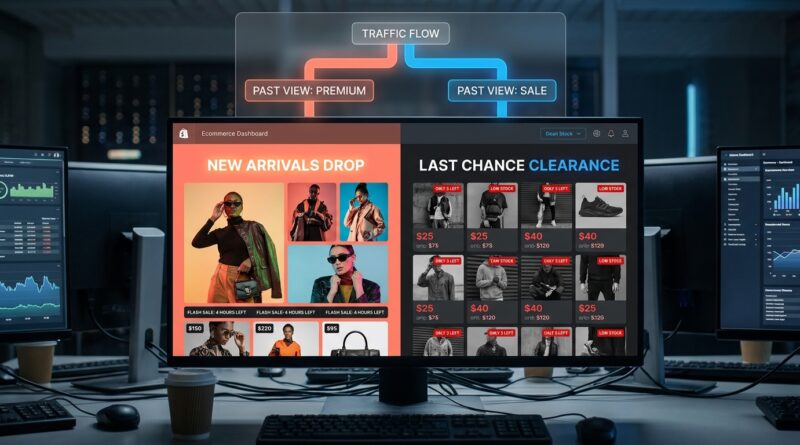
The ‘Intent-Pair Flash’ Strategy: Match Every Shopper To The Right Sale Instead Of Slashing Prices For Everyone
Flash sales are frustrating when they seem busy but somehow leave you poorer. You send one big discount to everyone, orders come in, and then you realize you just gave away margin to people who probably would have bought anyway. Worse, the shoppers hunting your newest drops get the same message as the people waiting for a bargain bin deal. That is where things go sideways. A smart ecommerce flash sale personalization strategy starts by accepting one simple truth: not every customer wants the same carrot. Some want first access, some want lower prices, and some just need a nudge. If you match the offer to the shopper’s intent instead of blasting a blanket promo, you protect your best products, move old inventory faster, and stop teaching loyal buyers to hold out for 30 percent off. The good news is you do not need a giant data team to do this well.
⚡ In a Hurry? Key Takeaways
- Match flash sale offers to shopper intent, not your entire list, if you want better margins and cleaner results.
- Start with two simple groups. New Arrivals shoppers get access or perks. Clearance shoppers get the stronger discount.
- This is a practical setup for smaller stores and can plug into Klaviyo, Shopify audiences, and TikTok custom lists without a huge rebuild.
Why blanket flash sales quietly hurt your store
A flash sale feels productive because it creates movement fast. You see opens, clicks, carts, orders. It looks alive.
But a lot of that activity hides a bad trade. The customer who loves your new collection does not need the same heavy discount as the shopper who only wakes up for markdowns. When both get the same offer, you lose money on the first group and fail to push hard enough on the second.
That is the real issue. It is not that discounts are bad. It is that the same discount for everyone is lazy pricing.
A good ecommerce flash sale personalization strategy fixes that by pairing message and incentive to buying intent.
What “Intent-Pair Flash” actually means
Think of it like sorting people by what they usually respond to.
Group 1: Newness buyers
These are shoppers who click new arrivals, browse recent launches, buy near full price, and care about getting the good stuff before it sells out.
For them, your flash sale offer should protect margin. Try early access, limited inventory alerts, a small gift, bonus loyalty points, or a tight discount on select new items instead of a storewide cut.
Group 2: Deal-driven buyers
These shoppers click sale tabs, wait for promo texts, buy from clearance, and respond when the price feels meaningfully lower.
For them, use the stronger markdown. This is where you move slow stock, aging sizes, end-of-season colors, and products that need a push.
Same sale window. Different carrots. Better economics.
How to spot intent without fancy tools
You do not need a full CDP or months of setup. Most scrappy stores already have enough signals sitting in plain view.
Use browsing behavior
If someone repeatedly visits new arrivals, launch pages, or product pages for recently added items, that is a clue. If they spend time on sale pages and filtered markdown collections, that is another clue.
Use purchase history
Look at full-price versus discounted orders. Shoppers who regularly buy without codes should not be first in line for your deepest cuts. Shoppers who mostly convert during sales probably need a price-led offer.
Use campaign engagement
Who clicks “just dropped” emails? Who clicks “last chance markdown” texts? You already have a rough intent map if you look at engagement by campaign theme.
Use recency
Someone who viewed new products this week is not the same as someone who has ignored your last six launches but clicked three sale sends in a row.
That is enough to build two or three usable segments tonight.
A simple setup in Klaviyo, Shopify audiences, and TikTok
This is why the strategy works for smaller operators. The setup is not glamorous, but it is realistic.
In Klaviyo
Create segments like:
- Viewed New Arrivals 2 or more times in 30 days
- Purchased full price in the last 90 days
- Clicked sale campaign 2 or more times in 60 days
- Purchased from clearance or with a discount code in the last 120 days
Then build two sale messages. One for newness. One for deal seekers.
In Shopify audiences
Use product collections and customer tags to separate launch-focused shoppers from clearance-focused shoppers. Even simple tagging can help your ad and email logic stay clean.
In TikTok custom lists
Upload or sync the same audience logic for paid retargeting. That way your deal-seeking segment sees markdown-led creative while your new-arrivals segment sees urgency, exclusivity, and fresh product hooks.
The point is consistency. If your email says “VIP first pick” but your ads scream “30% off everything,” you blur the signal and train the wrong behavior.
What each segment should actually see
This is where many stores overcomplicate things. Keep the sale architecture simple.
Offer ideas for New Arrivals addicts
- Early access for 6 to 12 hours
- Limited stock warning on new pieces
- Gift with purchase
- Bonus points or store credit on full-price buys
- Small, selective discount instead of storewide markdown
These shoppers often care more about getting the item than squeezing every dollar out of it.
Offer ideas for Clearance hunters
- Extra percentage off sale items
- Buy more, save more on aging inventory
- Clearance-only flash window
- Free shipping threshold aimed at moving multiple units
This is where the heavier markdown earns its keep because it is doing a job. It is cleaning up stock you actually want gone.
How this protects margin without killing excitement
The big fear is that a segmented sale feels smaller or less exciting. Usually the opposite happens.
Why? Because relevance beats volume. A shopper who loves new drops is more likely to act on “You get first access to the latest collection until midnight” than “30% off sitewide.” It feels personal and scarce, not generic.
And the discount-focused shopper sees a deal that actually matters to them, instead of a half-hearted promo on products they do not care about.
If you also want to raise cart size during these campaigns, pair this with The ‘Cluster-Flash’ Strategy: Turn One Smart Bundle Into A Higher AOV Stampede. It fits especially well when your clearance audience is likely to add one more item if the bundle math feels obvious.
A practical rollout you can do this week
You do not need a grand rebuild. Start small.
Step 1: Pick one upcoming flash sale
Do not redo your whole marketing system. Use the next sale as a test.
Step 2: Build just two segments
One segment for new-arrivals intent. One for discount intent. Keep the rules simple and readable.
Step 3: Create two offers
Do not make five versions. Two is enough to prove the point.
Step 4: Keep the landing paths separate
Send each segment to the page that matches the promise. Newness shoppers should land on fresh inventory or curated launch products. Deal shoppers should land on sale or clearance collections.
Step 5: Compare margin, conversion, and AOV
Revenue alone can fool you. Check what happened to gross margin, average order value, and the mix of products sold.
Common mistakes to avoid
Giving your best customers the worst habit
If your loyal full-price buyers keep getting broad discounts, they learn to wait. That is hard to undo.
Segmenting by demographics instead of behavior
Age and location rarely tell you as much as clicks, product views, and order history.
Making the sale too complicated internally
If your team cannot explain the logic in one minute, it is probably too messy to run well.
Forgetting inventory goals
This strategy works best when tied to stock reality. Protect the products with healthy demand. Push the products that need help.
What success looks like
A good result is not just “the flash sale made sales.” That is the low bar.
A better result looks like this:
- Higher sell-through on stale inventory
- Stronger margins on newer products
- Fewer unnecessary discounts to full-price buyers
- More relevant messages and better click rates
- Less dependence on blanket 30 percent off campaigns
That is the real win. You are still using urgency, but you are using it with intent.
At a Glance: Comparison
| Feature/Aspect | Details | Verdict |
|---|---|---|
| Blanket flash sale | Same discount to every subscriber, regardless of browsing or buying behavior | Easy to launch, but usually wastes margin and trains customers to wait |
| Intent-paired sale setup | Different offers for newness shoppers and deal shoppers based on real behavior signals | Best mix of relevance, profit protection, and inventory movement |
| Tooling required | Can be built with Klaviyo segments, Shopify audiences, and TikTok custom lists | Very doable for smaller ecommerce teams without a long roadmap |
Conclusion
The stores winning flash sales right now are not always the loudest. They are usually the ones putting the right carrot in front of the right person. That is why an ecommerce flash sale personalization strategy matters so much. Intent-paired flash sales help you keep stronger margins on new products, quietly clear dead stock with shoppers who love a bargain, and stop teaching your best customers to wait for a sitewide discount. Best of all, this is not some giant enterprise project. For scrappy operators, it is a fast upgrade you can plug into Klaviyo, Shopify audiences, and TikTok custom lists without a six-month rebuild. Same traffic. Smarter offer. Better sale.