The ‘Micro-Window Flash’ Strategy: Turn 7‑Minute Traffic Spikes Into Predictable Cash
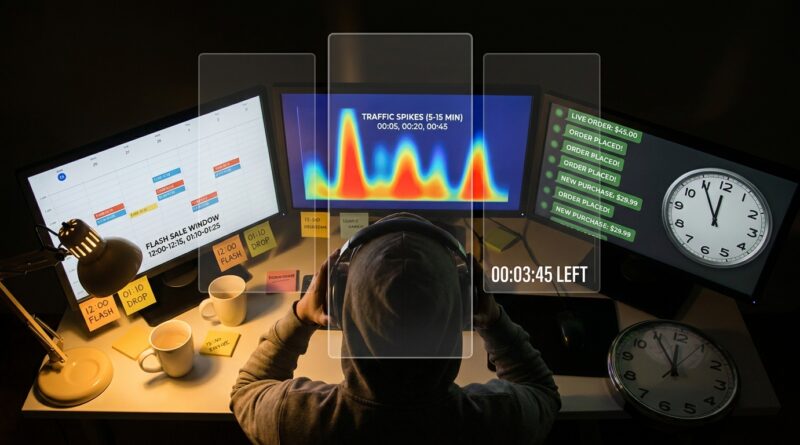
You are not crazy if your flash sales feel broken. A lot of shops run a 24-hour discount, blast it out everywhere, then wonder why the numbers look soft. The problem often is not the offer. It is the timing. Your shoppers do not arrive in one neat block and hang around all day waiting for the best moment to buy. They come in short bursts, especially from TikTok Shop, lives, email clicks, and marketplace traffic. Some stay seven minutes. Some stay less. So when your promo runs for hours, you are usually over-discounting for dead time and missing the exact windows when intent is highest. That is where a micro window flash sale strategy ecommerce teams can use right away starts to make sense. Instead of treating the whole day like one long event, you match small, real discounts to the short periods when people are actually watching, clicking, and adding to cart.
⚡ In a Hurry? Key Takeaways
- Stop running blanket all-day promos. Use short sale windows during the 5 to 15 minute traffic spikes your data already shows.
- Start by finding three to five daily moments when live views, add-to-cart rate, or checkout starts rise, then attach a modest flash offer only to those windows.
- Keep it honest. Avoid fake strike-through pricing, endless timers, or “last chance” language that quietly resets every day.
Why your current flash sale feels wasteful
Most flash sales are not really flash sales. They are long discounts wearing a louder hat.
You put a countdown on the site. You send the text. You post the story. Then traffic drips in at odd times, while the discount keeps running whether anyone is there or not.
That creates two problems. First, margin gets chewed up during low-intent periods. Second, shoppers start learning that your “urgent” promos are not actually urgent.
This is why the timing piece matters so much. Recent live-commerce patterns across TikTok and similar platforms point to engagement arriving in short, repeatable pockets. Not neat hourly blocks. Not all afternoon. Small surges.
What the Micro-Window Flash strategy actually is
A micro-window flash sale strategy ecommerce brands can use is pretty simple.
You look for short periods during the day when performance jumps. That might be a 7-minute bump in live viewers, a 10-minute stretch where add-to-cart rises, or a short post-email burst where checkout starts moving. Then you place your offer inside that window only.
Think three to five windows per day. Not twenty. Not every hour on the hour.
The offer itself should be small but meaningful. For example:
- 10% off one featured product for 8 minutes
- Free shipping for the next 12 minutes during a live
- Bundle pricing unlocked only during the high-intent traffic pocket
- A free low-cost add-on for the next 7 minutes
The point is not bigger discounts. The point is better timing.
Why this works better than broad 24-hour urgency
It matches real shopper behavior
People on social and live-commerce platforms move fast. They dip in, react, comment, click, then disappear. If your sale starts doing its best work two hours after that burst ends, you missed the moment.
It protects margin
If you only discount when conversion intent rises, fewer low-value sessions get the same deal. You are not paying for empty hours.
It reduces promo fatigue
Your list gets fewer blanket sale messages. Your audience sees a sharper, more believable reason to act now.
If this sounds close to the idea behind The ‘Micro-Burst Flash’ Strategy: Run 12-Minute Sales That Don’t Train Shoppers To Wait For Discounts, that is because both approaches fix the same bad habit. Shops keep stretching “flash” until it means almost nothing.
How to find your micro-windows
You do not need fancy software to start. You need decent observation.
1. Check where short spikes already happen
Look at:
- Live view count by minute
- Add-to-cart events by time of day
- Email click bursts after sends
- TikTok Shop session peaks
- Marketplace traffic surges
- Checkout starts after product demos or creator mentions
You are looking for repeatable clusters, not one lucky spike from last Thursday.
2. Mark three to five windows
Pick short windows that show up often enough to matter. For example:
- 12:08 p.m. to 12:17 p.m. after lunch-hour email clicks
- 6:42 p.m. to 6:50 p.m. during your TikTok live product demo
- 9:05 p.m. to 9:15 p.m. after creator repost traffic hits
That is your starting map.
3. Match the right offer to the right moment
Not every spike needs the same promo.
High-view, low-cart windows may need a simple nudge like free shipping. High-cart, low-conversion windows may respond better to a small price drop or bundle sweetener. Repeat customer windows may work with loyalty perks instead of discounts.
What to run in a 7-minute traffic spike
A short window needs a short message.
Good examples:
- “Live-only. 8 minutes. Free shipping on this set.”
- “For the next 10 minutes, buy 2 get the 3rd at 50% off.”
- “Next 7 minutes only. Add this item and unlock a free accessory.”
Weak examples:
- “Huge sale happening now”
- “Today only” when you run it every other day
- “Last chance” when the timer comes back tomorrow morning
The sharper and more honest the message, the better it tends to work.
How to stay compliant and avoid fake urgency
This part matters. Short promos can be effective without being sketchy.
Use real time limits
If the offer ends at 2:17 p.m., it should actually end at 2:17 p.m.
Use real reference pricing
Do not invent a “was” price just to make the discount look bigger. Make sure any compare-at or strike-through price follows the rules in the markets where you sell.
Do not keep recycling the same “exclusive” timer
If every visitor sees the same personal countdown that resets endlessly, trust drops fast. Regulators also tend not to love that.
Keep records
Save screenshots, sale logs, and pricing notes. If you ever need to show that your offer was real and time-bound, you will be glad you did.
A simple 1-week rollout plan
Day 1: Find your spikes
Review the last two to four weeks of traffic and conversion patterns. Highlight short, repeatable bursts.
Day 2: Pick one product or category
Do not test this across your entire store first. Start with one hero item, one bundle, or one live-shopping segment.
Day 3: Set three micro-windows
Choose three windows for one day. Keep each one between 5 and 15 minutes.
Day 4: Write clean promo copy
Prepare the exact message, landing page changes, and timer setup. Keep the language plain and specific.
Day 5: Run the test
Push traffic as normal through live, email, or marketplace channels. Do not add ten extra variables.
Day 6: Compare results
Measure conversion rate, average order value, margin per visitor, and revenue per session during the windows versus outside them.
Day 7: Adjust
Keep the windows that converted well. Drop the dead ones. Try a better offer in one weak slot.
Mistakes that can ruin the strategy
Making the windows too frequent
If every hour becomes a “special moment,” the special part disappears.
Discounting too deeply
This strategy is about precision, not panic. Small, targeted offers often do better than big all-day markdowns.
Ignoring fulfillment reality
If a live-driven spike creates orders you cannot ship cleanly, the short-term lift is not worth the customer service mess.
Looking only at revenue
Watch margin per visitor too. A micro-window that produces slightly lower top-line sales but much better margin can still be the better move.
At a Glance: Comparison
| Feature/Aspect | Details | Verdict |
|---|---|---|
| Timing style | Micro-window sales target 5 to 15 minute intent spikes instead of broad 2 to 24 hour discount periods. | Better fit for live-commerce and social traffic. |
| Impact on margin | You give discounts to fewer low-intent visitors because the offer only appears when behavior suggests buying intent is up. | Usually more efficient than all-day promos. |
| Customer trust | Works best when timers are real, pricing is truthful, and the promotion actually ends when you say it does. | Strong long-term value if run honestly. |
Conclusion
You do not need more noise. You need better timing. Right now, plenty of e-commerce brands are piling on more lives, more TikTok Shop flash deals, and more urgent copy while missing the real issue. Shopper attention comes in short, repeatable bursts, often 5 to 15 minutes long. If you keep using blunt 2-hour, 4-hour, or 24-hour promos, you are discounting for people who were never there. A micro window flash sale strategy ecommerce teams can start this week gives you a cleaner way to match the offer to the moment. Spot three to five daily windows where live views or add-to-cart rates climb, attach a small but worthwhile offer to those exact periods, and keep the whole thing honest and compliant. The upside is practical, not theoretical. Better conversion. Better margin per visitor. Less promo fatigue. For an under-resourced shop, that is a smart structural fix, and one of the fastest ways to get more from the traffic you already have.