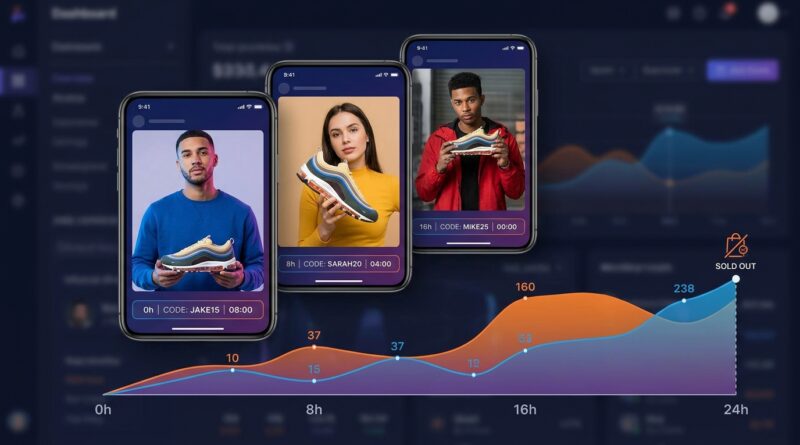
The ‘Creator-Relay Flash’ Strategy: Turn 3 Tiny Influencers Into One 24‑Hour Sell‑Out
You know the drill. You line up one bigger creator, send one email, cut the price for a few hours, and hope the internet notices. Sometimes it works. More often, it sputters. Traffic comes in a burst, sales are uneven, and by the next morning you are left wondering whether the influencer helped, the email did the work, or the discount simply gave away margin you did not need to lose. That is frustrating, especially for smaller shops that cannot afford to keep guessing.
A smarter ecommerce flash sale influencer strategy is the creator-relay flash. Instead of betting everything on one loud post, you line up three smaller influencers to push the same hero offer in sequence over 24 hours. Each creator gets a specific time slot, a trackable link or code, and a content angle that fits their audience. You get repeated bursts of attention, cleaner data, and a better shot at selling out without turning your whole brand into a permanent coupon bin.
⚡ In a Hurry? Key Takeaways
- Use three small creators in staggered time slots instead of one big post if you want a tighter, more measurable flash sale.
- Give each creator a unique code, link, and message angle so you can see what actually converts.
- Keep the offer tied to a single hero product or bundle to protect margins and avoid a messy sale that confuses shoppers.
What the creator-relay flash actually is
Think of it like a relay race, not a fireworks show.
One creator starts the sale. A second creator picks it up a few hours later. A third closes the day with urgency and social proof. All three point to the same product, the same landing page, and the same deadline. The sale stays focused. The audience keeps refreshing. Your brand gets multiple moments to be seen instead of one quick spike and silence.
This works especially well for shops selling a clear hero item. A bestselling skincare set. A kitchen gadget bundle. A limited apparel drop. One strong offer is easier to explain, easier to track, and easier to buy on impulse.
Why the old flash sale playbook is wearing out
Shoppers are split across platforms, inboxes, and time zones. One post can disappear in an hour. One email can land while people are driving, working, or ignoring promotions. Then the sale ends before many of your best buyers even notice.
That is why timing matters as much as the discount itself. If you have ever watched a countdown expire while your audience was barely awake, it is worth reading The ‘Sync-to-Clock Flash’ Strategy: Match Your Sale Window To When Your Buyers Actually Shop. It pairs nicely with this approach because a relay only works if each handoff happens when real people are ready to shop.
Why three tiny influencers can beat one bigger one
Trust is often stronger in smaller communities
Micro and nano creators usually have tighter audience relationships. Their followers ask questions. They reply. Recommendations feel more personal and less like an ad read.
You get more than one shot at attention
A single big post creates one moment. Three creators create three moments. That matters because many shoppers need to see an offer more than once before buying.
Your risk is spread out
If one creator underperforms, the whole sale is not dead. The next two can still carry it. That is a much safer setup for a smaller business.
Your data gets cleaner
With separate codes and links, you can finally answer the question every owner asks after a sale. What actually worked?
How to set up a creator-relay flash in one day
1. Pick one hero offer
Do not send creator traffic to a broad “everything is on sale” page. That is where good attention goes to get lost.
Choose one product or one simple bundle. Make the value obvious fast. If the shopper has to browse, compare, and think too much, the flash part of your flash sale disappears.
2. Find three creators with different but adjacent audiences
You are not looking for the biggest follower count. You are looking for fit.
Good mix:
- Creator 1: Awareness. Great on short video or story-driven intros.
- Creator 2: Education. Good at demos, comparisons, or showing the product in use.
- Creator 3: Conversion. Strong at urgency, testimonials, and “last chance” pushes.
Example. If you sell a hydration product, your three creators might be a fitness coach, a wellness creator, and a busy-mom lifestyle reviewer. Different audiences. Same core need.
3. Assign each creator a job and a time slot
Do not let everyone post whenever they feel like it. That ruins the relay.
A simple 24-hour structure:
- 9 a.m. Creator 1 announces the drop and shows the product problem it solves.
- 2 p.m. Creator 2 demonstrates how it works and answers likely buyer objections.
- 8 p.m. Creator 3 pushes urgency with “ends tonight,” plus customer reactions or stock updates.
This gives the sale a rhythm. It also lets you spot which part of the day produced the strongest revenue.
4. Give each creator a unique code and URL
This is the part many brands skip, then regret later.
Every creator should have:
- A unique discount code
- A trackable UTM link
- A custom landing page headline if possible
- A clear call to action
Now you can measure clicks, conversion rate, average order value, and revenue by creator. No guessing. No “we got a lot of buzz” reports.
5. Tie discounts to performance, not panic
You do not need to hand out the deepest discount at the start.
Try a tiered setup:
- Creator 1 gets free shipping or a small bonus gift.
- Creator 2 gets 10% off.
- Creator 3 gets the strongest closeout perk, but only for the final few hours.
This keeps your margins healthier and gives people a reason to act now instead of waiting for your next sale.
What the content should look like
Creator 1: Start with the problem
This post should make people feel seen. “If you hate X, this fixes it.” Fast, simple, relatable.
Creator 2: Show the product in real life
This is where demos shine. Show how it works. Show what is inside the bundle. Answer the question a shopper would ask right before buying.
Creator 3: Close with proof and urgency
This creator should sound like the friendly nudge, not a late-night infomercial. Use lines like “popular sizes are going fast” only if they are true. If not, stick to the real deadline and real reasons to act.
Common mistakes that wreck the strategy
Using creators with overlapping audiences only
Some overlap is fine. Total overlap means you are paying three people to talk to mostly the same buyers.
Changing the offer mid-sale
If one creator promotes 10% off and another says 15% off with a gift, shoppers get confused and may wait. Keep the structure clear.
Sending traffic to your homepage
Never make people hunt. Creator traffic should land exactly where the promised item lives.
Running the sale at the wrong hours
A relay is still a timing game. If your buyers shop late at night, an early afternoon close may leave money on the table.
Ignoring post-sale analysis
The sale is not over when the timer hits zero. That is when the useful part begins. Which creator drove the best conversion rate? Which time slot had the best average order value? Which content angle got the cheapest sale?
How to measure whether it worked
Do not judge success by revenue alone. Look at:
- Traffic by creator
- Conversion rate by creator
- Revenue by creator
- Average order value
- Refund rate
- New customer percentage
- Email or SMS signups from the landing page
One creator may bring fewer clicks but better buyers. Another may create a lot of noise and very few sales. That is exactly the kind of insight a good ecommerce flash sale influencer strategy should give you.
Who this works best for
This setup is a strong fit for:
- Small and midsize ecommerce brands
- Shops with one clear bestseller
- Brands testing influencer sales without huge risk
- Teams that want cleaner attribution from a flash campaign
It is less ideal if your site is confusing, your product needs a long education cycle, or your inventory is too thin to survive a real burst of demand.
At a Glance: Comparison
| Feature/Aspect | Details | Verdict |
|---|---|---|
| Reach style | Three small creators deliver staggered bursts of attention across the day instead of one short spike. | Better for sustained flash-sale momentum. |
| Tracking and attribution | Unique links and codes show which creator, time slot, and message actually converted. | Much clearer than a one-post campaign. |
| Margin protection | You can use different incentives through the relay instead of opening with your deepest discount. | Smarter for smaller shops watching profit closely. |
Conclusion
Flash sales are getting pricier, and attention is scattered all over the place. That is exactly why the creator-relay flash is worth trying. It gives smaller shops a practical way to rent three trusted audiences in one day, focus all that traffic on one hero offer, and protect margins by tying discounts to measurable performance. Best of all, it is a low-risk test. You do not just get a burst of sales. You get answers. Which creator style worked. Which time slot hit hardest. Which incentive moved buyers without giving too much away. That means your next sale can be sharper, not just louder.