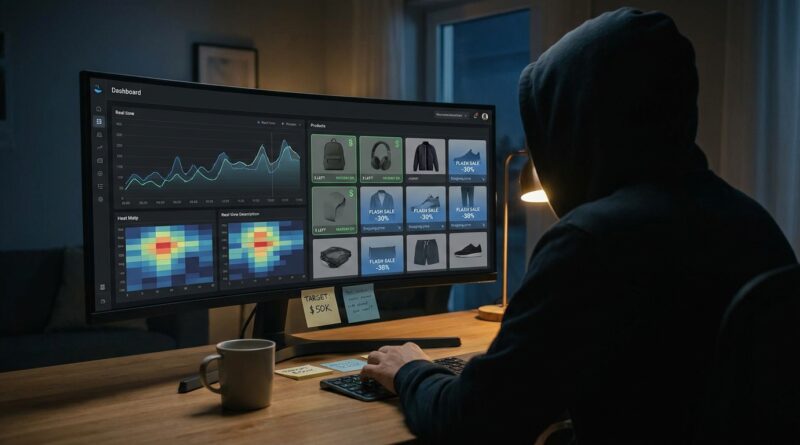
The ‘Dynamic-Price Flash’ Strategy: Turn Real‑Time Discounts Into A Sellout Without Killing Your Margin
Flash sales can feel like a trap. You need a quick burst of orders, but the usual move, a flat 30% off for everyone, often hands away margin you did not need to lose. Your regular buyers might have checked out at full price. Your best-selling items get discounted for no good reason. And the products that are actually stuck still do not always move fast enough. That is the annoying part. Traffic goes up, stress goes up, and profit quietly slips out the back door.
A smarter dynamic pricing flash sale strategy ecommerce brands can use today is simple in concept. Stop treating every product the same. Let live signals such as stock age, conversion rate, cart activity, and sell-through decide which SKUs get a gentle nudge and which need a stronger push. The goal is not to make prices feel random. It is to make discounts feel earned, timely, and limited, while protecting margin on items that are already doing their job.
⚡ In a Hurry? Key Takeaways
- Use dynamic discounts by SKU, not one sitewide discount, so slow stock gets help without cutting healthy margins.
- Set clear rules before the sale starts, including floor margins, discount bands, and inventory triggers.
- Keep customer trust by limiting price swings, using short sale windows, and avoiding constant price changes on hero products.
Why flat flash sales so often backfire
A basic flash sale is easy to set up. That is why so many stores use one. But easy is not always smart.
If every shopper sees the same 30% off across the board, you create three problems at once. First, you discount products that were already selling fine. Second, you train shoppers to wait for sales. Third, you lower the perceived value of your best items.
That is where dynamic pricing helps. Instead of asking, “What discount should we offer?” you ask, “Which products need a discount right now, and how much?”
What a dynamic-price flash really means
This is not about changing prices every minute just because you can. That would annoy people fast.
A dynamic-price flash sale uses a short time window, usually 3 to 24 hours, and adjusts discounts inside set boundaries. Think of it like a thermostat, not a roulette wheel. You decide the safe range. Your data decides where each SKU sits inside that range.
The signals worth watching
For most ecommerce brands, these are the practical inputs that matter most:
- Inventory age. How long the item has been sitting.
- Sell-through rate. How quickly stock is moving.
- Current conversion rate. Are visitors already buying it?
- Cart and checkout activity. Is there buying intent without enough completed orders?
- Margin floor. The lowest discount you can allow without hurting the business.
- Stock level. Too much stock may justify stronger offers. Low stock may not.
If you have ever wanted your sale to act more like a smart store manager than a blunt coupon code, this is the setup.
The practical playbook for a 3 to 24 hour flash sale
1. Split products into three buckets
Before the sale starts, divide your catalog into simple groups:
- Protect. Strong sellers, low stock, or high-intent items. These get little or no discount.
- Nudge. Decent products that convert okay but could move faster. These get moderate discounts.
- Push. Slow movers, aging stock, or overbought inventory. These get the strongest discounts.
This one step fixes most flash-sale waste. You stop paying for urgency where urgency already exists.
2. Set discount bands, not one discount
Instead of “everything 30% off,” create controlled bands such as:
- Protect: 0% to 10%
- Nudge: 10% to 20%
- Push: 20% to 35%
Your ecommerce platform, pricing app, or custom rules engine can then move products within those bands based on live performance.
For example, a slow-moving sweatshirt sitting for 80 days might start at 20% off. If traffic is strong but conversion stays weak after two hours, it can move to 25%. If it suddenly starts selling well, it stays there or even stops increasing.
3. Protect hero products on purpose
This matters more than most merchants think. Hero products bring people in. They shape your brand. They often lift average order value because shoppers add smaller items around them.
So do not automatically throw these into the deepest discount pile.
If a hero item already has strong add-to-cart activity, keep it at full price or near full price. Let weaker products do the heavy lifting on discount depth.
If this idea clicks for you, you may also like The ‘Live Price Pulse Flash’ Strategy: Turn Real‑Time Demand Spikes Into Automatic Extra Profit, which looks at the flip side of this problem, raising or protecting profit when demand spikes instead of discounting too broadly.
4. Use time checkpoints, not nonstop changes
You do not need constant repricing. In fact, you probably should not do it.
Use checkpoints every 1 to 4 hours, depending on how long the flash sale runs. At each checkpoint, review:
- Traffic by SKU
- Conversion by SKU
- Units sold vs target
- Remaining stock
- Margin impact
Then adjust only where needed. This keeps the sale feeling stable and fair.
5. Add simple shopper-facing messaging
Customers do not need to know the algorithm. They do need clarity.
Good examples include:
- “Extra savings added on select overstock styles”
- “Discounts update during the event based on availability”
- “Best prices are limited to selected items while stock lasts”
This frames the sale as real and limited, not chaotic.
How to keep margin from slipping away
The fear with dynamic pricing is obvious. If the system chases conversions too aggressively, you can still end up in a race to the bottom.
That is why your rules matter more than your software.
Set a hard margin floor
For each SKU or category, define the minimum acceptable gross margin. Once a product hits that floor, the discount cannot go lower. Full stop.
Exclude high-intent segments when possible
If your tools allow it, be careful about showing your deepest offers to people who were already ready to buy. Repeat buyers, high-intent email clickers, and warm retargeting traffic may not need the same discount level as cold paid traffic.
If your stack is simpler, the easier version is to avoid discounting the products those buyers already flock to.
Measure profit per visitor, not just revenue
A flash sale can look amazing in top-line sales and still underperform financially.
Track:
- Revenue per visitor
- Gross profit per visitor
- Average discount by SKU
- Units sold from aged inventory
- Post-sale return rate
If profit per visitor rises while old inventory falls, your sale did its job.
A sample setup for small brands
If you are not a giant retailer with a data science team, do not worry. You can still run this well.
Simple 12-hour flash sale example
- 8:00 AM: Sale starts.
- Protect bucket: 5% off max.
- Nudge bucket: starts at 15% off.
- Push bucket: starts at 25% off.
- 12:00 PM checkpoint: Any push SKU with high traffic and low conversion moves from 25% to 30%, if margin floor allows.
- 4:00 PM checkpoint: Any nudge SKU exceeding sell-through target drops back to 10% or holds steady.
- 7:00 PM final hour: Selected push items get one last bump, such as 5% more, but only if stock is still heavy.
That is dynamic pricing in a form most brands can actually use.
Mistakes to avoid
Making every product “on sale”
This kills the signal. If everything is urgent, nothing is urgent.
Changing prices too often
Frequent shifts can make shoppers feel tricked. Keep adjustments controlled and predictable.
Ignoring customer memory
Your regulars notice patterns. If your best items are always deeply discounted, they will wait you out.
Forgetting your post-sale review
After the event, look at what really happened. Which products needed deeper discounts? Which products sold with little discount at all? That review is what makes the next sale better.
When this strategy works best
A dynamic pricing flash sale strategy ecommerce teams use tends to work best when:
- You have uneven inventory across SKUs
- Some products sell well without help
- Traffic is valuable, but conversion is mixed
- You want to clear stock without teaching everyone to expect blanket markdowns
It is especially useful for apparel, beauty bundles, home goods, accessories, and seasonal products, where inventory risk is real and not every item deserves the same treatment.
At a Glance: Comparison
| Feature/Aspect | Details | Verdict |
|---|---|---|
| Flat sitewide flash sale | One discount for every SKU, easy to launch but often cuts margin on products that were already converting. | Fast, but usually too blunt. |
| Dynamic discount by SKU | Discounts move within set bands based on stock age, conversion, and sell-through. | Best balance of inventory movement and margin protection. |
| Manual category markdowns | Better than sitewide discounts, but still slow to react once the sale begins. | Useful starter option, but less precise. |
Conclusion
You do not need to choose between doing nothing and slashing prices across the whole store. Dynamic pricing has moved from academic papers and big-box retailers into everyday ecommerce tech stacks, which means small brands can finally stop guessing at their flash sale discounts and start letting live data set the rules instead. This playbook gives you a concrete way to run a 3 to 24 hour event that adjusts discounts by SKU, protects margin on products that are already converting, and pushes harder only where inventory is stuck. Done well, a flash sale stops being a panic button and starts acting like a controlled, profitable tool when traffic is down.