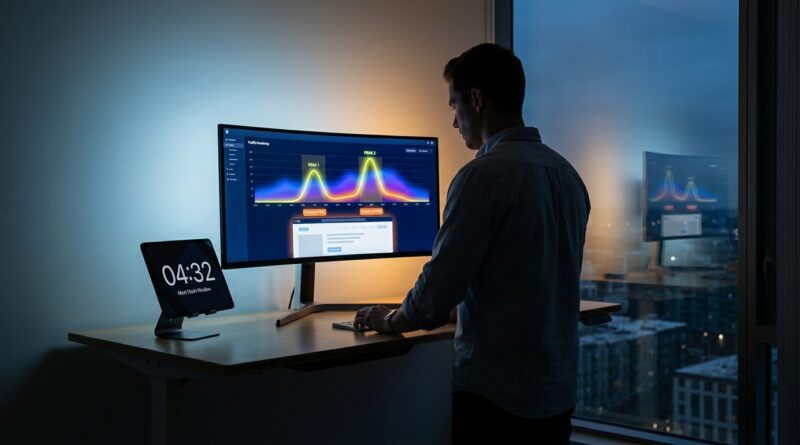
The ‘Sync-to-Clock Flash’ Strategy: Match Your Sale Window To When Your Buyers Actually Shop
Nothing is more annoying than running a flash sale, watching the countdown tick away, and then realizing your best customers were not even online. A lot of brands still choose sale times by habit. Thursday morning. Friday night. Whatever worked once during Black Friday. But shopping behavior has changed. People now browse on lunch breaks, tap through Instagram stories in bed, and jump between phone and laptop all day. If your sale goes live when your audience is busy, asleep, or just not in buying mode, even a good offer can flop. That is why a smart ecommerce flash sale timing strategy starts with one simple question. When do your buyers actually show up? The Sync-to-Clock Flash idea is straightforward. Use your own traffic and session data, find the hours when real shoppers are already active, and lock your sale window to those moments instead of guessing.
⚡ In a Hurry? Key Takeaways
- A Sync-to-Clock Flash works best when you match your sale to your top 90 to 120 minute traffic peaks, not a random calendar slot.
- Pull the last 30 days of hourly traffic, spot your two strongest buying windows, and test a short recurring sale in those time blocks this week.
- This approach protects margin better than nonstop discounts because you focus your offer when attention is already high.
Why old flash sale timing stops working
Plenty of store owners assume traffic follows a neat pattern. It often does not. Your customers may discover a product on TikTok at 11:45 p.m., come back from an email at 8:10 a.m., then finally buy during a quick break at 1:20 p.m.
That means the old habit of setting one broad sale window for everyone can miss the mark. You are not just fighting competitors. You are fighting distracted schedules, multiple devices, and social feeds that never really sleep.
This is the core of a better ecommerce flash sale timing strategy. Stop timing the promotion around your workday. Start timing it around your buyer’s behavior.
What a Sync-to-Clock Flash actually is
A Sync-to-Clock Flash is a short sale that goes live only during the hours your audience already shops most often. Think of it as opening the discount gate when the store is already busy, instead of hoping people arrive after the sale starts.
Usually, the sweet spot is 90 to 120 minutes. Long enough for people to react. Short enough to create urgency without training customers to wait for all-day markdowns.
What makes it different from a normal flash sale
A normal flash sale says, “We picked a time. Please come.”
A Sync-to-Clock Flash says, “You’re already here. Now is the moment.”
That sounds small, but it changes everything. Better open rates. Better conversion potential. Less wasted discounting.
How to find your best sale window in 30 minutes
You do not need fancy software to start. Most ecommerce platforms and analytics tools already show sessions by hour, day, and device.
Step 1: Pull the last 30 days of traffic by hour
Look for:
- Sessions by hour
- Add-to-cart activity by hour, if available
- Conversion rate by hour, if available
- Device split, especially mobile versus desktop
If you only have traffic by hour, that is enough to begin. It is not perfect, but it is a strong start.
Step 2: Circle your top two peaks
You are looking for the strongest 90 to 120 minute windows that repeat. Maybe it is 12 p.m. to 2 p.m. on weekdays. Maybe it is 9:30 p.m. to 11 p.m. on Sundays. Maybe your shoppers are active right after a creator mentions you.
If influencer spikes matter for your brand, it is worth also reading The ‘Creator-Surge Flash’ Strategy: Turn One Viral TikTok Into A 90-Minute Storewide Frenzy. That approach pairs nicely with this one because both are about acting when attention is real, not theoretical.
Step 3: Match traffic with buying intent
A huge traffic spike is nice. A huge traffic spike with low buying behavior is less useful.
If you can, compare:
- Traffic peaks
- Cart starts
- Checkout starts
- Actual orders
Your best sale window is not always the busiest hour. It is often the busiest hour that still has buyer intent.
Step 4: Build one lean offer
Keep it simple. A small store does not need a ten-layer promotion. Try one of these:
- 15 percent off selected bestsellers
- Buy more, save more on a single category
- Free shipping during the 90-minute window
- A gift with purchase while the clock is live
The goal is not to slash prices to the floor. The goal is to reward attention at the right time.
What to avoid
Do not run it too long
If your sale lasts six hours, it stops feeling urgent. It starts feeling like a regular promotion with extra graphics.
Do not choose windows based on vanity traffic alone
A spike in visits from curious browsers is not the same as a buying window. Check whether people move past the homepage.
Do not train your audience to expect daily discounts
Recurring does not mean constant. One or two clock-locked sales a week can feel exciting. Daily markdowns can eat margin and weaken your brand.
Do not ignore time zones
If your audience is spread across regions, segment your timing. A 9 p.m. flash for New York is a very different thing in California.
How smaller brands can beat bigger retailers with this
Big retailers often win on scale. Smaller brands can win on precision.
You probably cannot outspend a giant chain on ads. But you can be more careful with timing. You can watch your own traffic, spot behavior changes quickly, and launch short sales when your real shoppers are already paying attention.
That makes this ecommerce flash sale timing strategy especially useful in 2026. Attention is expensive now. Scattered too. If you treat it like unlimited inventory, you waste it. If you treat it like something scarce and time-bound, your promotions get sharper fast.
A simple weekly test plan
If you want to run this without overthinking it, use this plan.
Week 1
- Pull 30 days of hourly traffic data
- Pick two strong 90 to 120 minute windows
- Create one offer with a clear margin limit
Week 2
- Run Window A
- Track sessions, conversion rate, average order value, and revenue per visitor
Week 3
- Run Window B
- Track the same numbers
Week 4
- Compare results
- Keep the better window
- Test a new offer or a tighter time slot
That is it. No giant replatform. No complicated automation stack. Just cleaner timing.
Signs the strategy is working
- More orders during the sale window without a huge jump in discount depth
- Better conversion rate than your usual campaign blasts
- Higher engagement from email or SMS because the timing feels relevant
- Less reliance on all-week sales that quietly chip away at profit
At a Glance: Comparison
| Feature/Aspect | Details | Verdict |
|---|---|---|
| Timing method | Gut-feel sale timing uses habit or tradition. Sync-to-Clock timing uses your last 30 days of hourly shopper data. | Data-led timing is usually the smarter bet. |
| Sale length | Short 90 to 120 minute windows create urgency without dragging the discount out all day. | Shorter windows tend to protect urgency and margin. |
| Best fit for small brands | Works on basic ecommerce plans because it mainly needs traffic reports, simple promo setup, and repeat testing. | Very practical and low-tech. |
Conclusion
Shopper behavior is all over the place now. People discover brands at odd hours, bounce between devices, and ignore the old “Thursday 9 a.m. launch” habit that once felt reliable. That is exactly why this works. When you tie flash sales to live traffic and session patterns, you stop copying the blunt, always-on discount game of giant retailers. You start treating attention like inventory. Limited. Valuable. Too expensive to waste. The good news is this is easy to test. Pull the last 30 days of traffic by hour, choose your two strongest 90 to 120 minute peaks, and build a lean, recurring sale that switches on only when your best buyers are already in the store. It is low-tech, margin-aware, and something you can run this week, even on a basic ecommerce setup.