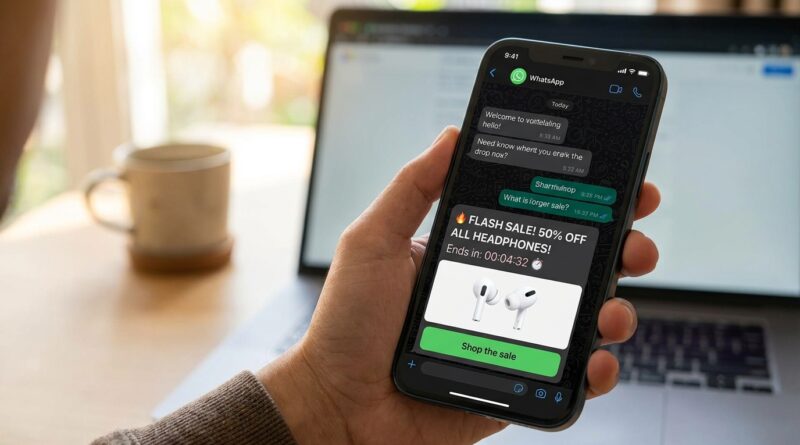
The ‘Countdown-In-Chat Flash’ Strategy: Turn One WhatsApp Broadcast Into A 24‑Hour Sellout
You know the feeling. You spend hours setting up a flash sale, send the email, add the banner, maybe even post it everywhere, and then watch people visit, poke around, and leave. No urgency. No rush. No real bump. That is frustrating, especially when your customers are checking WhatsApp all day and your best offer never reaches the place they actually pay attention to. A smart whatsapp flash sale strategy fixes that by moving the sale into chat, where the message feels direct, timely, and hard to ignore. The trick is not blasting everyone. It is sending one tight, clear countdown offer to a smaller list of people who already care, then ending it exactly when you said you would. Done right, one broadcast can create a 24-hour sellout without turning you into a full-time marketer or annoying your customers.
⚡ In a Hurry? Key Takeaways
- A strong WhatsApp flash sale works best with a small, high-intent list, one clear offer, and a real deadline customers can trust.
- Send one kickoff message and, at most, one reminder close to cutoff. Add a countdown image or end time and make the link dead simple to tap.
- Do not keep extending the sale. Closing on time protects trust and trains buyers to act fast next time.
Why this works better than another email blast
Email still has a place. So do banners. But for short, time-boxed deals, private messaging often wins because it gets seen faster and acted on sooner.
That matters in a flash sale. You are not trying to educate someone for three weeks. You are trying to help them decide in a few minutes.
A good whatsapp flash sale strategy puts the offer where people already are. Inside chat. Inside the same app where they talk to friends, family, and favorite brands. That makes the sale feel immediate instead of easy to ignore.
The countdown-in-chat flash sale, explained simply
The idea is straightforward. Pick one deal. Pick one audience segment. Send one short WhatsApp broadcast with a clear start, a clear end, and one tap to buy. Then stop the offer when the timer ends.
That final part is what makes the whole thing work. When buyers learn that your deadline is real, they treat the next message seriously too.
What makes it different from a normal promo message
Most promo messages are vague. “Big sale now on.” That is easy to postpone.
A countdown-in-chat message is specific. It says what the deal is, when it ends, who it is for, and what to do next. No guessing. No scrolling through a cluttered site trying to find the item again.
Who should get the message
Not everyone on your list.
This is where many sellers get it wrong. They think a bigger audience means better results. Usually it means weaker response, more unsubscribes, and less trust.
Start with people who have already shown buying intent. For example:
- Past buyers from the same product category
- People who clicked a recent product link
- Customers who abandoned a cart in the last 7 to 14 days
- VIP shoppers or repeat customers
If your list is small, that is fine. A flash sale does not need a stadium. It needs the right room.
What to send, step by step
Message 1: The launch
Keep it short. One deal. One image if it helps. One link. One deadline.
Something like this:
24-hour VIP deal. Our best-selling linen set is 25% off until 8 PM tomorrow. Limited stock. Tap here to shop: [link]
If you can add a visual countdown or a simple graphic that says “Ends in 24 hours,” even better. The brain catches time pressure faster when it can see it.
Message 2: The reminder
Send this only if needed, and only once. Good timing is usually 3 to 4 hours before cutoff.
Example:
Last call. The linen set deal ends today at 8 PM. A few sizes are already gone. Shop here before it closes: [link]
That is enough. More than two messages for one short sale starts to feel pushy.
Why the timer matters more than the discount
People do not only buy because something is cheaper. They buy because they believe the chance will disappear.
If your “24-hour sale” quietly stays live for two extra days, customers notice. Maybe not the first time. But they notice. Then the next timer means less. That is how flash sales lose their power.
Protect the deadline. If the sale ends at 8 PM, it ends at 8 PM.
How to set this up on almost any ecommerce stack
You do not need fancy software to start. A practical setup looks like this:
- A WhatsApp Business account or approved messaging tool
- A segmented customer list with consent to receive messages
- A product or collection page built just for the offer
- A discount code or automatic sale that expires on schedule
- A simple tracker so you can see clicks and orders
If your store platform supports scheduled discounts and product links, you already have most of what you need.
Keep the destination page clean
When people tap from WhatsApp, they should land on the exact deal. Not your homepage. Not a broad category page with 200 products.
Reduce decisions. Show the item, the sale price, the end time, and the buy button. That is it.
What to measure after the sale
You do not need a giant dashboard. Watch a few basics:
- How many people received the message
- How many tapped the link
- How many bought
- Average order value
- Unsubscribes or opt-outs
If taps are high but sales are low, the landing page may be weak. If taps are low, the segment or message probably needs work. If unsubscribes spike, you are sending too broadly or too often.
How often should you run one?
Not every day.
The strength of this playbook comes from trust and novelty. Weekly can work for some stores. Twice a month is plenty for many others. You want customers to think, “I should check this now,” not “here comes another promo.”
If you want a variation on this idea that uses social proof instead of a plain product page, have a look at The ‘Lookbook-Flash’ Strategy: Turn One UGC Gallery Link Into A 24‑Hour WhatsApp Sale. It is a smart next step when you want shoppers to see real customer photos before they buy.
Mistakes that quietly kill results
1. Sending to too many people
Broad lists feel efficient. They usually lower response and train people to tune you out.
2. Making the message too clever
Save the wordplay. Clarity wins. Say what it is, what it costs, and when it ends.
3. Giving too many choices
One featured deal often beats a messy “everything on sale” message. Less thinking. Faster clicks.
4. Extending the deadline
This is the big one. If you break your own timer, the next timer is weaker.
When this strategy works best
This approach shines when you have a product people already understand and want. Think restocks, seasonal favorites, best sellers, bundles, or limited drops.
It is less effective for items that need lots of explanation. If your product takes three videos and a FAQ to understand, warm people up first, then run the flash sale later.
At a Glance: Comparison
| Feature/Aspect | Details | Verdict |
|---|---|---|
| Audience targeting | Small, high-intent groups such as past buyers, cart abandoners, or VIP customers respond better than broad lists. | Best for strong click and buy rates without feeling spammy. |
| Message structure | One launch message and one reminder, each with one offer, one link, and a clear end time. | Simple beats clever. Clear beats long. |
| Deadline discipline | Turning the offer off on time teaches buyers your countdowns are real. | Most important habit for repeatable results and customer trust. |
Conclusion
A good whatsapp flash sale strategy is not about shouting louder. It is about showing up in the right place with the right offer at the right moment. That is why more flash sales are moving out of noisy feeds and into private messaging, especially WhatsApp, where open and tap-through rates are often far stronger for short, time-boxed offers. The win for everyday merchants is that this does not need a huge team or fancy stack. Segment a small, high-intent list. Send one or two crystal clear messages with a real timer. Shut the offer off on time. Customers learn that when your sale lands in chat, it is worth acting on now, not later. That keeps the tactic respectful instead of spammy, simple enough to repeat on almost any ecommerce setup, and powerful enough to turn one daily deal into a playbook that builds trust and revenue over time.