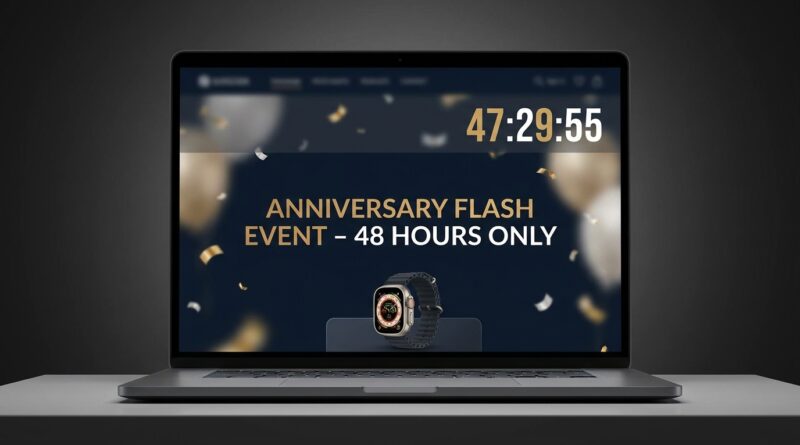
The ‘Anniversary Anchor Flash’ Strategy: Turn Brand Birthdays Into Your Highest-Converting 48 Hours
You are not imagining it. A lot of small ecommerce “anniversary sales” feel messy because they are messy. The date is fuzzy, the offer is broad, the homepage says one thing, the ad says another, and shoppers land with that quiet little question in their heads. Why now? If they do not get the answer in a second or two, they bounce. That is why big retailers make these events look easy. They are not just discounting. They are telling a simple story around a milestone. A birthday. A company anniversary. A one-time marker. The good news is you do not need a giant team to copy the part that works. A smart ecommerce anniversary flash sale strategy is really about focus. One reason for the sale. One or two products people already want. One landing page that makes the whole thing make sense fast.
⚡ In a Hurry? Key Takeaways
- Your anniversary flash sale works best when it answers three questions right away: why this date, why this product, and why this price.
- Use one dedicated landing page and build the whole event around one or two hero SKUs, not your entire catalog.
- This protects margins and reduces confusion, which usually matters more than getting a short-lived traffic spike.
Why most anniversary sales underperform
The usual problem is not the discount itself. It is the lack of a clear story.
Plenty of brands pick a random weekend near their company birthday, throw 15 or 20 percent off sitewide, send an email, and hope urgency does the rest. But shoppers are good at spotting a generic sale. If it looks like the same promotion they saw last month with a new name slapped on it, the “anniversary” angle does not help.
A better ecommerce anniversary flash sale strategy gives the customer a clean, instant explanation. This is our 7th birthday. This best-selling bundle is the featured deal. This price lasts 48 hours. Done. No puzzle solving required.
The Anniversary Anchor Flash idea in plain English
Think of the anniversary as the anchor, not the entire promotion.
The date gives your sale a believable reason to exist. The flash part gives it urgency. The hero product gives it focus. Put those together and you get something that feels special instead of noisy.
What the “anchor” actually does
It answers the biggest trust question. Why are you offering this deal right now?
People do not need a long brand history lesson. They just need a simple reason that feels tied to a real moment. Your 3-year anniversary. Your founder’s launch date. Your 100,000th customer milestone. The tighter the reason, the stronger the event.
What the “flash” actually does
It keeps people from putting off the decision.
A 48-hour window is short enough to feel urgent but long enough for email, paid ads, and social posts to work together. Shorter can work too, but 48 hours is often the sweet spot for lean teams that need a little room to adjust during the campaign.
The three questions your page must answer instantly
If your landing page does not answer these fast, conversion rates usually suffer.
1. Why this date?
Say it in the first headline or subhead. “Our 5th Anniversary Sale.” “Birthday Weekend.” “Celebrating 10 Years.” This is the story wrapper.
2. Why this product?
Choose something obvious. A bestseller. A starter kit. A high-converting bundle. A product tied closely to what your brand is known for. If customers have to wonder why you picked it, you have added friction.
3. Why this price right now?
Be specific. “Lowest price this season.” “Anniversary-only bundle pricing.” “Free gift for the first 200 orders.” Clarity beats cleverness here.
Do not run this like a sitewide free-for-all
This is where many brands hurt themselves.
Sitewide anniversary sales can bring in orders, sure. They can also train customers to wait for discounts, overwhelm your support team, and drag down margins across products that did not need help selling in the first place.
A tighter play is usually stronger. Pick one or two hero SKUs. Maybe add a related upsell or bundle. That is enough.
This keeps your ad creative cleaner, your inventory planning simpler, and your message far more believable. Instead of “everything is on sale because anniversary,” you are saying, “we are celebrating with this standout offer.” That sounds intentional because it is.
Build one landing page and make everything point there
If your ads promise an anniversary deal, do not send people to a generic homepage carousel and hope they find it.
Build a dedicated page for the event. It does not need to be fancy. It needs to match the promise people clicked on.
What to include on the page
Keep it simple:
- A headline that names the anniversary or milestone
- A subhead that explains the offer in plain English
- One clear product section for the hero SKU or bundle
- A countdown or end date
- Social proof, like reviews or bestseller notes
- A clear call to action
That is enough for most brands. You are not building a mini website. You are building a focused conversion page.
Match the ad to the headline
This sounds small, but it matters a lot.
If your Facebook ad says “5-Year Anniversary. 48 Hours Only. Save 25% on Our Starter Kit,” the landing page should say almost exactly that at the top. Same language. Same offer. Same product. That message match reduces doubt.
Every mismatch costs you. Even small ones. A different discount. A different product image. A vague headline. Tiny points of confusion add up fast.
How to choose the right hero SKU
Your hero offer should not just be the item with the biggest markdown. It should be the item most likely to turn attention into profitable orders.
Good hero SKU options
- Your best seller
- Your easiest entry-point product
- A bundle with strong average order value
- A seasonal item already getting traction
Bad hero SKU options
- A slow mover nobody wants at full price
- A product with inventory risk you cannot manage
- An item with margins so thin the sale barely makes sense
- Something unrelated to what your brand is known for
The goal is not to clear random stock. The goal is to create a focused, believable event that converts well.
What to send before, during, and after the 48 hours
You do not need a huge campaign calendar. You need a clean one.
Before the event
Tease the date. Mention the milestone. Build interest around the hero product. If you have an email list, this is a good time to let subscribers know they will get first access or the full details first.
During the event
Repeat the same message everywhere. Email, SMS, paid social, organic social. Do not keep inventing new angles. Repetition helps more than originality during a short sale window.
After the event
Turn it off when you said you would. That part matters. Fake urgency trains customers not to trust your deadlines.
Then review performance. Which ad got the cheapest clicks? Which channel converted best? Did the hero product pull in profitable upsells? That is how your next anniversary event gets better instead of just louder.
How to protect your margins while still creating urgency
This is the part owners care about most, and rightly so.
An anniversary event should feel special without becoming a panic discount. You can do that a few ways:
- Discount a bundle instead of a single item
- Offer a gift with purchase instead of a deeper price cut
- Limit the deal to one high-intent SKU
- Cap the offer by quantity, not just time
If 20 percent off everything wrecks your economics, do not do it just because bigger stores can. Your version should fit your numbers, your stock, and your customer behavior.
A simple repeatable formula for lean teams
If you want the shortest practical version of this ecommerce anniversary flash sale strategy, use this:
- Lock in a real milestone date.
- Pick one hero offer.
- Write a one-line reason for the event.
- Build one dedicated landing page.
- Make every ad and email point to that page.
- Run it for 48 hours, then end it.
- Measure profit, not just traffic.
That is the play. Clean, repeatable, and much easier to manage than a broad sitewide scramble.
Common mistakes to avoid
A few traps show up again and again:
- Calling it an anniversary sale without mentioning the anniversary clearly
- Using too many products, which makes the offer feel unfocused
- Sending traffic to the homepage instead of an event page
- Changing the message between ad, email, and landing page
- Extending the sale after the countdown ends
None of these are hard to fix. They just require discipline.
At a Glance: Comparison
| Feature/Aspect | Details | Verdict |
|---|---|---|
| Sitewide discount vs hero offer | Sitewide sales create more complexity and often cut margins across the board. A hero offer keeps the message sharp and easier to manage. | Hero offer usually wins for smaller brands. |
| Homepage traffic vs dedicated landing page | A homepage forces shoppers to hunt for the deal. A landing page answers the why, what, and when right away. | Dedicated page is the better conversion move. |
| Big discount vs clear story | A larger discount may get attention, but a clear anniversary story paired with a focused offer often does more for trust and action. | Clear story is more sustainable and often more profitable. |
Conclusion
Big retailers are getting attention by wrapping ordinary discounts in a simple story. A birthday. An anniversary. A milestone people understand in one glance. Smaller brands can absolutely use that same move. The trick is not “20 percent off everything for two days.” The trick is a tight flash sale that answers three questions fast: why this date, why this product, and why this price right now. Build one anniversary landing page. Match your ad promise to the first headline. Limit the event to one or two hero SKUs. That gives you urgency without confusing shoppers or blowing up your margins. And best of all, it is repeatable. The next time your brand hits a milestone, you do not have to invent chaos. You can run a clean, focused event where every click has a better shot at turning into profit.