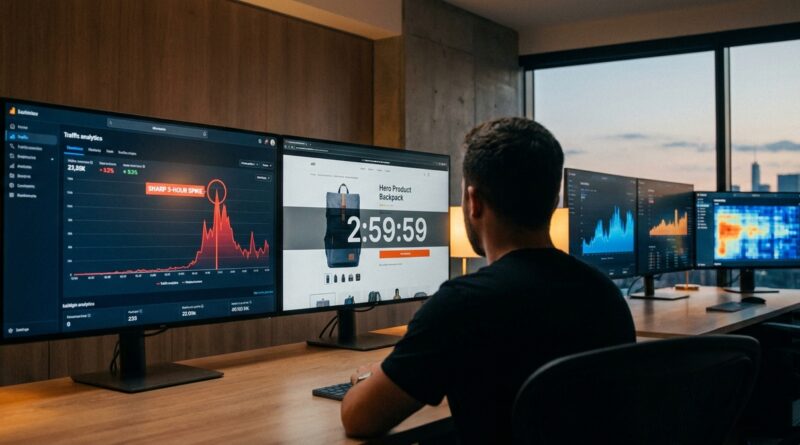
The ‘Micro-Window Flash’ Strategy: Turn One 3‑Hour Drop Into Your Highest‑Converting Sale Of The Month
Nothing is more annoying than watching a “48-hour flash sale” turn into a 6-hour sale with 42 hours of dead air. The first burst looks great. Then conversions slow down, customers start thinking they have plenty of time, and your carefully planned discount begins teaching people to wait you out. Meanwhile, you are still paying for ads, still sending emails, still nudging SMS subscribers, and still shaving your margins thinner by the hour. That is exactly why the 3 hour ecommerce flash sale strategy is getting so much attention. It flips the usual script. Instead of dragging urgency across two days, you squeeze demand into one tight, high-intent window. Done right, that three-hour drop can become your highest-converting sale of the month. It feels special, it protects your pricing, and it gives smaller brands a real shot at creating a sharp cash spike without acting like they are on sale all week.
⚡ In a Hurry? Key Takeaways
- A 3-hour sale often converts better than a 24 or 48-hour sale because urgency stays real from start to finish.
- Pick one strong offer, one clear audience, and one well-timed launch window instead of blasting everyone for two days.
- Shorter promos can protect margins and reduce email and SMS fatigue, but only if your site, stock, and checkout are ready before launch.
Why long flash sales stop feeling urgent
Most shoppers are not stupid. They know when a brand says “today only” and then stretches the same deal into tomorrow, or sends three last-chance emails that are not really the last chance.
That hurts more than one campaign. It chips away at trust. It also trains customers to delay buying because they assume another reminder, extension, or better discount is coming.
A micro-window sale fixes that by making the deadline believable. Three hours feels short enough that people act now, not later. That simple change can raise conversion rate without asking you to slash prices deeper.
What the micro-window flash strategy really is
The idea is simple. You run one tightly planned sale for just three hours. Not all day. Not all weekend. Three hours.
You announce it ahead of time, build expectation, and then concentrate your traffic into that short period. Think of it like a pop-up event rather than a standing promotion.
What makes it work
The best 3 hour ecommerce flash sale strategy has four parts.
- A single clear offer
- A specific audience or product set
- A launch time when your buyers are actually paying attention
- A hard stop that you keep
If any one of those is fuzzy, the sale starts to feel like just another discount email.
Why three hours can beat forty-eight
There is a practical reason this works. Attention is scattered. People jump between Instagram, inboxes, texts, work chats, and a dozen tabs. A short event cuts through because it asks for action now, not “sometime before Friday.”
It also improves efficiency. Instead of funding a long campaign that loses energy after the first burst, you stack traffic, clicks, and buying intent into one block.
Benefits smaller brands feel fast
First, you preserve pricing power. You are not sitting in discount mode for days.
Second, you reduce list fatigue. Endless promos can hurt deliverability because subscribers stop opening, clicking, or caring. A short burst is easier on your audience and your email reputation.
Third, you get cleaner data. It is much easier to measure the true lift from a focused three-hour sale than a sprawling two-day event with constant reminders.
How to set up a 3 hour ecommerce flash sale strategy that actually converts
1. Start with one hero offer
Do not cram in ten categories and six promo codes. Pick one offer people can understand in two seconds.
Examples:
- 20 percent off one bestseller collection
- Buy one, get one on a seasonal item
- Free premium bundle with orders over a set amount
The simpler the offer, the faster people can decide.
2. Match the timing to buyer behavior
The right three hours matter more than the discount in some cases. If your audience buys on lunch breaks, do not run it at 9 p.m. If your best traffic comes after school pickup, plan around that.
Check your store data. Look at when conversions usually peak. Then test a micro-window during that natural buying rhythm.
3. Warm people up before the window opens
A three-hour sale should not be a surprise dropped out of nowhere. You want anticipation.
Good warm-up moves include:
- An email the day before
- An SMS 30 minutes before go-live
- Social stories with a countdown sticker
- A homepage banner teasing the exact time
You are not selling yet. You are helping people mark the moment.
4. Build one focused traffic spike
This strategy works best when all roads point to the same event. Paid social, organic social, email, SMS, and onsite banners should all echo the same message and deadline.
If you also have outside media support, even better. That is where a partner feature can amplify urgency without hammering your own list again. If that angle fits your brand, The ‘Publisher-Partner Flash’ Strategy: Turn One Editorial Feature Into A 24‑Hour Sell‑Out is a smart companion play because it shows how to turn borrowed attention into a concentrated sales burst.
5. Make the landing page stupidly clear
This is not the time for clever copy that hides the deal. Your page should show:
- What the offer is
- When it ends
- Which products qualify
- What shoppers should do next
A visible countdown helps. So does removing distractions.
6. End it for real
This is the part many brands mess up. If your sale says it ends at 3 p.m., end it at 3 p.m.
Do not extend it because sales slowed in the final hour. That one extension can do more long-term damage than the short-term revenue is worth. The whole point of the micro-window is credibility.
Best use cases for a micro-window sale
This approach is not only for giant product launches. It works especially well when you need focused movement without turning your entire brand into a discount machine.
Good moments to use it
- Clearing limited seasonal stock
- Driving a mid-month cash bump
- Rewarding your VIP list
- Turning a product restock into an event
- Competing against noisy holiday sale periods
Smaller brands often win here because they can move faster and make the event feel more personal.
Common mistakes that kill results
Too much audience, not enough relevance
If you send the same message to everyone, some people will care and many will not. Segment when you can. A smaller, warmer audience often outperforms a giant cold blast.
The offer is weak
Three hours cannot save a boring promotion. If the deal feels ordinary, shoppers will shrug and move on.
Your checkout is slow
Urgency only helps if buying is easy. Test mobile checkout, discount logic, cart behavior, and page load speed before launch.
You forgot inventory planning
If the event is built around one hero item, make sure stock is enough to support the push. Running out in 15 minutes can be exciting. Running out because you guessed badly can feel sloppy and irritate buyers.
How to measure whether it worked
Do not judge the campaign on top-line revenue alone. A short sale can win in quieter ways too.
Watch these numbers:
- Conversion rate during the 3-hour window
- Revenue per visitor
- Average order value
- Email open and click rate
- SMS click rate
- New versus returning customer mix
- Margin after discount and ad spend
If your conversion rate jumps and your margin holds up better than it does during long promos, you are on the right track.
A simple rollout plan
24 hours before
Announce the event. State the exact start and end time. Tease the offer.
1 hour before
Update site banners. Queue SMS. Confirm inventory and customer support coverage.
At launch
Send email and SMS. Push social stories and paid traffic. Put the offer above the fold on your homepage.
Final 30 minutes
Send one true last-call reminder. Keep it short and direct.
After it ends
Switch creative fast. Thank buyers. Review results while the data is still fresh.
At a Glance: Comparison
| Feature/Aspect | Details | Verdict |
|---|---|---|
| Urgency | A 3-hour window keeps the deadline believable and encourages immediate action. | Strong advantage over 24 to 48-hour sales. |
| Margin protection | You spend fewer hours discounting, which can limit margin erosion and reduce promo fatigue. | Better for brands trying to stay profitable. |
| Operational risk | Because the event is compressed, site issues, stock errors, or confusing messaging hurt more quickly. | Worth it, but only with solid prep. |
Conclusion
Long sales are losing their punch because people have learned to wait, scroll past, or assume another reminder is coming. A short, disciplined micro-window changes that. When you use a 3 hour ecommerce flash sale strategy, you create real urgency instead of fake urgency stretched across two days. That matters right now, because traffic and attention are more fragmented than ever, and long sales are getting ignored. For smaller brands especially, this is a practical way to outmaneuver bigger competitors. You stack urgency, relevance, and profitability into one tight event. You protect pricing power, avoid deliverability issues from endless promos, and still get the sharp cash-flow spike you need this week, not someday. Keep it simple, keep it timed well, and most important, keep the deadline real.