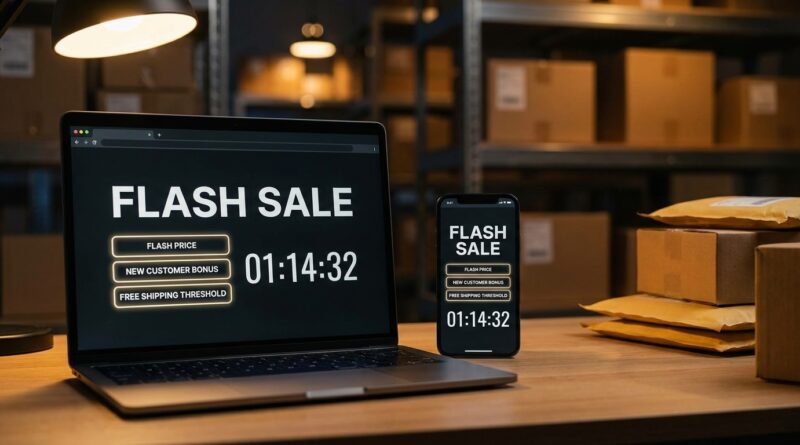
The ‘Stacked-Deal Flash’ Strategy: Turn One Smart Coupon Stack Into Your Highest-Value 24‑Hour Sale
Nothing kills a flash sale faster than a checkout that feels like homework. You post a strong offer, traffic comes in, carts start filling, then shoppers hit the discount box and stall. Which code works. Does the sitewide sale combine with free shipping. Is the bundle deal better than the percent-off code. If buyers have to do math, many leave. The fix is not a bigger discount. It is a clearer one. A stacked-deal flash gives shoppers one easy path to the best total savings in a 24-hour window. That means one visible anchor discount, one bonus layer, and a checkout experience that makes the final price feel obvious and worth acting on now. If you want a practical ecommerce flash sale coupon stacking strategy, start by making the stack simple enough to explain in one sentence and strong enough to feel like a real win the moment the cart updates.
⚡ In a Hurry? Key Takeaways
- Use one main flash discount plus one clearly defined extra perk, not a pile of competing codes.
- Show the full savings before checkout with plain language like “20% off + free shipping + $10 off $50.”
- Keep rules tight and visible so you move inventory fast without causing refund requests or support tickets.
Why flash sales fall apart at checkout
Most bad flash sales do not fail because the discount is too small. They fail because the offer feels messy.
Shoppers now expect stacked value. They see it on TikTok Shop, Shopify stores, Amazon-style marketplace promos, and coupon-heavy deal posts all day long. They are trained to hunt for the real total, not the headline number. So when your product page says one thing and your cart says another, trust drops fast.
That is why a smart ecommerce flash sale coupon stacking strategy matters. You are not just discounting. You are removing friction.
What a “Stacked-Deal Flash” actually is
A stacked-deal flash is a short sale, usually 24 hours, where the customer can instantly understand how multiple savings work together.
The simple version
Think of it like this:
- Base discount: 15% off the product
- Bonus stack: free shipping
- Threshold reward: extra $10 off orders over $60
That is enough. It feels better than a plain 20% off sale, but it is still easy to explain.
What it is not
It is not five promo codes, a hidden auto-discount, a mystery gift, and a footnote about excluded variants. That setup creates doubt. Doubt kills urgency.
The rule that makes this work
Your shopper should understand the deal in under three seconds.
If they need to click into a policy page, test codes, or message support, the stack is too complicated. The best version reads almost like a receipt preview:
Today only: 20% off. Free shipping included. Spend $75, save an extra $10 automatically.
That line tells people everything they need. No guessing. No coupon roulette.
Build the stack in this order
1. Start with one anchor discount
This is the main reason to click. It can be a percent-off, dollar-off, or category markdown. For overstock or aging inventory, percent-off usually works best because the value is easy to compare.
Good examples:
- 25% off all winter accessories
- $15 off any 2-pack bundle
- Buy one, get one 50% off on slow-moving SKUs
Pick one anchor. Just one.
2. Add one booster shoppers love
This is where the stack feels exciting instead of ordinary. The booster should be easy to understand and cheap enough for you to sustain for 24 hours.
Common boosters:
- Free shipping
- Extra cart discount over a spend threshold
- Free low-cost add-on item
Free shipping is often the cleanest choice because customers immediately understand the value.
3. Make the best deal automatic when possible
If your platform allows it, auto-apply at least one layer. This cuts support tickets and stops the classic “my code didn’t work” problem.
If you need a code, use one code only. Keep it short. Make it match the sale name.
This is also why some merchants like the approach described in The ‘Cart-Stack Flash’ Strategy: Turn One Simple Code Into The Best Deal On The Entire Web. It works because it respects how tired shoppers are. They do not want to test three random codes. They want one clear path to the best price.
How to structure the message so shoppers believe it
Show total savings, not just the first discount
“20% off” is fine. “Save 20% + free shipping + extra $10 at $75” is better.
The second version feels complete. It tells the shopper there is a real payoff waiting in the cart.
Repeat the same wording everywhere
Your product page, collection page, cart drawer, email, SMS, and social caption should all describe the offer the same way.
Do not say:
- “Flash markdown live” on the homepage
- “Use code SAVE20” in email
- “Bonus checkout deal” on TikTok
That sounds like three different promos. It confuses people. Use one message, over and over.
Use plain numbers
Avoid clever wording. “Triple-value event” sounds nice, but it does not tell me what I save.
Say exactly what happens:
24 hours only. 20% off clearance. Free shipping on all orders. Extra $10 off $75 automatically.
Where this strategy works best
TikTok Shop
TikTok shoppers move fast. They want instant value and a checkout that feels like a win right now. A stacked flash works well here because the platform rewards urgency and visible savings.
Shopify stores
Shopify gives you more control over cart messaging, auto discounts, and bundling apps. That makes it one of the easiest places to run a clean stack, especially if you want to clear inventory without permanently lowering list prices.
Marketplaces
Marketplaces are harder because promo controls vary, but the same idea still applies. If the platform supports coupons, shipping incentives, or quantity discounts, keep the combination simple and front-load the final value in the listing copy.
Best use case: aging or overstock inventory
This is where the stacked-deal flash shines.
If you slash base price too hard, shoppers start to think that lower number is the “real” value. That hurts you later. A stack lets you create urgency without fully resetting price expectations.
For example:
- Keep the item at a reasonable sale price
- Add a 24-hour cart bonus
- Layer free shipping to push conversion
You move product now, but your regular pricing stays more intact after the sale ends.
Common mistakes that ruin the sale
Too many exclusions
If half the catalog is blocked from the promo, customers stop trusting the headline. Keep exclusions rare and obvious.
Conflicting discounts
Do not run a sitewide code that cancels a bundle offer unless you clearly say which one gives the better result. Better yet, remove the conflict entirely.
Hidden thresholds
If the extra savings starts at $50 or $75, show that early. Customers hate finding out late.
No cart preview
Your cart should show what was saved. People are much more likely to finish checkout when they can see the stack working.
A fast 24-hour setup you can copy
Here is a simple formula for a one-day event:
- Anchor: 20% off selected overstock items
- Booster: free shipping on every order
- Threshold: extra $10 off orders over $75
- Code: none, or one code only if needed
- Message: “Today only. 20% off + free shipping + extra $10 off $75”
That is easy to post, easy to understand, and easy to verify at checkout.
How to know if your stack is working
Watch these numbers during and after the sale:
- Cart-to-checkout rate
- Checkout completion rate
- Average order value
- Customer support contacts about promo confusion
- Units moved from targeted inventory
If conversion improves but support tickets spike, the stack may still be too hard to understand. If traffic is good but carts stall, the message likely is not showing total savings clearly enough.
At a Glance: Comparison
| Feature/Aspect | Details | Verdict |
|---|---|---|
| Simple stack structure | One anchor discount plus one bonus layer and, if needed, one spend-threshold reward. | Best balance of clarity and perceived value. |
| Multiple competing codes | Shoppers must test offers, compare outcomes, and guess what stacks. | Avoid. It hurts trust and slows checkout. |
| Automatic savings display | Cart shows discounts and shipping savings clearly before payment. | Strongly recommended for higher conversion and fewer support issues. |
Conclusion
You do not need a louder flash sale. You need a cleaner one. Right now shoppers on TikTok Shop, Shopify, and marketplaces are being trained to chase promo stacks and will skip over any listing that does not feel like a win at checkout. A simple, well-structured flash stack helps move aging or overstock inventory fast without racing to the bottom on price, cuts customer service headaches from messy codes, and fits how people browse deals this week. They want to see the real total savings in one glance before they waste another click. Keep the stack simple, make the best deal obvious, and let the cart prove the value for you.