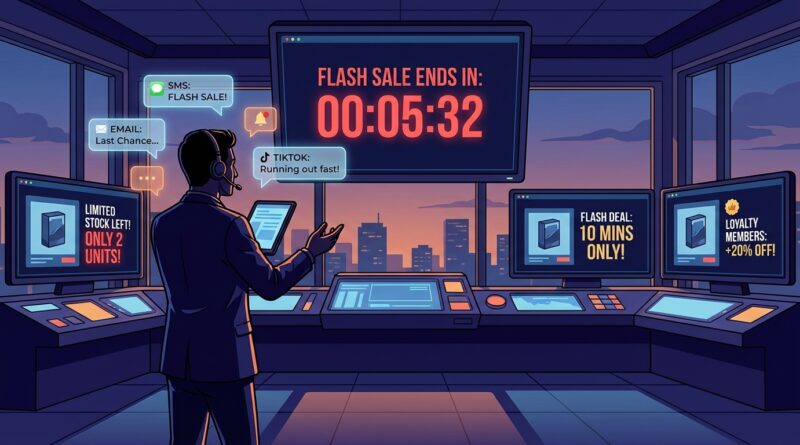
The ‘Segmented Scarcity Flash’ Strategy: Turn One Sale Into Three Different Urgencies That Actually Convert
You can feel the problem when a flash sale goes out and the results look weirdly familiar. The discount chasers pile in. Your loyal regulars shrug. Your best customers, the ones who usually spend freely, quietly wait because they have learned another sale is always around the corner. That is frustrating, and expensive. It also usually means the sale itself is not the problem. The problem is that everyone got the same urgency, on the same clock, in the same tone. A smarter ecommerce segmented flash sale strategy fixes that by turning one promotion into three different urgency paths based on shopper behavior. Instead of shouting “20% off ends tonight” at everyone, you give cart abandoners a low-stock nudge, repeat buyers a tighter deadline and cold audiences a softer entry offer. Same sale window. Different pressure. That is how you get more conversions without training your whole customer base to wait for markdowns.
⚡ In a Hurry? Key Takeaways
- Stop sending one blanket flash sale to everyone. Segment urgency by shopper behavior, value and channel.
- Use three urgency types in one campaign: time pressure for repeat buyers, stock pressure for cart abandoners and social proof or early-access pressure for colder audiences.
- This protects margins better than constant storewide discounts because you are not training every customer to hold out for the deepest deal.
Why generic flash sales stop working
Blanket flash sales feel efficient. One creative. One code. One blast to email, SMS and social. Done.
But shoppers are not all standing in the same place. Some are one click from buying. Some are curious but not convinced. Some already know your sale pattern better than you do.
When they all get the same message, three bad things happen.
Bargain hunters respond first
They are trained to wait for the broadest discount. They are not necessarily your most profitable buyers, but they are often the loudest signal in your results.
Regular customers tune it out
If they were not planning to buy right now, a generic countdown often feels like background noise.
High-value shoppers get more patient
If your best customers keep seeing blanket discounts, they learn there is no reason to buy at full price. That slowly chips away at your margins.
This is exactly why an ecommerce segmented flash sale strategy works better. It matches the urgency to the person, not just the product.
What the “Segmented Scarcity Flash” strategy actually is
Think of it as one sale with three different kinds of pressure.
You are not necessarily creating three totally different discounts. You are creating three different reasons to act now.
- Time scarcity for people likely to buy quickly.
- Stock scarcity for people who have already shown product interest.
- Access scarcity for people who need a gentler push, like early access, limited bonus gifts or limited audience-only pricing.
The key is behavior. If someone abandoned a cart with a specific item, “Only 7 left” is more useful than “Sale ends at midnight.” If someone has purchased from you three times already, a 6-hour VIP timer often works better than a 48-hour generic sale. If someone on TikTok barely knows your brand, a “first 100 orders get the bundle bonus” hook can feel more real than a broad code splashed across every channel.
If you want to go one step deeper on matching offers to shopper behavior, The ‘Intent-Pair Flash’ Strategy: Match Every Shopper To The Right Sale Instead Of Slashing Prices For Everyone is a useful companion read.
The three urgency lanes that actually convert
1. Cart abandoners get stock-based urgency
This group is your warmest audience. They already picked a product. They just did not finish.
For them, broad discount language is often too vague. Better messages are specific and tied to the item they viewed or added.
What to send:
- “Your cart is still saved. Only 5 left in your size.”
- “Popular item alert. Stock is moving fast.”
- “Checkout in the next 2 hours for today’s bonus gift.”
Why it works: They are not deciding whether they like your brand. They are deciding whether to finish this purchase. Specific scarcity helps close that gap.
2. Repeat buyers get short-timer urgency
Repeat customers often need less convincing, but they do need a reason not to put it off.
That makes them perfect for tighter windows.
What to send:
- “VIP early access ends in 4 hours.”
- “Your repeat-buyer price expires tonight at 8 PM.”
- “Restock pricing ends before midnight.”
Why it works: These shoppers already trust you. A shorter timer adds urgency without requiring a dramatic discount.
3. Cold or social audiences get access-based urgency
Your TikTok viewers, newer email subscribers and casual browsers often are not ready for hard pressure. If you hit them with the same “last chance” line you send loyal buyers, it can feel fake.
Instead, give them urgency around access, not just markdowns.
What to send:
- “First 100 orders get the travel pouch free.”
- “SMS subscribers get first pick before the public drop.”
- “Bundle pricing is live for today only.”
Why it works: It creates a reason to move now without making your brand look permanently on sale.
How to build this in a week, not a quarter
You do not need a huge tech stack overhaul to start. Most Shopify brands can build a simple version with tools they already have.
Step 1: Split your audience into three buckets
- Hot: cart abandoners, product viewers, checkout starters
- Warm: repeat buyers, recent customers, past category buyers
- Cold: new subscribers, social traffic, broad retargeting audiences
Step 2: Assign one urgency type to each bucket
- Hot: stock scarcity
- Warm: short countdown timer
- Cold: limited access, limited bonus, limited slot messaging
Step 3: Match the channel to the message
This part matters more than people think.
- Email: best for layered detail, like VIP windows or category-specific offers
- SMS: best for short timers, restock alerts and cart urgency
- TikTok or paid social: best for access hooks, social proof and bonus-limited offers
Step 4: Keep the offer structure simple
Do not make every segment a different math problem. You can keep the core sale similar and just change the urgency wrapper.
For example:
- Cart abandoners: 15% off the saved item, valid for 2 hours, low-stock language
- Repeat buyers: 15% off sitewide, VIP window ends tonight
- Newer audiences: 15% off bundles, first 100 get a free add-on
Message examples you can swipe
Email to repeat buyers
Subject: Your VIP sale ends in 6 hours
Body: You already know the favorites. Your private pricing is live until 8 PM tonight. After that, it closes and stock opens to everyone.
SMS to cart abandoners
Text: Still thinking it over? Your cart is saved. Only 4 left in the color you picked. Checkout here before they go: [link]
TikTok caption for colder traffic
Caption: Flash deal, but make it worth it. First 100 orders today get the free case with any bundle.
What not to do
Do not fake scarcity
If inventory is not actually tight, do not pretend it is. Customers catch on. Trust is hard to rebuild.
Do not use the same timer everywhere
A 48-hour countdown on your homepage, email, SMS and retargeting ad quickly starts to feel decorative instead of urgent.
Do not over-discount your best customers
Your top buyers often respond to exclusivity, speed and convenience. They do not always need the biggest markdown.
Do not ignore post-sale behavior
Watch who bought because of each urgency type. If your stock alerts convert well but attract low-margin orders, tighten the offer. If your VIP timers lift average order value, expand that path.
How to measure whether this is working
Do not judge it only by top-line revenue. A segmented sale should improve quality, not just volume.
Track:
- Conversion rate by audience segment
- Average order value by urgency type
- Margin by channel
- Time to purchase after message send
- Repeat purchase rate from each sale cohort
A good sign is when your repeat buyers convert faster without needing your deepest discount, and your cart recovery flow improves without a giant storewide promo.
At a Glance: Comparison
| Feature/Aspect | Details | Verdict |
|---|---|---|
| Generic flash sale | Same discount, same timer and same message sent to every audience across every channel. | Easy to launch, but usually weak on margins and easy for shoppers to ignore. |
| Segmented scarcity sale | One promotion split into behavior-based urgency types like low-stock alerts, short VIP windows and limited-bonus access. | Best balance of conversions and margin protection. |
| Channel-specific delivery | Email handles detail, SMS handles immediacy and TikTok or paid social handles discovery and social proof. | Important if you want urgency to feel natural instead of repetitive. |
Conclusion
If your recent promos have felt noisy but underwhelming, the fix is not always a bigger discount. Often it is a better match between the shopper and the pressure you use. Most ecommerce brands now know they should use urgency, scarcity and countdown timers, but almost all of them spray the exact same offer and time pressure at everyone. Fresh research on flash sales and scarcity tactics keeps showing that urgency works best when it is aligned to behavior and timing, not just slapped on top of a discount, and that simple tweaks like low-stock alerts for cart abandoners or shorter timers for repeat buyers drive far more impulse purchases than a generic 20 percent off blast. A clear ecommerce segmented flash sale strategy lets you rescue weak promos this week, not someday after a big product launch. Better still, it helps you stop the margin-killing habit of teaching every customer to wait for the next blanket sale.