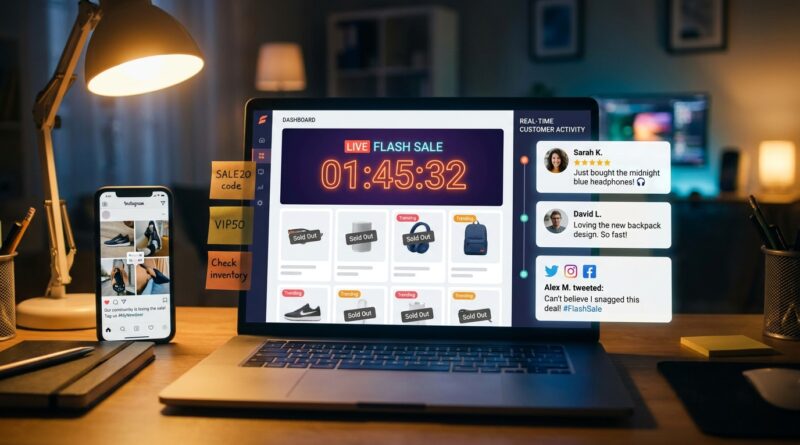
The ‘Peer Proof Flash’ Strategy: Turn Live Buyer Comments Into Your Highest‑Trust 60‑Minute Sale
You know the feeling. You set up a flash sale, add a decent discount, slap on a countdown timer, send the emails, and wait for the orders to roll in. Then the traffic shows up, people click around, and… not much happens. That is frustrating, especially when the offer is actually good. The problem is not always your price. More often, shoppers just do not trust a lonely banner anymore. They have seen too many fake countdowns, too many “limited time” offers, and too many polished product pages that feel a little too polished.
What buyers do trust is other buyers. They trust comments, questions, photos, quick reactions, and signs that real people are buying right now. That is where the Peer Proof Flash comes in. It is a short, focused sale designed so customer activity becomes part of the selling. Instead of saying, “Please believe our discount,” you show proof in public that people like them are already asking, buying, and liking what they see. For a small or mid-size store, that is a much smarter way to run an ecommerce flash sale social proof strategy in 2026.
⚡ In a Hurry? Key Takeaways
- A Peer Proof Flash works by turning live buyer comments, questions, and purchases into trust signals during a short sale window.
- Start with one hero product, one 60-minute event, and one place where shoppers can see real customer activity in real time.
- Keep it honest. Fake urgency or made-up comments will do more harm than a weak discount ever would.
Why normal flash sales are losing their punch
For years, the formula was simple. Add a discount. Put up a timer. Send traffic to the page. Done.
That still gets attention, but attention is not the same thing as trust. Buyers have become better at spotting empty urgency. They know when a countdown clock resets every day. They know when “only 3 left” feels suspicious. And they know that a product page can look great while telling them very little about what actual customers think.
That is why a plain discount often brings browsers, not buyers. People want a reason to feel safe buying now. Social proof gives them that reason.
What a Peer Proof Flash actually is
A Peer Proof Flash is a 60-minute sale built around visible customer activity.
The discount matters, but it is not the star. The star is live proof. That can include:
- Real-time buyer comments
- Questions answered during the sale
- Fresh customer photos or videos
- Recent order notifications that are truthful and not spammy
- Chat reactions during a live session
- Short reviews highlighted while the sale is happening
The basic idea is simple. Each customer action lowers the fear for the next customer. One person asks a sizing question. Another posts a photo. Someone else buys. Now the page feels alive. Trust starts to build on itself.
Why this works better in 2026
Shoppers are numb to generic promotions, but they still pay attention to people. That is why platforms keep pushing live shopping, social commerce, creator clips, and UGC. Those formats feel closer to real life. People can see others react, ask, hesitate, and buy.
Static product pages do not create that feeling. A Peer Proof Flash does, even if you are a smaller store without a giant production budget.
You are not trying to rebuild your whole shop. You are creating one short event where customer proof is easier to see than your sales copy.
How to set up a Peer Proof Flash without making it complicated
1. Pick one hero product, not ten
Do not turn this into a storewide mess. Choose one product, or one tight bundle, that already has some customer love behind it. Ideally, it should be something people often ask about before buying. That hesitation is useful, because visible answers help close the sale.
If you want a stronger top-of-funnel push before the event starts, pair this with a simple teaser video. A good example is The ‘AI Video Flash’ Strategy: Turn One 30‑Second Clip Into A Weekend Sellout, which is built around using a short clip to create momentum fast.
2. Choose one main public sales space
Your shoppers need to see activity, not hunt for it.
That main space could be:
- A live shopping page on your site
- An Instagram or TikTok live tied to a checkout link
- A product page with embedded comments, reviews, and live Q&A
- A landing page that pulls together the offer, customer reactions, and checkout button
The rule is simple. If the proof is hidden in three different apps, it will not do its job.
3. Gather proof before the clock starts
“Live” does not mean starting from zero. You should walk into the 60 minutes with material ready to go.
Prepare:
- 5 to 10 short customer quotes
- 3 to 5 customer photos
- Answers to common questions
- A pinned comment explaining the offer clearly
- A simple plan for posting updates every few minutes
Think of it like hosting a party. Guests create the energy, but you still set out the food before they arrive.
4. Make your first buyers visible quickly
The hardest part of any sale is the first few conversions. Once people see that others are going first, resistance drops.
So seed the session with likely buyers. That might mean:
- Emailing past customers who already like the product
- Inviting VIP shoppers in 10 minutes early
- Offering a small bonus to the first 20 orders
- Asking repeat customers to share a quick comment during the event
You are not faking momentum. You are making it easier for genuine supporters to show up early and be seen.
5. Answer questions in public
This is where many stores miss the point. If someone asks about size, shipping, ingredients, compatibility, or returns, answer where everyone can see it.
That one answer may help ten silent shoppers.
Private support solves one problem. Public support helps the whole room convert.
What to show during the 60-minute window
You do not need nonstop hype. You need a steady rhythm of proof.
A simple flow looks like this:
Minutes 0 to 10
Open with the offer, the deadline, and the reason people buy this product. Then post one or two strong customer quotes and answer any early questions fast.
Minutes 10 to 25
Show buyer activity. Share a customer image. Mention common use cases. Highlight what people are asking right now.
Minutes 25 to 45
This is usually the hesitation zone. People are interested but still stalling. Post reassurance here. Shipping clarity. return policy reminders. real product photos. short comments from buyers who just checked out.
Minutes 45 to 60
Now urgency helps, because trust is already in place. Remind people the window is ending. Show final questions getting answered. Repeat the strongest proof points. Keep checkout links obvious.
What counts as good social proof, and what feels fake
Good social proof sounds like a person. Fake social proof sounds like ad copy wearing a fake moustache.
Good
- “I bought this last month and the fit was better than I expected.”
- “Does this work with the older model?”
- “Mine arrived in two days. Ordering another for my sister.”
Bad
- “This amazing life-changing product will revolutionize your daily routine.”
- Fake names with suspiciously polished praise
- Pop-ups claiming purchases that never happened
If it looks manufactured, trust disappears fast. Your ecommerce flash sale social proof strategy only works if people believe the proof is real.
Three mistakes that quietly kill these sales
Too much chaos
If comments, discounts, links, and updates are flying everywhere, people get tired. Keep one main message and one obvious call to action.
No moderation
Live comments are useful, but they need a human watching them. Spam, duplicate questions, and confusion can drag the whole session down.
Relying only on urgency
A timer is fine. A timer without proof is wallpaper. Use urgency as the closer, not the whole pitch.
A practical tech stack for small and mid-size stores
You do not need a giant budget to do this well.
A workable setup can be very simple:
- Your ecommerce platform product page or landing page
- A live video tool or social live feature
- A reviews app that can show recent customer content
- A chat or comment feed
- Email and SMS to bring people in at the right time
The trick is not adding more software. It is making sure the shopper can see trust signals without clicking all over the place.
How to measure whether it worked
Do not judge this only by total revenue. Look at the trust metrics behind the revenue.
Useful numbers include:
- Comment rate during the sale
- Questions answered publicly
- Click-to-checkout rate
- Conversion rate during the 60 minutes
- Average order value
- Number of customer photos or comments created
If you see more engagement and better checkout conversion, you are not just discounting harder. You are reducing buyer doubt.
Who should use this strategy first
This works especially well if you sell products people like to talk about before buying. Think skincare, apparel, fitness gear, home gadgets, pet products, or anything with fit, feel, setup, or quality questions.
It also helps stores with decent traffic but weak conversion. If people are already showing up and not buying, that usually means trust is the bottleneck.
At a Glance: Comparison
| Feature/Aspect | Details | Verdict |
|---|---|---|
| Standard flash sale | Heavy on discount and timer, light on visible customer activity | Good for clicks, weaker for trust |
| Peer Proof Flash | Uses live comments, public Q&A, customer content, and truthful purchase signals during a 60-minute event | Best for hesitant buyers who need reassurance |
| Setup effort | Needs planning, moderation, and prepped customer proof, but not a full store rebuild | Very realistic for small and mid-size stores |
Conclusion
If your flash sales are getting attention but not enough checkouts, the fix may not be a deeper discount. It may be more visible trust. In 2026, buyers are tired of plain promos but still highly tuned in to what real customers are saying in public. That is why social commerce, UGC, and live shopping keep growing. Sessions that show people asking questions, posting photos, and buying in real time simply convert better than a stale page with a timer at the top. A Peer Proof Flash gives small and mid-size stores a practical way to use that shift without rebuilding everything. You create one short, intense sales window where every real customer action helps the next buyer feel safer. That is how you stop chasing random bargain hunters and start converting the higher-value shoppers who were interested all along, but needed to see other humans go first.