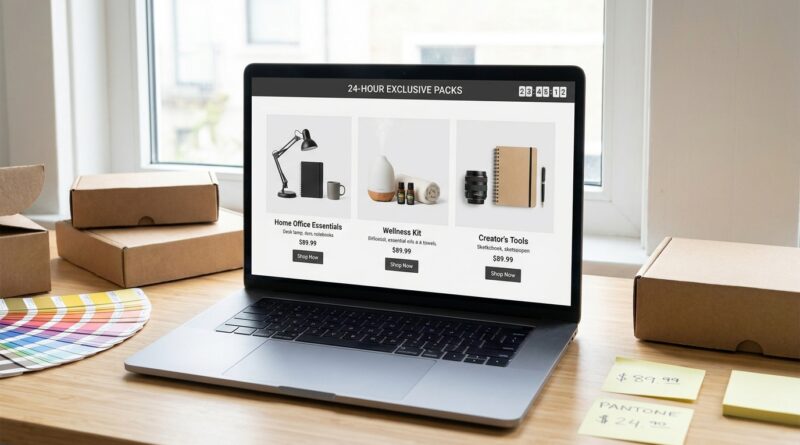
The ‘Micro-Bundle Flash’ Strategy: Turn Slow-Moving Singles Into High‑Margin 24‑Hour Packs
You can feel the trap when inventory starts collecting dust. A few products refuse to move at full price, they barely react to a storewide sale, and every extra discount starts to make the rest of your catalog look weaker. That is frustrating enough on its own. Then ad costs creep up again, and suddenly those slow sellers are not just annoying. They are tying up cash while eating into your ability to keep buying traffic. This is where the micro-bundle flash strategy earns its keep. Instead of marking down one lonely underperformer and making it look unwanted, you group a few slow-moving singles into a tight, useful 24-hour pack. It feels more curated, more special, and often more giftable. Customers see a kit, not clearance. You get room to offer a stronger deal, raise average order value, and clear stale stock without teaching shoppers to wait for 40 percent off on everything.
⚡ In a Hurry? Key Takeaways
- A micro-bundle flash is an ecommerce flash sale product bundle strategy that turns slow singles into a limited-time kit, so you can discount the pack without cheapening the whole store.
- Start with 2 to 4 items that naturally fit together, give the bundle a simple use case, and run it for just 24 hours with one clear message.
- Do not dump random leftovers into a pack. If the bundle feels sloppy or over-discounted, it can hurt trust instead of helping margin.
Why single-item markdowns often backfire
When one product is not selling, the obvious move is to cut the price. Then cut it again. But shoppers are not blind. If they keep seeing one item discounted harder and harder, they do not think, “What a great opportunity.” They think, “Something must be wrong with it,” or worse, “I should wait because this brand always drops prices further.”
That is the real problem. You are not just trying to move one SKU. You are protecting how people see your brand.
A deep discount on a single item can drag down perceived value across the store. A bundle changes the story. Now the discount is attached to a limited kit, not to the everyday value of one product.
What a micro-bundle flash actually is
Think of it as a short, focused kit sale. Usually 2 to 4 items. Usually live for 24 hours. Usually built around one clear theme.
Examples:
- “Desk Reset Kit” with a notebook, cable organizer, and screen wipes
- “Sunday Skincare Set” with cleanser, mask, and mini serum
- “Cold Weather Bundle” with socks, lip balm, and hand cream
The products may be slow on their own. Together, they feel intentional.
Why this works better than a blunt sale
Customers do not buy products only by SKU logic. They buy stories, convenience, and outcomes. A small bundle gives them all three. It answers the question, “Why these items?” before they even ask it.
It also gives you more room on price. A 25 percent cut on a bundle can feel bigger and more exciting than 25 percent off a single item, even if the economics are better for you.
How this helps when ad costs rise
Higher traffic costs mean average order value matters more. If your ad spend is climbing, low-ticket one-off purchases get harder to justify.
A bundle helps by lifting order size without forcing customers to build their own cart. You are doing the work for them. That can make paid traffic more tolerable again, especially for smaller stores that do not have much room for waste.
This is why the ecommerce flash sale product bundle strategy is so useful right now. It tackles two headaches at once. It helps clear stagnant stock, and it gives your traffic a better chance of paying for itself.
How to build a micro-bundle that does not feel like a junk drawer
1. Pick products with a real connection
Do not just grab three items nobody wants and tape them together. The bundle has to make sense fast. A shopper should understand it in two seconds.
Ask:
- Do these items solve one small problem together?
- Would someone actually use them in the same week?
- Can I name this pack without sounding silly?
If you cannot answer yes, keep working.
2. Use one hero item and supporting pieces
The easiest structure is one item with some appeal, plus one or two slower add-ons. The hero item gets the click. The supporting items help clear inventory and make the bundle feel complete.
That is a much smarter mix than grouping only dead stock together and hoping nobody notices.
3. Keep the discount meaningful, but not wild
You want enough savings to make the 24-hour window feel worth acting on. But you do not need to go nuclear. Many brands do well with a bundle price that lands around 15 to 30 percent below the combined individual prices.
That is often enough to feel like a real deal without training your customers to wait for huge markdowns.
4. Give it a job, not just a price
“Bundle and save” is weak. “Travel Essentials Pack” is stronger. “Last-Minute Host Gift Set” is stronger still.
Name the use case. Show the situation. Help people picture why they need it now.
The 24-hour part matters more than people think
A lot of stores leave promotions running too long. By day three, urgency is gone. By day five, it just feels like the new normal.
A 24-hour micro-bundle flash keeps things sharp. It says this is a specific event, not a pricing collapse.
If you already have an audience segment that tends to hesitate, pair this with a waitlist or early-access angle. That is where a strategy like The ‘VIP-Waitlist Flash’ Strategy: Turn Your “Maybe Later” Shoppers Into Your Highest-Intent 24‑Hour Buyers fits nicely. It gives your most interested shoppers a reason to act without blasting the whole store with desperation energy.
A simple rollout plan for smaller brands
Before the flash
- Choose 2 to 4 products with enough stock to matter
- Write one bundle name and one-sentence reason to buy
- Create a single product page or landing page
- Prepare email, SMS, and one paid ad angle
During the flash
- Lead with the outcome, not the discount math
- Show the bundle together in one image if possible
- Repeat that it ends tonight, and mean it
- Keep the rest of the site calm so the event feels focused
After the flash
- Check sell-through on each included SKU
- Measure average order value versus your normal day
- See whether paid traffic looked healthier with the higher cart size
- Save the winning bundle structure for future slow stock
Common mistakes to avoid
Making the bundle too big
More items do not always mean more value. Often they just create friction. Small and clear beats large and confusing.
Using random leftovers
Customers can spot a cleanup operation from a mile away. If it looks like you are emptying a warehouse shelf, they will treat it like clearance.
Running it too often
If every week is a 24-hour flash, none of them feel special. Use this when you have a real inventory reason or a traffic-cost reason.
Forgetting margin math
Not every bundle is a good bundle. Check packaging cost, shipping weight, and contribution margin before you launch. The point is to protect profit, not just create motion.
When this strategy works best
This approach is especially useful when:
- You have slow singles that still look fine and still have value
- You want to avoid publicly gutting one product’s price
- Your paid traffic needs a higher average order value to stay workable
- You need a fast “deal-of-the-day” event without cheapening the whole brand
It is less useful when the product has serious quality issues, extreme seasonality, or no logical pairings. In those cases, you may need a different fix.
At a Glance: Comparison
| Feature/Aspect | Details | Verdict |
|---|---|---|
| Single-item deep discount | Moves one SKU faster, but can make the product look unwanted and train shoppers to hold out for lower prices. | Risky for brand value |
| Micro-bundle flash | Combines 2 to 4 related items into a themed 24-hour pack that supports stronger pricing and higher AOV. | Best balance of margin and urgency |
| Storewide sale | Easy to explain, but often cuts too broadly and does little for the exact overstock problem. | Useful, but blunt |
Conclusion
If your store is stuck with slow-moving singles and rising ad costs, you do not have to choose between dead inventory and brand damage. A micro-bundle flash gives you a cleaner option. You turn stale products into a premium-feeling kit, you create a reason for a stronger discount without telling customers that everything is always on sale, and you lift average order value enough to make traffic easier to justify. That is the real win. Two big things are colliding this week: paid traffic is getting more expensive again, and a lot of brands are quietly sitting on overstock they are afraid to dump via deep single-item discounts because it nukes perceived value for the rest of the catalog. A micro-bundle flash solves both problems in one move. For smaller brands, it is one of the fastest ways to run a deal-of-the-day style event that feels exclusive and smart instead of desperate.