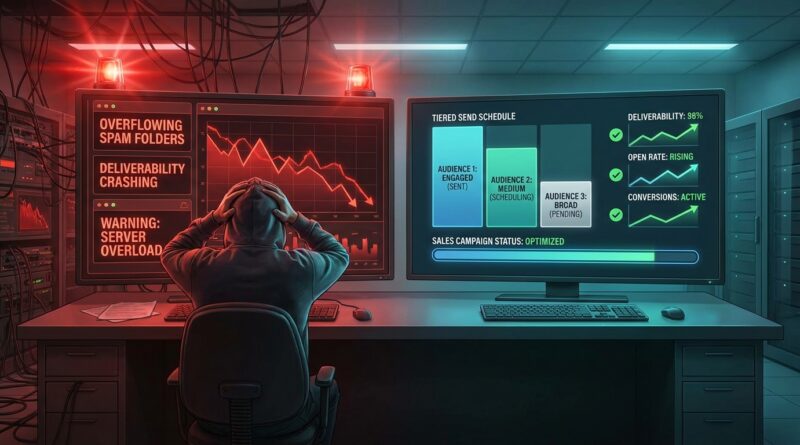
The ‘Inbox Warm‑Up Flash’ Strategy: Turn One Smart Send Order Into Your Highest‑Delivering Flash Sale Of The Month
You spend days planning a flash sale, write the promo, pick the perfect subject line, and then one big send knocks the wind out of your whole email program. That is the part that feels unfair. You wanted a quick revenue spike. Instead, Gmail gets cautious, open rates slide, and the next campaign suffers too. If that sounds familiar, the fix is usually not a better template or louder discount. It is send order. A smart flash sale email strategy for better deliverability starts by warming up the inbox with your most engaged readers first, then expanding in waves only if the early signals look healthy. That one change can help small and mid-size stores protect sender reputation, keep more emails out of the Promotions graveyard, and turn “last chance” campaigns into actual last-minute sales instead of list damage. The good news is this is simple to set up, cheap to run, and easy to repeat every month.
⚡ In a Hurry? Key Takeaways
- A better flash sale email strategy for better deliverability is to send in engagement tiers, not to your full list all at once.
- Start with your hottest segment first, check opens, clicks, bounces, and complaints, then release the next wave.
- This protects sender reputation, helps future campaigns land better, and often makes just as much revenue with less risk.
Why one giant flash sale send can hurt more than help
Email providers do not just look at what you send. They look at how people react to it. If a huge chunk of your list ignores the message, deletes it, or marks it as spam, that sends a loud signal.
And inbox providers are a lot stricter now. A sudden spike in volume to cold subscribers can make your campaign look risky, even if your business is perfectly legitimate.
That is why a flash sale can backfire. You get one short burst of traffic, then your next few emails underperform because your sender reputation took a hit.
What usually goes wrong
Most stores build the flash sale around urgency. “Starts now.” “Ends tonight.” “Last chance.” The timing feels too tight to be careful, so they blast everyone at once.
But your list is not one audience. It is several. You have loyal openers, recent buyers, occasional readers, long-term sleepers, and people who probably forgot they signed up.
Treating them all the same is where the trouble starts.
What the “Inbox Warm-Up Flash” strategy actually is
Think of it as sending your flash sale in smart waves.
You begin with the people most likely to engage right away. That gives inbox providers a clean first impression. If those readers open, click, and buy, the next wave has a better chance of landing well too.
It is not a trick. It is just good list hygiene mixed with good timing.
The basic send order
Wave 1: Subscribers who opened or clicked in the last 14 to 30 days, plus recent customers.
Wave 2: Subscribers engaged in the last 31 to 90 days.
Wave 3: Older or less active subscribers, only if the first waves perform well.
If Wave 1 looks weak, you pause. That is the whole point. You do not keep pushing volume into a campaign that is already struggling.
Why this works better than brute force
Inbox systems love consistency and positive engagement. They get nervous when they see a sudden jump in send volume paired with weak response.
By starting with your best readers, you improve the odds of:
- Higher open rates in the first hours
- More clicks and replies
- Lower spam complaints
- Better inbox placement for later waves
That first wave acts like a trust signal. You are showing the mailbox provider that people want this email.
How to build your tiers without making it complicated
You do not need enterprise software for this. Most email platforms already let you segment by opens, clicks, purchase date, and engagement window.
Tier 1: Your warmest audience
This is your safest starting point. Include people who:
- Opened or clicked recently
- Bought in the last 30 to 60 days
- Visited key product pages, if your platform tracks that
This group should get the first version of the flash sale.
Tier 2: Your solid but cooler audience
These people still know who you are, but they are not as active. Maybe they opened something in the last two or three months. They are good candidates for the second wave if your first numbers are healthy.
Tier 3: Your risky audience
This includes long-inactive subscribers, older imports, and anyone who has not engaged in a long time. Sending a flash sale to them can be tempting. It can also be expensive if it drags down deliverability.
In many cases, this tier should get a re-engagement message later, not the main flash sale.
What to watch between waves
Do not just schedule all three sends and hope for the best. The power of this strategy comes from checking the signals before you move on.
Watch these four numbers first
- Open rate: Is it in line with or better than your normal engaged-segment campaigns?
- Click rate: Are people actually interacting, not just glancing?
- Bounce rate: A high bounce rate is a warning sign.
- Spam complaints: Even a small jump matters during a flash sale.
If the first wave is healthy, release the next one. If it is soft, tighten your next segment instead of expanding it.
Subject lines and content still matter, but they are not the first fix
Plenty of teams blame copy when deliverability is the real problem. Yes, a cleaner subject line helps. Yes, a stronger offer helps. But if you send a flash sale to too many unengaged people at once, even great copy can sink.
Keep the email simple. Clear discount. Clear end time. One main call to action. Mobile-friendly layout. That is enough.
If you want to squeeze more revenue from the same campaign without hammering your whole list, pair your flash sale with targeted recovery flows. For example, abandoned cart buyers are often far more valuable than cold subscribers. That is why strategies like The ‘AI Cart Rescue Flash’ Strategy: Turn 100 Abandoned Carts Into Your Fastest High-Intent Sale Of The Week can work so well beside a tiered promo send.
A simple rollout plan for your next flash sale
Step 1: Start 12 to 24 hours earlier with your hottest segment
Do not wait until the official sale rush. Let your warmest audience go first. That early engagement can help the main push land better.
Step 2: Review performance after the first send
Give it enough time to gather real data. Then compare it to your usual numbers for engaged subscribers.
Step 3: Expand carefully
If performance is steady, send to the next engagement tier. If not, hold back your coldest subscribers.
Step 4: Save your “last chance” email for people who showed intent
Do not send the final countdown to everyone by default. Aim it at openers, clickers, cart starters, and recent site visitors first.
Common mistakes to avoid
- Sending your largest list segment first
- Ignoring inactive subscribers for months, then blasting them during a sale
- Using the same message for buyers, browsers, and sleepers
- Judging success by revenue alone while inbox placement quietly worsens
That last one catches a lot of teams. A flash sale can look good on the day and still harm the next three sends.
At a Glance: Comparison
| Feature/Aspect | Details | Verdict |
|---|---|---|
| Full-list flash sale blast | Fast to set up, but risky if a large part of the list is cold or inactive | Good for speed, bad for long-term deliverability |
| Tiered engagement send | Starts with recent openers and buyers, then expands based on results | Best balance of revenue and inbox safety |
| “Last chance” to intent-based segments | Targets openers, clickers, cart users, and recent visitors instead of everyone | Strong closer with lower reputation risk |
Conclusion
Flash sales do not have to wreck your deliverability. The safer move is also the smarter one. Start with the people most likely to care, watch the response, and only then widen the send. Inbox providers are more aggressive than ever, and every unplanned flash sale blast can quietly damage your list for weeks. A simple tiered send strategy, built around engagement rather than brute force volume, lets small and mid-size stores grab the upside of a flash sale surge without sacrificing future revenue. For our community, this is one of the fastest, lowest-cost changes you can make right now to protect list health, steady open rates, and make every “last chance” email land where it should, at the top of the inbox.