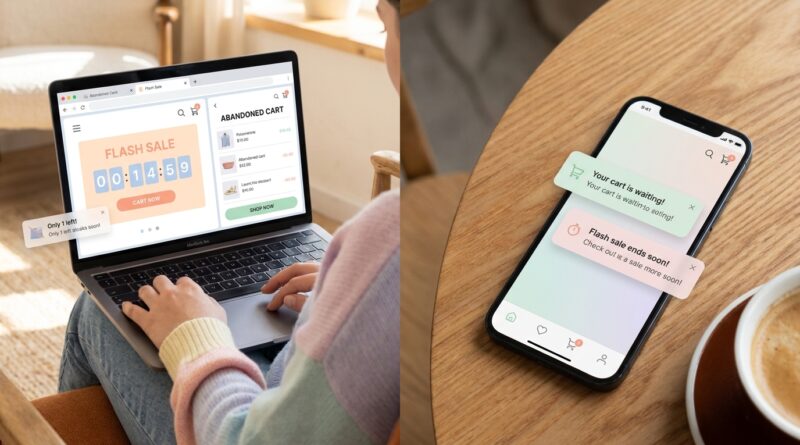
The ‘Cart-Ping Flash’ Strategy: Hit Shoppers While Their Tabs Are Still Open
You set up the discount. You line up the emails. You watch the traffic roll in. Then the frustrating part hits. Shoppers add products to cart, open three more tabs, answer a text, get pulled into work, and your flash sale disappears from their brain. That stings, because these are not cold visitors. They were inches from buying. The fix is not always a bigger discount. A smarter move is an ecommerce flash sale abandoned cart strategy that nudges people while the buying intent is still warm. I call it the cart-ping flash strategy. It is simple. When someone adds to cart during a flash sale, you send a small, well-timed reminder before the tab goes cold. Not ten emails. Not spam. Just a short sequence across the channels they already use, timed to match the short shelf life of a flash sale. Done right, it recovers sales you already paid to earn.
⚡ In a Hurry? Key Takeaways
- A cart-ping flash strategy targets shoppers who already added to cart during a flash sale and reminds them before urgency fades.
- Start with a 3-part sequence: on-site reminder, SMS or push within 15 to 30 minutes, then one email before the sale ends.
- Keep it light and honest. Too many pings can hurt trust, so cap frequency and make opt-outs easy.
Why flash sales fall flat even when traffic looks great
Most flash sales do not fail because the offer is bad. They fail because attention is fragile.
People shop in messy real life. They get interrupted. They compare prices. They open a review tab. They mean to come back. Then they do not.
That is why a basic ecommerce flash sale abandoned cart strategy matters so much. The person who added to cart has already done the hard part. They noticed the product. They liked the price. They pictured owning it. What they need now is a timely nudge, not another 10 percent off.
Big brands often throw money at this problem with bigger discounts and louder ads. Smaller stores can beat them with timing. A smart reminder sent at the right moment is often more profitable than cutting your margin again.
What the cart-ping flash strategy actually is
The cart-ping flash strategy is a short reminder layer built around your flash sale.
Here is the plain-English version. If a shopper adds an item to cart during your sale but does not check out, you trigger a few fast reminders while the sale still feels current.
The basic flow
It usually looks like this:
- An on-site reminder when they come back to the tab or move toward closing it
- A text message or push notification within 15 to 30 minutes
- A short email a few hours later, or closer to the sale deadline
Each message should do one job. Remind them what is in the cart. Confirm the sale is still live. Give them a quick path back to checkout.
That is it. No giant campaign rebuild required.
Why this works better than simply raising the discount
Because hesitation is often not price resistance. It is attention loss.
If someone abandoned a cart 40 minutes into your flash sale, they may not be saying, “This needs to be cheaper.” They may be saying nothing at all, because their dog barked, their boss called, or they wandered off to Instagram.
Your job is to catch them before the moment passes.
This is also why the strategy works nicely alongside urgency tools like reserved inventory or brief checkout windows. If you want to tighten that window even more, The ‘Cart-Hold Flash’ Strategy: Lock In Hot Shoppers For 8 Minutes And Watch Conversions Jump is worth a look. It pairs well with cart-pings because one method protects intent on-site, while the other brings distracted shoppers back.
How to set up a lightweight cart-ping layer
You do not need an enterprise stack to do this. Most ecommerce platforms and marketing tools can handle it with a few triggers.
1. Define the flash sale cart audience
Start with people who:
- Added to cart during the sale window
- Did not purchase within 10 to 20 minutes
- Have at least one reachable channel, such as email, SMS, or push
Keep this segment separate from your normal abandoned cart flow. Flash sale buyers behave differently. The timing is tighter. The message should be tighter too.
2. Use shorter timing than your regular abandoned cart flow
Your normal cart recovery email might wait four hours. That is too slow for a six-hour flash sale.
A better timing model looks like this:
- 10 to 15 minutes: on-site reminder or browser push
- 20 to 30 minutes: SMS if opted in
- 2 to 4 hours later: email reminder
- 60 to 90 minutes before the sale ends: final reminder
The key is simple. Match your reminders to the life span of the offer.
3. Keep the copy short and useful
Good cart-ping copy is not clever. It is clear.
Examples:
- “Your cart is still waiting. Flash sale ends at 8 PM.”
- “You are almost done. Finish checkout before the price resets.”
- “Still want it? Your items are in cart, and the sale is live for 2 more hours.”
Do not cram in five promotions, three product categories, and a giant paragraph. This is a reminder, not a newsletter.
4. Send people back to a ready-to-buy page
Link directly to their cart or a pre-filled checkout path when possible.
Every extra click gives distraction another chance to win.
The best channels for a cart-ping flash strategy
You do not need to use every channel. Use the ones your customers actually respond to.
SMS
Great for urgency. Usually the fastest seen rate. Best for shoppers who already opted in and know your brand.
Still useful, especially for longer same-day sales. Good for adding product image, cart summary, and deadline details.
Push notifications
Very handy if you already have browser or app permissions. Fast, low-friction, and cheap compared with SMS.
On-site reminders
Often overlooked. If someone reopens the tab, a sticky cart reminder or countdown can do a lot of work without sending a single outside message.
What to avoid, because this can go wrong fast
There is a thin line between helpful and annoying.
Do not blast every shopper the same way
If someone already received an SMS and clicked back, maybe skip the email until later. Build simple logic so channels work together instead of piling on.
Do not fake scarcity
If the sale “ends in one hour” every hour, customers will notice. Trust is hard to win back.
Do not dump flash sale shoppers into your normal 3-day cart series
That creates awkward messages after the sale is over. Nothing looks sloppier than reminding someone about a deal that expired yesterday.
Do not forget mobile checkout friction
If your reminder works but checkout is slow, buggy, or confusing on phones, you still lose the sale. Test the full path before launch day.
How smaller brands can use this to beat bigger competitors
Right now, every brand seems to be copying the same playbook. Louder countdowns. Shorter windows. Bigger discount claims. The result is a wall of sameness in inboxes and feeds.
That is actually good news for smaller stores.
You probably cannot outspend Amazon-style sellers. You can out-execute them. A clean cart-ping sequence is faster to build, easier to test, and usually cheaper than adding more paid traffic or deeper price cuts.
It also works with what you already have. Your current email platform, SMS tool, or Shopify app setup can often support this without a full rebuild.
How to measure whether it is working
Keep the scoreboard simple.
Watch these metrics
- Recovered cart revenue during the flash sale window
- Conversion rate for cart abandoners who got pings versus those who did not
- Click-through rate by channel
- Unsubscribe and opt-out rates
- Average order value on recovered carts
If recovered revenue goes up without a spike in opt-outs, you are on the right track.
If opt-outs jump, slow the cadence or cut one channel.
A simple starter playbook for your next sale
If you want the easiest version, use this:
- Create a segment for shoppers who add to cart during the flash sale.
- Wait 20 minutes.
- Send one reminder by SMS or push.
- Send one email 2 to 3 hours later.
- Send one final reminder shortly before the sale ends.
That small change alone can make a flat promotion look much healthier.
At a Glance: Comparison
| Feature/Aspect | Details | Verdict |
|---|---|---|
| Discount depth | Bigger discounts may lift conversions, but they cut margin and train shoppers to wait. | Use only if needed. Timing usually pays better first. |
| Cart-ping reminders | Short, timely nudges to shoppers who already added to cart during the sale. | High-value and fast to implement. |
| Standard abandoned cart flow | Good for everyday recovery, but usually too slow and generic for flash sale urgency. | Useful baseline, but customize it for flash events. |
Conclusion
Most brands are shouting louder with the same timer graphics and the same 20 percent off hook. That is why so many flash sales feel busy but underperform. The easiest profit is often sitting in carts that were almost checked out, then forgotten. A lightweight cart-ping layer fixes that. It helps you catch distracted buyers while their tabs are still open, their intent is still warm, and your discount still matters. Best of all, it is fast to add on almost any platform, works with the flows you already have, and gives smaller brands a real edge. Better timing can beat bigger discounts. That is a much nicer way to win.