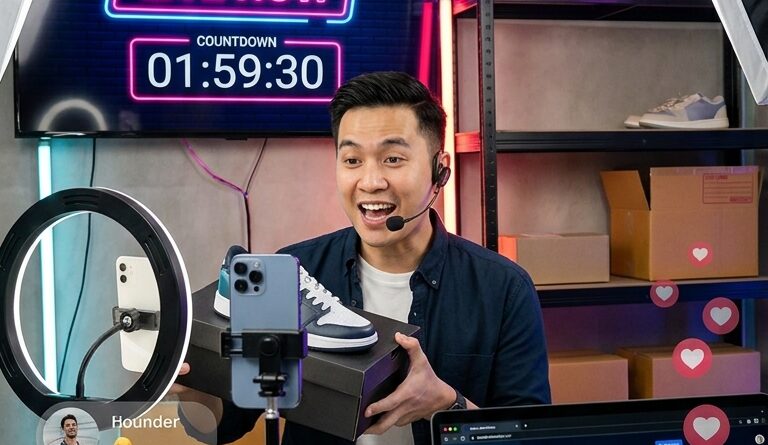
The ‘Two-Hour TikTok Spike’ Flash Sale Strategy: Turn One Live Stream Into A Sellout Window
You are not crazy if TikTok flash deals have felt messy, random, or weirdly disappointing. A lot of small brands hear the success stories, toss up a discount, go live for a bit, and then wonder why nothing happened except lower margins. The missing piece is structure. A good tiktok shop flash sale strategy is not “hit live and hope.” It is a short, controlled sales event with a clear beginning, middle, and end. That matters because TikTok Shop can convert fast when buyers feel urgency, trust the host, and know the offer expires soon. You do not need a huge audience. You do not need an agency. You do need a plan for what happens in each 15 to 30 minute block, what offer you will make, and how you will pull people in from email and SMS instead of waiting for TikTok to bless you with reach. Done right, one two-hour live can act like a compact sellout window, not an all-day time sink.
⚡ In a Hurry? Key Takeaways
- A strong tiktok shop flash sale strategy works best as a two-hour event with planned deal drops, not a random livestream.
- Split the show into warm-up, first deal, midpoint bump, and last-chance push, then support it with one email and two or three SMS reminders.
- Protect margins by limiting the discount window, using bundles or bonus gifts, and keeping full-price positioning the rest of the week.
Why most TikTok Shop flash sales fall flat
The usual mistake is treating the live like content first and a sales event second.
That sounds harmless, but it changes everything. If you are chatting without a clock, a deal sequence, or a traffic plan, viewers drift in and out with no reason to buy now. You may get comments. You may even get a few sales. But you do not get the sharp revenue spike people keep bragging about.
The better approach is to think like a local store running a two-hour sidewalk sale. The signs are up. The timer is real. The best offer happens at a known time. People know what is on sale, when it ends, and why they should care right now.
That is what makes this work. Urgency with order.
The two-hour format that makes TikTok Shop easier to manage
If you are not a full-time creator, this is good news. Two hours is long enough to build momentum and short enough to stay focused.
Segment 1: Warm-up, 0 to 20 minutes
Your job here is simple. Gather viewers, set expectations, and repeat the promise.
Say things like:
“We’re live for two hours only.”
“First deal drops in 10 minutes.”
“If you’re watching on replay, the best offers are live-only and time-limited.”
Do not start with your deepest discount in the first minute. Early viewers need context. Show the product in use. Explain who it is for. Answer basic questions. Pin the hero product. Mention limited quantity if that is true. Keep repeating when the first deal goes live.
This opening block matters because people need a reason to stay. They also need enough trust to buy without overthinking it.
Segment 2: First deal drop, 20 to 45 minutes
This is your first real conversion window.
Make the offer easy to understand in one sentence. Example:
“For the next 25 minutes, this bundle is 15% off and ships free.”
That is better than a vague “we’ve got a special deal today.” Clear beats clever every time.
If your margins are tight, avoid leading with your biggest markdown. Start with one of these:
- A bundle that lifts average order value
- Free shipping over a threshold
- A bonus item for the first set number of orders
- A modest percentage off a hero SKU
The goal is to trigger impulse buying without training customers to wait for giant discounts.
During this block, repeat the offer every few minutes. New viewers are constantly joining. What feels repetitive to you is clarity to them.
Segment 3: Midpoint bump, 45 to 75 minutes
This is where many lives lose energy. You can avoid that with a planned bump.
Use the midpoint to refresh attention with a new angle, not necessarily a new price. You could switch from product demo to comparison. Or customer questions. Or “best use cases.” Or before-and-after results.
Then add a second push. For example:
“We’re halfway through. For the next 15 minutes, every order also gets our travel pouch.”
This keeps the stream from feeling like one long, flat sales pitch.
If you already have a short clip that has converted well, now is a great time to reuse that angle live. It fits nicely with The ‘Live Clip Flash Sale’ Strategy: Turn Your Best 30 Seconds Into A 30‑Minute Revenue Spike, which is built around squeezing more revenue from the proof you already have.
Segment 4: Last-chance push, 75 to 120 minutes
This is the close. Be direct.
Viewers need to know three things:
- What the deal is
- When it ends
- What they miss if they wait
Try language like:
“We’ve got 25 minutes left.”
“This bundle goes back to full price right after the live.”
“If you want the free gift, this is the window.”
Don’t sound panicked. Sound certain.
This is also the right time to answer buying objections fast. Shipping. sizing. compatibility. ingredients. returns. Keep it moving. Buyers in the final stretch are usually deciding, not discovering.
What to say without sounding pushy or cheap
A lot of brand owners freeze here. They worry that “selling” will make them sound desperate.
It usually does not. Rambling does.
Good live selling is just clear, calm repetition. You are helping people make a decision.
Phrases that work well
- “Here’s who this is best for.”
- “If you wanted to try it, this is the lowest-risk window.”
- “This deal is live-only and ends when the stream ends.”
- “Most people are choosing the bundle because it saves more than buying one by one.”
- “If you’re between the two options, start with this one.”
Phrases to avoid
- “This is insane.”
- “Run, don’t walk.”
- “I’m literally obsessed.”
- “This is basically free.”
You do not need hype language if the event is structured well. A timer and a clear offer already do most of the heavy lifting.
How to protect your margins while still creating urgency
This is the part small brands care about most, and rightly so.
A flash sale only helps if it creates profitable demand, not just noisy demand.
Use one of these safer offer types
- Bundle pricing: Better for margin than discounting single units too deeply.
- Gift with purchase: Great if you have low-cost add-ons or samples.
- Tiered savings: Buy 2, save more than buy 1.
- Short shipping promo: Easier to control than a permanent price cut.
- Limited-stock hero offer: Discount only one SKU, not the whole catalog.
Set hard limits before you go live
Decide these in advance:
- Your maximum discount percentage
- Your minimum acceptable margin
- The number of units available at the deal price
- Whether gifts or bundles stop once stock hits a set number
This matters because live selling can tempt you to improvise. Improvising is fun. It is not always profitable.
Do not rely on TikTok alone for traffic
This is one of the biggest upgrades you can make.
Even a strong tiktok shop flash sale strategy should not depend entirely on the algorithm. Bring your own audience too. That means email and SMS.
A simple promo timeline
24 hours before: Send one email. Subject line should be plain and specific. Something like “Tomorrow: 2-hour TikTok Shop flash sale, 7 PM.”
2 hours before: Send one SMS. Short and direct. “We’re live on TikTok at 7 PM for 2 hours only. First deal drops at 7:20.”
At go-live: Send another SMS or email to your warmer list. “We’re live now. First deal starts in 20 minutes.”
At final 30 minutes: Send last-call SMS. “30 minutes left. Live-only bundle ends at 9 PM.”
That sequence gives you traffic waves instead of one burst and silence.
Why this works
People often need more than one reminder. Not because they are uninterested. Because they are busy. A planned reminder sequence catches them when they are free to watch and buy.
How to measure whether the live actually worked
If you cannot measure it, you will be stuck guessing again next week.
Track these basics after every event:
- Total live revenue
- Revenue by segment or deal window
- Units sold per featured product
- Average order value
- Email clicks and SMS clicks into the live
- Peak concurrent viewers
- Conversion rate during each offer window
You are looking for patterns. Maybe the first deal converts best, but the midpoint gift raises order value. Maybe your last-call SMS drives more buyers than TikTok discovery. That is useful. It means you can tighten the next event instead of starting from scratch.
A copy-and-paste run sheet for your next live
Here is a practical version you can use this week.
Before the live
- Pick one hero SKU and one bundle
- Set a two-hour time slot
- Create one main deal and one midpoint bonus
- Write your email and SMS reminders
- Prepare answers to the top five buyer questions
During the live
- 0:00 to 0:20 Welcome viewers, demo product, announce first deal time
- 0:20 to 0:45 Launch first deal, repeat offer clearly, answer easy objections
- 0:45 to 1:15 Midpoint bump with bonus gift, comparison, or use-case angle
- 1:15 to 2:00 Last-chance push, countdown reminders, direct buying prompts
After the live
- Pull performance numbers the same day
- Save clips of the best converting moments
- Note which phrases got questions or sales
- Keep your full-price positioning outside the event window
Common mistakes to avoid
- Starting with your deepest discount too early
- Offering too many products at once
- Talking about features without saying who the product is for
- Failing to mention the end time often enough
- Skipping email and SMS because “TikTok will push it”
- Changing the deal midstream without a reason
If you fix just those six things, your next event will already feel more intentional.
At a Glance: Comparison
| Feature/Aspect | Details | Verdict |
|---|---|---|
| Two-hour live structure | Warm-up, first deal, midpoint bump, and last-chance push keep viewers moving toward a purchase instead of drifting. | Best option for small brands that need focus and clear timing. |
| Offer type | Bundles, bonus gifts, and short shipping promos usually protect margin better than deep sitewide discounts. | Safer than blanket markdowns. |
| Traffic source | TikTok discovery helps, but email and SMS reminders create more reliable spikes at key moments. | Use both. Do not rely on algorithm luck. |
Conclusion
TikTok Shop is one of the highest converting flash-sale channels in 2026, and brands are regularly seeing 5 to 10 times their normal hourly revenue when they pair short live shows with tightly timed deals. The catch is that most small brands treat it like a random broadcast instead of a controlled event. That is why a simple two-hour framework works so well. You know when to warm people up, when to drop the first offer, when to add a midpoint bump, and how to close with a real last-chance push. You also keep your margins safer by using bundles, gifts, or limited windows instead of living on permanent discounts. Best of all, you do not need new tech, a giant following, or an agency to make this work. You can run this play this week, measure what happened, and use one focused stream to create a real sellout window while protecting your pricing for the other 166 hours of the week.