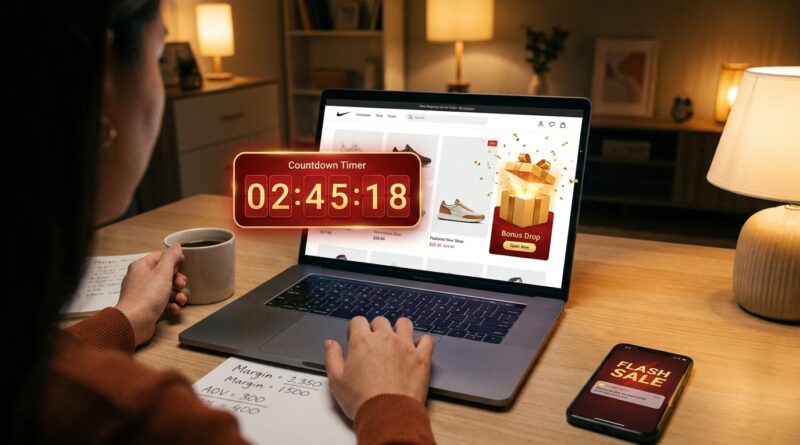
The ‘Bonus Drop Flash Sale’ Strategy: Add A Mystery Reward Instead Of A Deeper Discount
You can feel the trap, can’t you? Every time a flash sale underperforms, the easy fix is to cut prices a little more. Then a little more again. Before long, your margins are thinner than your patience, and your customers have learned a bad habit. They stop buying at full price and start waiting for the next code. Worse, your sale starts to look like every other sale in their inbox. Same countdown. Same red graphics. Same tired “20% off today only” line. A Bonus Drop Flash Sale gives you a cleaner way out. Instead of taking more money off, you keep the core price steady and add a mystery reward for buyers during a short window. It could be a free add-on, an upgrade, store credit, early access, or a limited gift. Customers still get that rush of getting more, but you don’t have to keep chopping into profit to make the sale feel exciting.
⚡ In a Hurry? Key Takeaways
- A Bonus Drop Flash Sale swaps a deeper discount for a surprise extra, which helps you stand out without wrecking your margin.
- Start with low-cost, high-perceived-value rewards like samples, upgrades, bundles, or future credit tied to a tight time window.
- Be clear about terms, inventory, and fulfillment so the “mystery” feels fun, not misleading or messy.
What a Bonus Drop Flash Sale Actually Is
Think of it as a flash sale with a twist. The customer buys at your normal promo price, or even full price in some cases, and gets a surprise bonus if they purchase during a short window.
The bonus is the hook. Not a bigger percentage off. Not another coupon stack. Just an extra reward that feels exclusive and time-sensitive.
That reward could be simple:
- A free best-selling accessory
- A mystery deluxe sample pack
- A limited-edition color or variant
- A free shipping upgrade
- $10 store credit for the next purchase
- A hidden bundle upgrade
The point is not to be random for the sake of it. The point is to make the offer feel fresh while protecting your pricing.
Why This Works Better Than Yet Another Discount
Customers are numb to standard sale language
Most shoppers have seen so many discount banners that they barely register them anymore. If every brand is shouting about 15%, 20%, or 25% off, your message becomes wallpaper.
A mystery reward breaks that pattern. It gives people a reason to pause because it does not feel copied and pasted from everyone else.
It uses scarcity without feeling cheap
People still react to a real deadline. They also react to getting something extra. A Bonus Drop Flash Sale combines both.
You are basically saying, “Buy in this small window and you get a bonus others won’t.” That feels more like access and less like clearance bin panic.
It helps protect margin
This is the business side that matters most. A 25% discount hits every order the same way. A bonus gift does not.
If you choose the bonus carefully, the cost to you can be much lower than the value the customer feels they are getting. That gap is where this strategy shines.
How to Pick the Right Mystery Reward
The best reward is not always the most expensive one. It is the one with the strongest perceived value and the lowest pain to fulfill.
Good bonus options for most ecommerce brands
- Overstock items that still look desirable
- Small accessories with strong perceived value
- Digital add-ons like guides, templates, or premium content
- Early access to a future launch
- Gift-with-purchase items tied to your hero product
- Store credit for a second order
What to avoid
- Slow-moving junk customers would never buy on purpose
- Rewards that are expensive to ship
- Complicated choices that create support headaches
- Anything that makes customers feel tricked once revealed
If the “mystery” turns out to be disappointing, the whole idea backfires. A surprise should feel like a treat, not leftover inventory in fancy wrapping.
How to Structure the Offer So People Actually Click
This strategy works best when it feels like a mini event. That means presentation matters.
Use a short, clean time frame
Keep the window tight. Four hours, twelve hours, or one day is usually enough. Too long, and the urgency fades. Too short, and people miss it.
Tease the category, not the exact item
You do not have to reveal everything. In fact, you probably should not. But you should give enough detail that people trust the offer.
For example:
- “Today’s orders get a mystery skincare bonus worth up to $18”
- “Flash buyers unlock a surprise accessory with every bag purchase”
- “Buy before midnight for a hidden bonus drop from our summer collection”
That keeps the surprise while still setting expectations.
Make the bonus feel limited
If possible, cap the reward by quantity as well as time. “First 200 orders” is powerful because it feels real. Just be sure you can track it properly.
Where Smaller Brands Can Really Win
Big retailers can outspend you on ad volume and brute-force discounts. They can flood feeds and inboxes all week. What they often struggle with is making a sale feel personal, fun, and worth talking about.
That is where smaller brands have an opening. A Bonus Drop Flash Sale can feel more like an insider moment than a mass promotion. It gives your regular buyers something to watch for and your email list a reason to stay tuned.
It also turns a plain offer into a story. “I ordered during the drop and got the surprise upgrade” is a lot more memorable than “I used a 20% off code.”
How to Launch One Without Making a Mess
Step 1: Start with one product group
Do not run this across your whole catalog on day one. Pick a category with healthy margin and clear buyer interest.
Step 2: Match the bonus to the order value
If your average order is $35, do not attach a reward that blows up your economics. Keep the reward cost in proportion to the cart value.
Step 3: Prep your site and support team
Your landing page, cart messaging, confirmation email, and customer service notes should all explain the offer the same way. Confusion kills trust fast.
Step 4: Build anticipation before the drop
Send a teaser email. Post a countdown in stories. Let SMS subscribers know a bonus window is coming. You want people watching for it, not discovering it by accident after it ends.
Step 5: Measure more than top-line revenue
Look at conversion rate, average order value, gross margin, repeat purchase rate, and customer feedback. This is not just about making one good sales day. It is about building a better promo habit.
When to Combine This With Smarter Targeting
Not every shopper should see the exact same version of the offer. Your repeat buyers, first-time visitors, and high-value customers may respond to different bonus types.
If you want to get more precise, it is worth reading The ‘Micro‑Segment Flash Sale’ Strategy: Let AI Build Different Deals For Different Shoppers In The Same Hour. It pairs nicely with the ecommerce flash sale bonus gift strategy because it helps you tailor who gets which kind of reward without turning your promo into chaos.
Common Mistakes to Avoid
Making the mystery too mysterious
If customers have no clue what kind of reward they might get, many will skip it. Curiosity is good. Confusion is not.
Offering a weak bonus
People can forgive a modest gift. They usually will not forgive a disappointing one. The bonus should feel thoughtful and on-brand.
Forgetting margin math
Yes, this is better than discounting blindly. No, it is not free money. Calculate product cost, pick-pack-ship cost, return risk, and customer service load before you launch.
Ignoring the post-purchase experience
A fun promo can quickly sour if the bonus is missing, delayed, or explained poorly. Fulfillment has to be solid.
Simple Examples by Store Type
Beauty brand
“Today only. Every order over $50 gets a mystery bonus item from our new treatment line.”
Fashion store
“Flash window. Buy any jacket and unlock a surprise accessory with your order.”
Home goods shop
“For the next 8 hours, select orders include a limited kitchen bonus pack at no extra cost.”
Supplements brand
“Buy two tubs today and get a mystery sample bundle added to your box.”
These are not huge changes. That is the beauty of it. You are not rebuilding your pricing model. You are just giving the promotion a smarter engine.
At a Glance: Comparison
| Feature/Aspect | Details | Verdict |
|---|---|---|
| Discount impact | Deeper percentage-off promos cut revenue on every order, while a bonus gift often costs less than the discount shoppers expect. | Bonus Drop usually protects margin better. |
| Customer attention | Standard sale banners blend in. A mystery reward creates curiosity, urgency, and a more memorable reason to click. | Bonus Drop is stronger for standing out. |
| Execution risk | You need clear terms, enough inventory, and smooth fulfillment so buyers get what was promised. | Works well if operations are tidy. |
Conclusion
If your usual sale playbook is “cut price, add timer, hope for the best,” it may be time for a reset. Customers are tired of the same old discount language, and many of them are already trained to wait for the next deal anyway. A Bonus Drop Flash Sale gives you a different path. You keep your price integrity, protect more margin, and still give shoppers a real reason to act now. That is the heart of a smart ecommerce flash sale bonus gift strategy. It taps into scarcity and the simple joy of getting something extra for the same price. Done well, it can help a smaller brand look sharper, feel more exciting, and turn an ordinary promotion into something people actually remember.