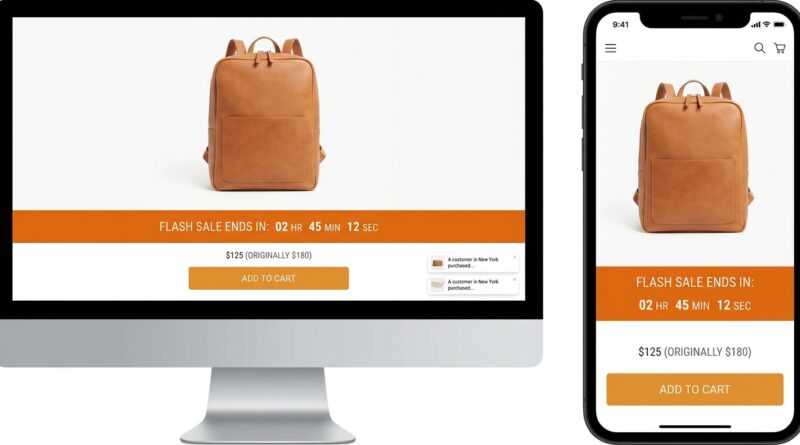
The ‘Single-Product Countdown’ Flash Sale Strategy: How One Hero Item Beats Storewide Discounts Every Time
Most flash sales fail for a very simple reason. They ask shoppers to make too many decisions at once. A banner screams “20% off storewide,” half the catalog gets marked down, and instead of feeling excited, people feel lost. They scroll, compare, hesitate, and leave. Meanwhile, your margins take the hit. If that sounds painfully familiar, you are not doing anything unusual. You are just using a sale format that often creates noise instead of urgency. The better move right now is much simpler. Pick one hero product, give it a real discount, put it on a dedicated page, and add a visible countdown that ends for everyone at the same time. That single product flash sale strategy works because shoppers can understand it almost instantly. One item. One price. One deadline. No scavenger hunt. No mental overload. Just a clear reason to buy now.
⚡ In a Hurry? Key Takeaways
- A single product flash sale strategy usually beats storewide discounts because it creates clarity and real urgency fast.
- Use one hero item, one landing page, one genuine countdown, and one easy-to-see discount shoppers can grasp in three seconds.
- Skip fake stock alerts and messy promo stacks. They hurt trust and make your results harder to measure.
Why one product often sells better than fifty discounted ones
Think about how people shop during a flash sale. They are moving quickly, often on mobile, and they do not want homework. If you discount dozens or hundreds of products, you are turning the sale into a browsing session.
Browsing is not the same as buying.
When you focus the offer on one hero item, the customer does not have to sort through your catalog to figure out what matters. You are doing that work for them. That reduces friction, and friction is often what kills conversion.
Clarity beats variety in a time-limited sale
A storewide sale sounds generous, but it can feel vague. What is actually worth buying? Which deal is best? Is the discount meaningful or just sprinkled everywhere?
A hero item answers those questions immediately. This is the product. This is the discount. This deal ends at this time.
That kind of clarity is exactly why the single product flash sale strategy keeps showing up in merchant discussions. It is easier to understand, easier to promote, and easier to track.
What changed recently
The big shift is that you no longer need custom development to run this well. Tools have gotten simpler. Shopify’s own FlashDrop and newer countdown apps make it easy to put a real timer on a product page or dedicated landing page, show a genuine compare-at price, and launch quickly.
That matters because speed is part of the strategy. If a sale takes a week to build, most smaller stores will never test enough ideas. If you can launch in a day, you can actually learn what works.
Merchants are also getting wiser about trust. Fake low-stock popups and cluttered “someone bought this 14 seconds ago” widgets are losing favor. Shoppers can smell manufactured urgency. A real deadline paired with a real discount feels cleaner and more believable.
The basic setup that works
You do not need a complicated funnel. Start with four pieces.
1. Choose a true hero product
Pick one item people already like, understand, or can buy without much explanation. Bestsellers work well. So do products with broad appeal, healthy margins, or plenty of social proof.
If the product needs a ten-minute demo to make sense, it is probably not the right flash sale item.
2. Build a dedicated landing page
Do not bury the offer on your normal collection pages. Give the sale its own page with one job only: convert.
That page should include:
- The product name and photo right away
- The sale price and regular price
- A visible countdown timer
- Short benefits, not a wall of copy
- One clear add-to-cart button
- Simple shipping and return details
This is not the moment to cross-sell six other categories.
3. Use a real countdown
The timer is important, but only if it is genuine. If your countdown resets tomorrow, customers will notice. Then the next sale loses credibility.
A fixed end time works because it gives people a reason to act now instead of “later.” Later is where most abandoned purchases go to die.
4. Promote one message everywhere
Your email, SMS, homepage banner, and social posts should all say basically the same thing. One product. One discount. One deadline.
Repetition helps. Confusion hurts.
Why this protects margins better
Storewide discounts are expensive because they cut into products that may have sold anyway. You end up discounting your easy wins along with your slow movers.
With one hero product, you control the damage. You know exactly which item is discounted, for how long, and what success looks like. That makes the sale much easier to model.
You can even use the hero item as the front door. Once shoppers are in, some will still add full-price items to the cart. That is a far healthier mix than chopping prices across the entire store from the start.
What shoppers actually see
Here is the non-technical version. A storewide sale says, “Please search for your own deal.” A single-product sale says, “Here is the deal.”
That difference is huge.
People are busy. They reward stores that make decisions easy. A focused offer feels curated. It feels intentional. It feels like the merchant knows what deserves attention.
How to test it in 24 hours
This is one of the best parts. You can run a clean test quickly without rebuilding your whole site.
Fast test plan
- Pick one product with solid margin and broad appeal.
- Create a dedicated landing page with a real countdown.
- Set a true discount that looks meaningful, not token.
- Send one email and one text message to your list.
- Put the same offer in your homepage banner and social stories.
- Track page visits, add-to-cart rate, conversion rate, and average order value.
By the next day, you will have much cleaner data than you would from a chaotic storewide event.
What to measure so you know if it worked
Do not judge the sale only by total revenue. That can fool you.
Look at:
- Click-through rate. Did the message get attention?
- Landing page conversion rate. Did the page do its job?
- Add-to-cart rate. Was the product compelling?
- Average order value. Did shoppers add anything else?
- Profit per order. Did the sale actually make sense?
This is another reason the single product flash sale strategy is so useful. It gives you fewer variables, which means better learning.
Common mistakes to avoid
Making the page too busy
If the sale page looks like your whole store got crammed into one screen, you have missed the point. Keep it focused.
Choosing the wrong item
A weak product does not become exciting just because you attach a timer to it. The item still has to be desirable.
Using fake urgency
False scarcity may get a short-term click, but it costs trust. Trust is hard to win back.
Discounting too lightly
If the offer is only barely better than your normal pricing, shoppers will not feel the urgency. The discount needs to be real and visible.
When to go beyond one product
Once you have the basic version working, you can get more sophisticated. For example, some merchants now tailor different deals to different audiences at the same time. If you want to explore that next step, The ‘Micro‑Segment Flash Sale’ Strategy: Let AI Build Different Deals For Different Shoppers In The Same Hour is a useful companion read.
But that comes after the simple version. Not before it.
For most stores, the smartest first move is still the straightforward one. Prove that one clear offer can convert. Then layer on complexity only if the numbers justify it.
Who this works for
Almost any store can use this approach.
- Small stores with only a handful of products can use it because it is fast and low effort.
- Larger catalogs can use it because it cuts through choice overload.
- Newer brands can use it because it focuses traffic on one item instead of asking visitors to trust the whole catalog at once.
You do not need a developer. You do not need advanced automation. You just need one good product and a sale page people can understand instantly.
At a Glance: Comparison
| Feature/Aspect | Details | Verdict |
|---|---|---|
| Offer structure | Single hero item with one clear discount and one deadline, versus broad markdowns across many products. | Single hero item is easier to understand and usually creates stronger urgency. |
| Margin control | You limit discounts to one chosen product instead of cutting into the whole catalog. | Better for protecting profit and measuring what the sale really costs. |
| Setup speed | Modern tools like Shopify FlashDrop and countdown apps let you launch a focused page quickly without custom code. | Faster to test, easier to repeat, and simpler to improve over time. |
Conclusion
The best flash sales right now are not bigger. They are simpler. That is the real lesson here. A single product flash sale strategy works because it removes confusion, makes urgency believable, and gives shoppers a fast yes-or-no decision instead of a maze. Tools like Shopify’s own FlashDrop and newer countdown apps have made this much easier to set up, even if you do not have a developer on standby. And experienced merchants are increasingly saying the same thing in fresh community threads. They are moving away from fake stock counters, noisy storewide promos, and cluttered pages. They are using one dedicated landing page, one real countdown, and one focused offer that makes sense in three seconds. For The Deal community, that is useful because you can test it in 24 hours, watch your click-through and conversion numbers clearly, and keep improving one reliable play instead of rebuilding your whole store every time you want a sales spike.