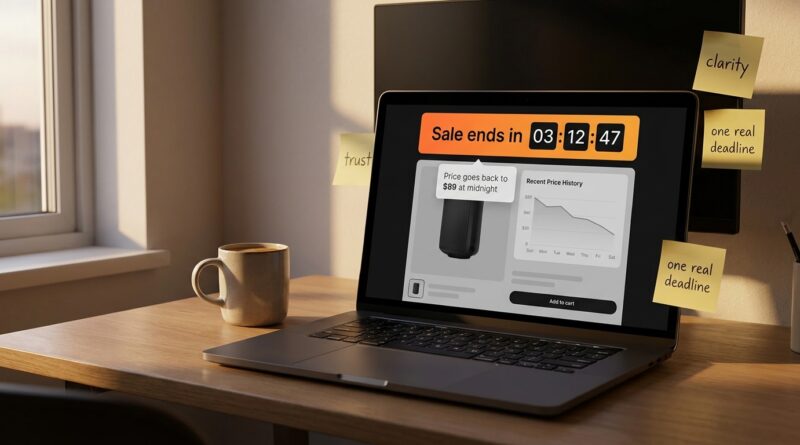
The ‘Trust-Timer Flash’ Strategy: Turn Transparent Deadlines Into Your Highest-Converting Sale Of The Week
You can feel the trap here. Urgency still sells, but fake urgency is getting easier to spot and harder to forgive. Shoppers have seen the countdown that magically resets tomorrow. They have seen “only 2 left” warnings on products that never seem to sell out. And once customers start thinking your sale clock is theater, every future promotion gets weaker. That is the real problem. It is not just one underperforming campaign. It is trust leakage.
The good news is you do not need to give up flash sales. You just need a cleaner version. A trust based ecommerce flash sale strategy uses one real deadline, one clearly stated offer, and visible proof that the sale actually ends when you said it would. No mystery timers. No rolling extensions. No fake scarcity. Done right, this can become your highest-converting sale of the week because it gives shoppers a reason to act now without making them feel played. Better still, most stores can set this up fast with tools they already have.
⚡ In a Hurry? Key Takeaways
- Use a single, real sale window with a verifiable end time. Do not restart the clock.
- Show price history and what happens after the sale, so customers know the deal is honest.
- A visible post-sale reset protects trust and can improve long-term conversion more than constant “urgent” promos.
Why old-school urgency is wearing out
Customers are not imagining it. A lot of ecommerce urgency got sloppy over the last few years. Timers stayed on pages for weeks. “Ends tonight” emails were followed by “extended through Sunday” emails. Low-stock alerts became decoration.
People noticed. They compare notes in Reddit threads, reviews, Facebook groups, and comment sections. Once that skepticism sets in, even honest sales start looking suspect.
That is why a trust based ecommerce flash sale strategy matters now. It is not softer selling. It is smarter selling. You still create a reason to buy today. You just do it in a way that can survive scrutiny.
What the Trust-Timer Flash actually is
Think of it as a flash sale with receipts.
You announce one offer. You set one end time. You make that end time visible across your site, email, and social posts. You keep the pricing clear. Then, when the sale ends, you let it end.
That last part is where most stores slip. They get nervous, extend the sale, and quietly teach customers a bad lesson. Wait long enough and the discount comes back.
The three pieces that make it work
1. One verifiable deadline. The timer should point to a real date and time, ideally with time zone clarity. If your email says the sale ends Friday at 11:59 p.m. Eastern, your product page should say the same thing.
2. Clear price history. Show the regular price, the sale price, and how much buyers save. If your platform supports it, note that the item was sold at the regular price before the promotion. You are removing doubt before it starts.
3. A visible post-sale reset. When the clock hits zero, the price goes back up. Not tomorrow. Not “after a short grace period.” Right then. Customers need to see that your deadline meant something.
Why this converts better than it sounds
At first glance, this can feel too plain. No gimmicks. No endless nudging. But that is exactly why it works.
Real urgency reduces decision delay. Trusted urgency reduces resistance. Put those together and you often get a healthier sale. Not just more clicks, but better quality conversions from customers who do not feel tricked five minutes later.
It also protects your next campaign. If people believe your Friday flash is real, they will pay attention to the next one. If they think your timer is fake, you have to discount harder every time.
How to set one up this week
Step 1: Pick a narrow window
Keep it tight. Four hours, eight hours, or one day is plenty. If you run it all weekend, it stops feeling like a flash and starts feeling like your normal pricing with extra steps.
Weekly works well because customers can learn the rhythm. For example, “Friday Flash, ends at 9 p.m.” is easy to remember and easy to trust if you stick to it.
Step 2: Limit the message, not the truth
You do not need ten urgency widgets fighting for attention. One timer near the add-to-cart button is enough. One short line in the cart is enough. One email reminder before the close is enough.
Too many warnings make honest offers look dishonest.
Step 3: Publish the rules in plain English
Write what the offer is, when it ends, and what happens after. Example:
“Save 20% until Friday at 11:59 p.m. Eastern. Price returns to $79 after the sale. No code needed.”
That is clear. It is hard to misunderstand. It also sounds confident, which helps.
Step 4: Show the regular price honestly
Do not inflate the compare-at price. If your regular price is $79, say $79. If you recently raised prices and then “discounted” back down, sharp shoppers will notice. Some will screenshot it.
If you need to run deeper promotions safely, pair your promotion planning with operational discipline. A helpful companion read is The ‘Inventory‑Safe Flash’ Strategy: Run Aggressive Sales Without Ever Overselling Again. It covers the back-end side many stores forget until orders start piling up.
Step 5: Make the reset visible
This is the whole point. At the end time, the product page should show the regular price again. The timer should disappear or switch to a “sale ended” message. Your cart should update too.
That visible reset turns your timer from decoration into proof.
What to say on the page
If you are not sure how to word it, keep it simple.
Good examples
“Today only. Ends at 8 p.m. Pacific.”
“Regularly $48. Flash price $36 until midnight Eastern.”
“When the timer ends, the price returns to normal.”
What to avoid
“Last chance” if you plan to repeat the exact same deal tomorrow.
“Only 2 left” unless inventory really is that low and updates accurately.
“Extended due to demand” unless there is a real, rare reason and you are willing to explain it.
Common mistakes that quietly kill trust
Resetting the countdown
This is the big one. It may rescue a bad sales day, but it weakens the next ten sales.
Mixing too many urgency claims
A timer, a stock alert, a “20 people viewing,” and a pop-up saying “selling fast” all at once feels like a casino. Use fewer signals and make sure they are true.
Training customers to wait
If your store is always on sale, the regular price becomes fiction in people’s minds. Then your margins get squeezed and your promos lose punch.
Forgetting operations
If a flash sale works and your inventory sync does not, you create a new trust problem. Oversold items, delayed shipping, and cancellation emails can undo all the goodwill from an honest timer.
How to measure if this strategy is working
Do not look only at top-line revenue. Watch these numbers too.
Conversion rate during the sale window
This tells you whether the deadline actually moves shoppers.
Post-sale price acceptance
After the reset, do customers still buy at the regular price? If yes, your promo is creating urgency without destroying baseline pricing.
Email engagement on future flashes
If open rates and click rates stay healthy over time, customers likely trust that your deadlines are real.
Refunds, complaints, and support tickets
If people feel misled, they tell support first and the internet second.
Best fits for a Trust-Timer Flash
This approach works especially well for:
- Products with stable pricing and decent margin
- Weekly hero offers
- Seasonal clearouts where the timeline is real
- Product launches with a defined intro price
It is less useful if your team cannot control pricing changes cleanly or your inventory data is unreliable. Fix those first.
At a Glance: Comparison
| Feature/Aspect | Details | Verdict |
|---|---|---|
| Deadline style | One fixed end time shown consistently across site, cart, and email | Best for trust and repeatability |
| Price transparency | Regular price, flash price, and savings are clearly displayed | Improves confidence and reduces skepticism |
| After-sale behavior | Price resets immediately and visibly when the sale ends | Critical. This is what proves the urgency was real |
Conclusion
The old cheap tricks are wearing out, and customers are getting louder about it. That is why this shift matters right now. Shoppers have learned to spot shady urgency tactics and they are talking about it in public, from Reddit threads to product reviews, which means lazy countdown tactics that worked in 2020 quietly underperform or even backfire in 2026. A trust-based flash built around one verifiable end time, clear price history and a visible post-sale reset gives you the conversion lift of urgency without the long-term damage, and it is simple enough to ship this week on any major ecommerce stack. If you want urgency that still works next month, not just this afternoon, start there.