The ‘Micro-Wave Flash’ Strategy: Turn 3 Tiny Sale Windows Into One Big 24‑Hour Revenue Spike
You line up a flash sale, send the email, post the countdown, and then. Nothing much happens after the first burst. That is frustrating, especially when you know the offer is good and your audience is real. The problem usually is not the discount. It is timing. Most people do not shop the first moment they see a promo. They get pulled into work, school, dinner, texts, life. By the time they remember, the sale is over or the message is buried. A smart 24 hour ecommerce flash sale strategy fixes that by breaking one sale day into three small, timed pushes. Think of it as one sale with three chances to catch attention. An early-bird perk starts the day, a midday bonus wakes things up again, and a last-chance push closes strong. Same 24 hours. Better rhythm. More reasons to come back and buy.
⚡ In a Hurry? Key Takeaways
- Split one flash sale into three timed mini-offers so shoppers have more than one reason to return in the same 24 hours.
- Use a simple schedule: morning early-bird perk, midday booster, and evening last-chance bonus, each with its own announcement.
- Keep the rules easy to understand. If shoppers need to decode the deal, conversion usually drops.
Why regular flash sales stall so fast
A lot of brands treat a flash sale like a fireworks show. One loud launch, then silence. That works only if your audience is standing there looking up at the exact right moment.
Most are not.
People check email on the train, scroll Instagram between meetings, click a product page while making lunch, then wander off. They are interested, but distracted. A single message plus a static countdown timer does not do much for that kind of behavior.
That is why a micro-wave setup works. It matches real life. Instead of asking customers to act now or miss everything, you give them a few fresh reasons to act throughout the day.
What the micro-wave flash strategy actually is
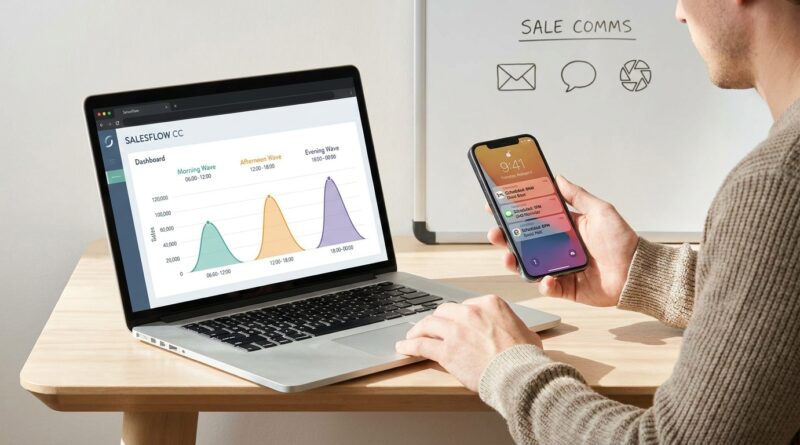
The idea is simple. You run one sale for 24 hours, but inside that day you create three tiny sale windows. Each one has a different perk and a different announcement.
Wave 1: Early-bird drop
This is your morning nudge. It rewards the people who act first.
Example: 20% off plus free shipping until 11 a.m.
Wave 2: Midday boost
This wakes up the sale when energy usually dips.
Example: same 20% off, but now add a free gift or bonus sample from 12 p.m. to 3 p.m.
Wave 3: Last-chance push
This is your evening closer. It gives procrastinators a reason to stop waiting.
Example: same discount, plus a cart threshold bonus or limited add-on from 7 p.m. until midnight.
The point is not to create chaos. The point is to create motion.
Why this works better than one flat discount
Shoppers are tired of seeing the same old “today only” message. It blends into the wallpaper. A micro-wave setup feels alive because something actually changes during the day.
It also gives you three marketing moments instead of one. That matters more than many store owners realize.
- You get three email or SMS angles without sounding repetitive.
- You can re-post on social media with a real update, not the same banner again.
- You can pull back people who clicked earlier but did not buy.
- You create urgency in stages, which feels more natural than shouting all day.
How to build a 24 hour ecommerce flash sale strategy without making it messy
The trick is to change the perk, not the whole sale.
If every wave has new math, new coupon codes, and a new fine-print paragraph, people get confused. Confused shoppers leave.
Keep the base offer steady. Then layer one small incentive onto each window.
Use one anchor offer
Pick the main deal first. Maybe it is 15% off sitewide. Maybe it is buy two, get one half off. That is the anchor. It stays all day.
Add three simple perks
Then assign one extra reason to buy in each wave:
- Morning: free shipping
- Midday: free gift
- Evening: bonus loyalty points or cart threshold reward
Write three clear announcements
Each message should answer one question fast: Why should I shop this window instead of later?
Good example: “From noon to 3 p.m. only, your order includes a free mini kit.”
Bad example: “Our amazing event continues with exciting surprises and stacked value opportunities.”
That sounds like ad soup.
Pick perks people care about
Not every bonus has the same pull. A perk should feel useful, fast to understand, and cheap enough for you to offer safely.
Perks that often work well
- Free shipping
- Free gift with purchase
- Bonus store credit on the next order
- VIP access to a low-stock product
- Extra loyalty points
- Threshold reward, like “Spend $75, get a free add-on”
Perks that can backfire
- Too many coupon codes
- Perks that apply only to tiny categories nobody wants
- Rules that require shoppers to read a paragraph
- Bonuses that disappear at checkout because of tech issues
If your sale depends on stacking discounts, keep the checkout clean. A helpful example is The ‘Stacked-Deal Flash’ Strategy: Turn One Smart Coupon Stack Into Your Highest-Value 24‑Hour Sale, which gets into how to make layered offers feel easy instead of annoying.
A sample one-day schedule you can copy
Here is a beginner-friendly version you can run without a giant team.
8:00 a.m. to 11:00 a.m.
Offer: 20% off plus free shipping
Message: “Early-bird bonus ends at 11.”
12:00 p.m. to 3:00 p.m.
Offer: 20% off plus free gift
Message: “Midday bonus is live. Every order gets a free gift until 3.”
7:00 p.m. to midnight
Offer: 20% off plus spend-$75-get-$10 store credit
Message: “Final hours. Last chance to grab the sale and tonight’s bonus.”
Notice what stays the same. The main sale. Notice what changes. The little nudge.
How to announce each wave without annoying your audience
This part matters. Three waves does not mean blasting every channel every hour.
Be deliberate.
Use email for the first and last wave. Those are usually the strongest traffic drivers.
SMS
Use text carefully for the shortest, clearest windows. Midday or final call often works best.
Social posts and stories
These are perfect for all three waves because they are light-touch and easy to update.
On-site banners
Swap the banner when each wave changes. If your site still shows the morning bonus at 4 p.m., trust drops fast.
Watch these numbers during the sale
You do not need a giant analytics dashboard. Just pay attention to a few key numbers.
- Revenue by time block
- Conversion rate by wave
- Email open and click rates for each announcement
- Average order value during each perk window
- Cart abandonment, especially when a perk changes
After one or two runs, patterns usually show up. Maybe free shipping drives more orders in the morning, but a free gift raises order value later. That helps you tune the next sale instead of guessing.
Common mistakes that ruin the micro-wave idea
Changing too much
If every wave looks like a brand-new event, people get lost. Keep the structure stable.
Using weak perks
A 3% extra discount is not a wave. It is a rounding error.
Forgetting inventory reality
Do not promise gifts or bonuses you cannot fulfill.
Poor timing
If your audience shops mostly at night, a huge 7 a.m. push may not do much.
Complicated checkout
If the perk does not apply automatically, test it before launch. Then test it again.
At a Glance: Comparison
| Feature/Aspect | Details | Verdict |
|---|---|---|
| Single static flash sale | One announcement, one discount, same message all day | Easy to run, but often fades after the first traffic spike |
| Micro-wave flash sale | One 24-hour sale split into three timed perks and three announcements | Best for creating repeat attention and multiple buying peaks |
| Complex multi-code promo | Several changing offers with lots of conditions at checkout | Can lift value, but only if the customer experience stays simple |
Conclusion
If your flash sales feel like they burn bright for an hour and then disappear, do not assume your audience is not interested. More often, they just missed the moment. A better 24 hour ecommerce flash sale strategy is to create three moments instead of one. Shoppers are numb to generic countdown timers and endless “today only” banners, so a single static flash sale is easy to ignore. A micro-wave structure gives small brands a practical way to act like bigger platforms. Pre-load three different perks, schedule three clear announcements, and let one average sale day turn into three natural peaks instead of one slow trickle. It is simple, repeatable, and much kinder to real-world attention spans.