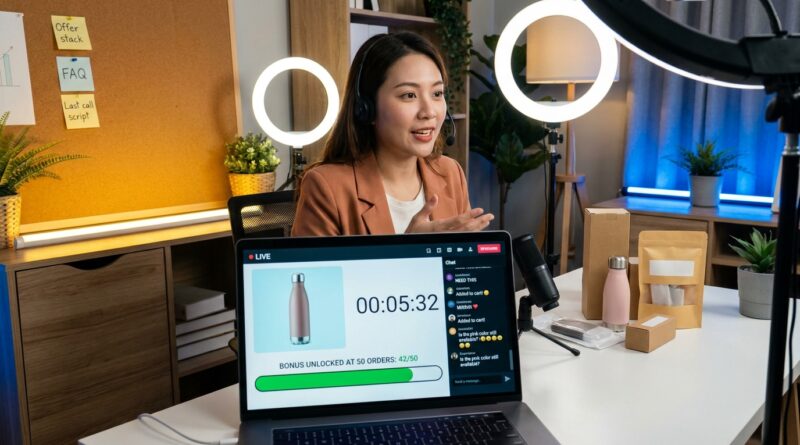
The ‘Live Watch Party Flash Sale’ Strategy: Turn One Creator Stream Into A Sell‑Out Event
You can feel when a livestream “flash sale” is just a coupon with a ring light. The host talks. Comments trickle in. A few people ask about sizing, shipping, or whether the product is actually worth it. Then the energy fades and viewers quietly leave. That is the frustrating part for small brands. You are spending money to get people into the room, but you are not giving them a reason to stay, buy, and feel like they were part of something. A better live commerce flash sale strategy is not about yelling “limited time” louder. It is about giving one stream a simple shape people can follow. Think of it like a watch party with a shopping button attached. One creator. One hero product. One short window. Shared goals on screen. Fast answers to common objections. And a replay plan for everyone who shows up late but still wants in.
⚡ In a Hurry? Key Takeaways
- A strong live commerce flash sale strategy works best when you focus on one hero product, one host, and one clear time limit.
- Use visible group rewards, pinned FAQs, and timed prompts so viewers feel momentum instead of random discount chaos.
- Do not rely on the live only. Save the replay, clip the best moments, and send a simple follow-up offer to catch late buyers.
Why most livestream flash sales flop
Most brands copy old-school TV shopping without the parts that made it work.
They throw several products on screen. They mix too many discount codes. They let the host improvise every answer. And they expect urgency to happen by magic.
It usually does not.
Viewers need a reason to care right now. Not just “it is on sale.” They need a story they can join. That is what makes the Live Watch Party Flash Sale different. It turns the stream into an event, not a coupon dump.
What a “Live Watch Party Flash Sale” actually is
This live commerce flash sale strategy is simple on purpose.
You build the entire stream around one hero product. Not five. Not twelve. One item people can understand quickly.
Then you add four things:
- A short, clearly capped window, usually 20 to 45 minutes
- Visible progress toward shared rewards, like “when we hit 50 orders everyone gets free shipping”
- Pre-loaded answers to the top objections, so the host is never scrambling
- A replay funnel for people who miss the live moment
The result feels more like a group event. Viewers know what is being sold, why now matters, and what happens if the group participates.
Start with one hero product
Pick the item that is easy to explain fast
Your hero product should have three qualities. It should solve a clear problem. It should demo well on video. And it should have enough margin to support a reward or bonus.
Good picks include a skincare starter set, a kitchen gadget with a strong before-and-after, a fashion item with broad appeal, or a bestselling supplement bundle with a simple use case.
Bad picks are usually products that need a long education, have too many variants, or create endless sizing and compatibility questions.
Keep choices under control
If the product comes in six colors and nine options, your live gets messy fast. Trim the options if you can. The easier it is to buy, the better the stream converts.
Use a short window that feels real
Fake urgency is easy to spot. If your “flash sale” runs all weekend, nobody believes you.
A good live commerce flash sale strategy uses a time box that feels believable. Around 30 minutes is often the sweet spot. Long enough to build momentum. Short enough to feel special.
Say the rules early and repeat them often:
- The deal starts now
- The bonus ends when the timer ends
- The replay gets a smaller offer for a limited period, if you want to extend the tail
This matters because people need boundaries. A stream with no edges just drifts.
Make progress visible so viewers feel part of it
Shared rewards beat lonely discount codes
This is the heart of the format.
Instead of saying “here is 10 percent off,” give the room something to do together. For example:
- At 25 orders, everyone unlocks a bonus sample
- At 50 orders, shipping becomes free
- At 75 orders, three random buyers get store credit
Now viewers are not just shopping. They are helping the group hit a goal.
That changes the mood. The stream becomes participatory. People comment more. They tag friends. They stay longer because they want to see what unlocks next.
Keep the reward ladder simple
Do not build a complicated game board. Two or three milestones are plenty. If viewers need a spreadsheet to understand your promo, it is too much.
Pre-load answers to objections before you go live
This is the part many brands skip, and it costs them sales.
Most live buyers do not need more hype. They need small bits of reassurance.
Write out the top objections in advance:
- How long does shipping take?
- What if it does not fit?
- How do I use it?
- Is this safe for sensitive skin?
- What makes this better than the cheaper version?
Then turn those into pinned comments, cue cards for the creator, and short on-screen overlays.
That way the host can answer quickly and confidently. The stream feels smooth. More important, hesitant buyers get what they need before they click away.
If you are also testing more tailored offers outside the live, it is worth looking at The ‘Personalized Cart Flash’ Strategy: Turn AI Recommendations Into 24-Hour High-Margin Orders. It is a useful next step when you want to move beyond blanket discounts and protect margin after the stream ends.
Give the creator a structure, not a script prison
Creators are usually best when they sound like themselves. But “just wing it” is risky.
Give them a simple run of show:
- Minute 1 to 3: Hook and explain the event
- Minute 3 to 8: Demo the hero product in plain English
- Minute 8 to 12: Answer common objections
- Minute 12 to 20: Share customer proof, reactions, and milestone updates
- Final stretch: countdown, recap, and clear call to buy
This keeps the stream moving without making it feel robotic.
How to build the event before the event
Seed the audience 24 to 72 hours early
You do not want people discovering the stream by accident.
Post a short teaser. Send an email. Use Stories. Pin a countdown. Tell people exactly what the event is about.
Be specific. “Join us Friday at 7 PM for our 30-minute watch party. We are featuring one best seller, live demos, and community unlocks.”
That works better than “big sale coming.”
Collect the top questions beforehand
Ask followers what they want to know before the live. This gives you two wins. First, you learn the objections. Second, people who ask questions are more likely to show up because they are now invested.
During the stream, keep giving viewers a job
People watch longer when they have a reason to interact.
Ask them to vote on a use case. Ask who is buying for themselves versus as a gift. Ask them to guess when the next reward unlocks. Ask them to drop a keyword if they want the replay link.
Small prompts keep the room lively. They also signal activity to the platform.
That matters on TikTok, Instagram, and YouTube, where engagement often helps the stream get shown to more people while you are live.
Do not waste the replay
This is where many brands leave money on the table.
The live ends, and they move on. But your best stream is also content.
Turn the replay into a simple follow-up funnel:
- Save the full live with clear purchase links
- Clip the best demo moments into short videos
- Send a replay email or text with a smaller, honest extension offer
- Retarget viewers who clicked but did not buy
You are not trying to fake the live moment after it is over. You are giving latecomers a tidy second chance.
What success should look like
Do not judge the stream only by peak live viewers.
Look at:
- Comment rate
- Click-through rate on the product link
- Conversion rate during the live window
- Replay conversions over the next 24 hours
- Average order value if you bundled a bonus
A smaller stream with sharp conversion is often better than a crowded one full of passive watchers.
Common mistakes to avoid
Too many products
The second you make viewers choose between lots of items, you slow them down.
Weak host prep
If the creator does not know the top objections cold, the stream gets choppy.
Confusing offers
One main deal. A few shared milestones. That is enough.
No post-live plan
If you do not prepare replay assets before going live, you will usually never do them well after.
A simple version you can run this weekend
If you want the no-fuss version, here it is:
- Pick one hero product
- Run a 30-minute stream with one creator
- Offer one live-only bonus
- Add two group milestones
- Pin three FAQs in comments or on screen
- Clip the best 20-second and 60-second moments right after
- Send a replay link with a 12-hour follow-up offer
That is a practical live commerce flash sale strategy. Not fancy. Just clear.
At a Glance: Comparison
| Feature/Aspect | Details | Verdict |
|---|---|---|
| Product focus | One hero product keeps the demo clear, cuts decision fatigue, and makes the offer easier to remember. | Best for conversion |
| Urgency format | A real 20 to 45 minute window with visible milestones feels more believable than a vague “limited time” code. | Stronger engagement |
| Post-live value | Replay links, clipped highlights, and a short follow-up offer help one stream keep selling after it ends. | Important for ROI |
Conclusion
Live commerce is heating up again on TikTok, Instagram, and YouTube, but too many small brands are still copying QVC and hoping for the best. A Live Watch Party Flash Sale gives you something much more useful. It is concrete, testable, and realistic enough to run this weekend. Keep it centered on one hero product, a short time window, visible group rewards, ready-made answers to objections, and a simple replay funnel. That mix helps you cut through paid ad noise, get more from the followers you already have, and turn one well-run stream into both sales and reusable content. You do not need a giant production team. You just need a format that gives people a reason to stay and buy together.