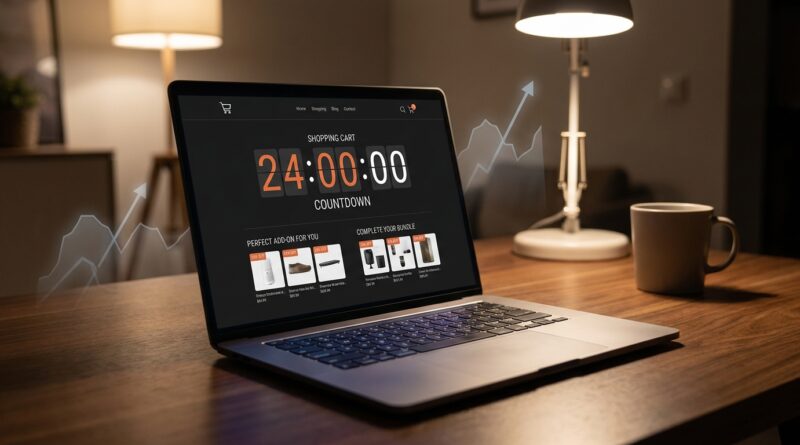
The ‘Personalized Cart Flash’ Strategy: Turn AI Recommendations Into 24-Hour High-Margin Orders
Blanket flash sales are exhausting. You get the traffic spike, sure, but you also watch margins shrink and customers learn a bad habit. They stop buying unless there is a giant red discount tag in front of them. If that sounds familiar, you are not doing anything unusual. A lot of ecommerce brands still run the same playbook. The problem is that broad promos treat every shopper the same, even though their carts, habits, and price sensitivity are completely different. A better move is a personalized flash sale strategy for ecommerce. Instead of cutting prices across the board, you build a 24-hour offer around what each shopper is most likely to add right now. That can mean a smart bundle, a higher-margin add-on, or a small discount tied to a relevant recommendation. The sale still feels urgent. It just stops feeling wasteful.
⚡ In a Hurry? Key Takeaways
- A personalized flash sale strategy for ecommerce swaps sitewide discounts for time-limited, shopper-specific offers that protect margin.
- Start with cart-based recommendations, bundles, and add-ons that fit what the customer is already browsing or buying.
- Keep the discount small and the relevance high, because the goal is profitable urgency, not training customers to wait for deep sales.
Why the old flash sale model is starting to backfire
Classic flash sales are simple. That is why brands keep using them. Pick a percentage off, blast an email, update the homepage, and hope volume makes up for the lower margin.
Sometimes it works. But the hidden cost adds up fast.
You discount items that would have sold anyway. You attract bargain hunters who disappear when the sale ends. You also flatten your pricing power, because customers start to believe your real price is whatever shows up during the next promo.
That is the core problem. Urgency is useful. Blanket discounting is expensive.
What a personalized cart flash actually looks like
Think of it as a flash sale built inside the cart, not across the whole store.
Instead of saying, “Everything is 20% off for 24 hours,” you say, “For the next 24 hours, add this matching accessory, upgrade to this bundle, or spend $18 more to unlock a better-value order.”
The shopper still feels the countdown. But the offer is tied to what they care about.
The three most common versions
1. Smart add-on offer. A customer adds running shoes. The cart shows performance socks or insoles with a small limited-time discount.
2. Bundle upgrade. A shopper picks one skincare item. The cart offers a 3-piece routine at a better per-item value for the next 24 hours.
3. Threshold reward. A cart sits at $62. The site recommends one or two highly relevant products to push the order above a free shipping or gift threshold.
None of these require slashing the whole store. They just use relevance to make the next click easier.
Why this works better than spray-and-pray promos
Relevance does a lot of the heavy lifting that discounts used to do.
When customers see something that fits their current purchase, the offer feels helpful instead of random. That matters because people do not just respond to lower prices. They respond to less decision friction.
If you can show the right product at the right moment, a smaller discount can do the job of a much larger one.
That is why this approach is getting more attention. Upsells, bundles, and personalized recommendations are already responsible for a meaningful share of ecommerce revenue for many brands. Add a 24-hour timer, and you get urgency without turning your store into a clearance rack.
How to set up a personalized flash sale strategy for ecommerce
Start with your highest-margin companions
Do not begin with your bestsellers. Begin with products that naturally attach to them.
Look for accessories, refills, travel sizes, warranties, consumables, and bundle-friendly items. These are usually easier to add to a cart because they feel like a finishing touch, not a whole new decision.
If your margin on the add-on is healthy, you can offer a modest discount and still come out ahead.
Use behavior, not guesswork
Your recommendation engine should look at things like:
- Current cart contents
- Browsing history
- Past purchases
- Products often bought together
- Price range the shopper usually responds to
This is where AI helps, but the idea is simple. Show fewer, better suggestions.
Three relevant options will usually beat twelve random ones.
Keep the offer window tight
The “flash” part still matters. Give the shopper 24 hours, or even less for abandoned cart follow-ups.
The point is to create a reason to act now without making the promotion feel fake. If every customer sees a never-ending countdown, trust disappears fast.
Make the math obvious
Do not make people work to understand the deal.
Use language like:
- “Add this for 15% off in the next 24 hours”
- “Upgrade to the bundle and save $12 today”
- “You are $9 away from free shipping. Recommended for your cart”
Clear beats clever every time.
Where brands usually mess this up
The biggest mistake is treating personalization like decoration.
If the recommendation is weak, the timer just makes it annoying faster.
Another mistake is offering too much discount on the wrong product. If the item was already likely to be added, you may be giving away margin for no reason. Test the smallest incentive that still moves the order.
And watch out for clutter. A cart page stuffed with countdowns, pop-ups, and six competing offers feels pushy. One primary flash offer is usually enough.
What to measure if you want this to be profitable
Do not judge success by traffic alone. That is how brands fool themselves.
Track these numbers instead:
- Average order value
- Attach rate on recommended products
- Margin per order
- Bundle conversion rate
- Cart recovery rate for shoppers who saw the flash offer
- Repeat purchase rate after the promo
If average order value rises but profit falls, the discount is too generous. If shoppers see the offer but ignore it, the recommendation likely needs work.
The best outcome is not “more orders at any cost.” It is “better orders with healthier economics.”
A smart variation if you want shoppers to feel in control
Some brands take this one step further and let the customer help shape the deal. If you like that idea, The ‘AI Deal Match Flash Sale’ Strategy: Let Shoppers Ask For Their Own Discount is worth a look. It covers a slightly different angle, where the shopper signals what kind of offer they want instead of just receiving a fixed promotion.
That can work especially well if your audience loves the thrill of “finding” a better price rather than being handed a generic coupon.
Who should try this first
You do not need a giant catalog to use this strategy.
It works especially well for:
- Beauty and skincare brands with routines and refills
- Apparel stores with accessories and outfit building
- Home and kitchen shops with add-ons and replacement parts
- Pet brands with recurring consumables
- Electronics sellers with protection plans, cables, cases, and upgrades
If your products naturally connect to each other, you have something to work with.
At a Glance: Comparison
| Feature/Aspect | Details | Verdict |
|---|---|---|
| Sitewide flash sale | Big traffic spikes, simple to run, but discounts many products that did not need help selling. | Good for clearing stock, weaker for protecting margin. |
| Personalized cart flash | Uses shopper behavior, cart contents, and timely recommendations to push add-ons, bundles, or upgrades. | Best balance of urgency, relevance, and profit. |
| Discount depth | Traditional sales often need larger headline cuts. Personalized offers can often work with smaller incentives. | Smaller, smarter discounts usually age better. |
Conclusion
If you are tired of flash sales that feel loud but not very smart, this is the reset button. Most brands are still running spray-and-pray promos, even as 2026 data shows that upsells, bundles, and personalized recommendations can drive 10 to 30 percent of ecommerce revenue on their own. Put that inside a 24-hour sale format, and you get both speed and relevance. The customer feels a reason to act now, but the cart also feels more handpicked than discounted into submission. That is the real opportunity here. Smaller headline discounts. Better in-cart offers. Stronger margins when ad costs keep rising. You do not need a dramatic overhaul to start. Pick a few high-margin add-ons, tie them to your most common carts, and test a tight 24-hour window. Done right, a personalized flash sale strategy for ecommerce can make your promotions feel less desperate and a lot more profitable.