The ‘Cash‑Back Flash’ Strategy: Turn One Rebate Wallet Into Repeat Flash‑Sale Buyers
You cut prices, the clicks roll in, and for a few hours it feels great. Then the countdown ends and so does the relationship. That is the part most store owners are tired of. Mid-July sale season is noisy, crowded, and expensive. Everyone is waving a bigger percentage sign, and smaller shops often pay for the traffic only to watch those shoppers vanish after one order. A smarter ecommerce flash sale cash back strategy changes the deal. Instead of giving away all the value in one shot, you give shoppers a reason to come back. They buy during the flash sale, earn store cash-back credit, and now they have a small wallet waiting for their next visit. That one change can help you convert bargain hunters, lift average order value, and turn a one-day spike into a second sale you did not have to buy with more ads. It is simple, but it works because it matches how people actually shop.
⚡ In a Hurry? Key Takeaways
- Use cash-back store credit in your flash sale so today’s buyer has a built-in reason to return tomorrow.
- Set a short redemption window and a sensible minimum spend to raise repeat orders and protect margin.
- Keep the offer simple and clearly explained, or shoppers may treat it like a gimmick and leave.
Why ordinary flash sales keep fizzling out
A standard flash sale does one thing very well. It creates urgency. That is useful, of course. But urgency on its own often attracts the most price-sensitive shoppers, the ones already comparing five tabs and waiting for the next code.
So you get the first order, but not much else. Your margin takes the hit. Your ads did the heavy lifting. And when the timer reaches zero, the shopper moves on to the next deal.
That is why a plain discount can feel like renting customers instead of winning them.
What the Cash-Back Flash strategy actually is
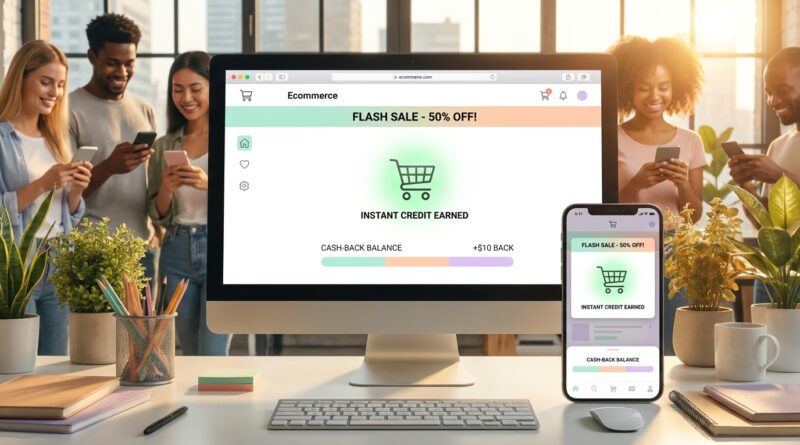
The idea is simple. During a limited-time sale, the shopper gets a good deal now and earns a rebate wallet, usually in the form of store credit, for use on a future purchase.
For example:
- Buy today and get 20% back in store credit
- Spend $75 during the flash sale and receive a $15 wallet credit
- Flash deal price today, plus bonus credit that unlocks next week
You are not just cutting the first sale. You are planting the second one.
Why this works better than a deeper one-time discount
Cash-back credit changes the shopper’s mental math. A straight discount says, “Take the cheapest deal now.” Store credit says, “You already have value waiting here.”
That matters because people hate wasting what feels like money they already own. A small wallet balance can pull them back faster than another ad ever will.
The three jobs this strategy should do
A good ecommerce flash sale cash back strategy should not just sound clever. It should do three clear jobs.
1. Lift conversion during the sale
The first win is obvious. “Buy now, get credit back” gives shoppers a reason to stop browsing and check out.
2. Raise average order value
You can attach the credit to spending thresholds. For example, spend $50 for $10 back, spend $100 for $25 back. That nudges baskets upward without shouting “buy more” in a pushy way.
3. Create a second visit without more ad spend
This is the big one. Your sale is not over when the first order ships. The earned credit gives you a clean excuse to email, text, and retarget those customers with a follow-up offer.
If you like the idea of building more than one profit path into a sale, The ‘Three-Tier Flash’ Strategy: Turn One Discount Into Three Profit Levels Instead Of One Race To The Bottom is worth a look too. It tackles the same core problem from a slightly different angle.
How to structure the offer so it does not eat your margin
This is where many stores get sloppy. Cash-back sounds safe, but only if the rules are tight.
Use store credit, not cash refunds
This should be store wallet credit redeemable on a future order. Not transferable. Not cashable out. That keeps the value inside your store.
Set an expiration date
Do not make the credit valid forever. A short window works best, usually 7 to 21 days. Long enough to feel fair. Short enough to create action.
Require a minimum second purchase
If you give $15 back, do not let it wipe out a $16 cart. Set a reasonable floor, such as “valid on orders over $50.” That helps protect your profit.
Exclude your weakest-margin products if needed
You do not need to apply this to everything. Bestsellers, bundles, seasonal items, and high-margin add-ons often make the most sense.
Best formats for smaller ecommerce stores
You do not need a giant loyalty system to make this work. Most smaller brands can run one of these simple versions.
Fixed wallet credit
Example: Spend $80 today, get $20 in store credit for next week.
This is easy to explain and works well in email, SMS, and paid ads.
Percentage cash-back
Example: Get 25% back in your rebate wallet on all flash sale purchases.
This feels generous, but make sure the numbers still work after product costs and shipping.
Tiered cash-back
Example:
- Spend $50, get $10 back
- Spend $100, get $25 back
- Spend $150, get $40 back
This is often the sweet spot because it drives bigger carts. It also pairs nicely with the thinking behind a multi-level promo structure.
How to message it so shoppers understand it fast
If customers need a calculator and a legal team to decode your sale, you will lose them.
Keep the headline plain:
- Flash Sale. Save today, get $20 back for your next order.
- 24-hour deal. Earn 25% store credit when you buy now.
- Shop today. Your rebate wallet unlocks tomorrow.
Then answer the three questions shoppers always have:
- How much do I get?
- When can I use it?
- When does it expire?
Put those answers on the product page, cart, checkout, and confirmation email. Repetition helps. Confusion kills conversion.
Where the follow-up money really comes from
The first sale gets attention. The second sale is where this strategy starts to shine.
Email and SMS sequence
Once the wallet credit is issued, send a short sequence:
- Confirmation: “You earned $20 in store credit”
- Reminder after 2 to 3 days: “Your credit is ready”
- Last call before expiry: “Your $20 expires tonight”
These messages usually perform well because they are not random promotions. They are tied to value the customer already earned.
Product recommendations for the second order
Do not send them back to a blank homepage. Suggest items that fit the first purchase. Accessories, refills, bundles, and complementary products are your friends here.
Common mistakes to avoid
Making the offer too generous
If the credit is so rich that the second order becomes barely profitable, you have built a busy but unhealthy promotion.
Using a redemption window that is too long
A 90-day expiration sounds nice, but it weakens urgency. Shorter windows tend to bring better return traffic.
Hiding the fine print
If customers feel tricked by conditions they did not see, you may win one sale and lose trust. Be direct.
Forgetting the post-purchase journey
The sale is not complete when the order comes in. If the customer never gets reminded about the wallet credit, you gave away margin without getting the second visit.
Who should use this strategy first
This works especially well for stores that:
- Compete with marketplace pricing
- Need a stronger repeat-purchase loop
- Sell products with natural add-ons or replenishment
- Want a flash promotion without relying only on deeper markdowns
If your customers usually buy once and disappear, this is one of the cleanest tests you can run.
At a Glance: Comparison
| Feature/Aspect | Details | Verdict |
|---|---|---|
| Immediate conversion | Cash-back flash sales still create urgency, but add a future reason to buy again. | Better than a plain one-time discount for most smaller stores. |
| Average order value | Tiered credit and minimum spend thresholds can push shoppers into larger baskets. | Strong upside if your margins and thresholds are set carefully. |
| Repeat purchase potential | Expiring store credit gives buyers a practical reason to return without more ad spend. | This is the main reason to use the strategy. |
Conclusion
When every brand is yelling about bigger markdowns, going louder is rarely the smart move. Going smarter is. A flash sale built around store cash-back credit gives shoppers a win now, then quietly pulls them back for round two. That is what makes this approach so useful in mid-July, when Prime-style events, daily deal drops, and Black-Friday-in-July promos train people to hop from one bargain to the next. For smaller stores, an ecommerce flash sale cash back strategy can do three jobs at once. It can boost conversion now, support a higher order value, and seed your next promotion without asking for a bigger ad budget. Keep it simple, set clean rules, and make the follow-up just as strong as the sale itself. That is how one flash buyer starts looking a lot more like a customer.