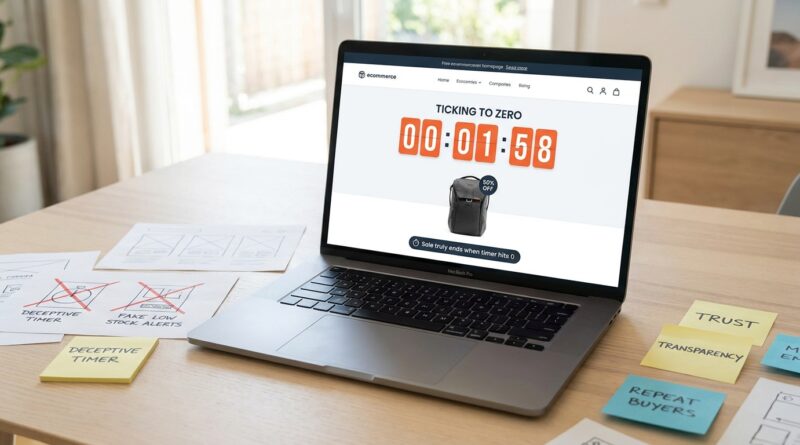
The ‘Ethical Countdown Flash’ Strategy: Turn Honest Timers Into Your Highest‑Trust Sale This Quarter
Your shoppers are not imagining it. They have seen too many “sale ends tonight” banners magically restart the next morning, and it has made them cynical. If you run an ecommerce store, that puts you in a tough spot. Timers still work. They help people stop hesitating and finally click buy. But if the clock feels fake, the short-term bump can cost you long-term trust. That is where an ethical countdown timer flash sale strategy earns its keep. The idea is simple. Use a real deadline, tie it to a real price change, and make sure the offer actually ends when the clock hits zero. Done right, you still get urgency, but without the eye-roll. Better yet, you give people a reason to believe your next promo too. In a market full of noisy “last chance” tricks, being the store whose clock is real can become a quiet competitive edge.
⚡ In a Hurry? Key Takeaways
- An ethical countdown timer flash sale strategy means the timer ends at a real, fixed deadline and the discount genuinely changes when time runs out.
- Start with one hero product, one clear offer, and email or SMS messaging built around a simple promise: this clock is real.
- This approach can lift conversions while lowering trust risk, customer frustration, and compliance headaches tied to fake urgency tactics.
Why fake countdowns are finally backfiring
Customers have learned the pattern. They land on a product page, see a bright timer ticking down, leave to think about it, then come back later and find the exact same “2 hours left” message. At that point, the timer stops being persuasive. It starts looking silly.
That matters more now than it did a few years ago. Consumer watchdogs, review communities, and regulators are paying closer attention to fake scarcity and false urgency. So the old trick of running an “evergreen” flash sale that never really ends is getting riskier.
If you want the deeper version of that warning, read The ‘Clean Countdown’ Flash Strategy: Run High‑Urgency Sales Without Shady Tactics Or Fines. The core message is hard to ignore. Customers can smell a fake countdown now, and so can regulators.
What an ethical countdown timer flash sale strategy actually looks like
This is not complicated. It just requires discipline.
Set one real end time
Your sale needs a genuine finish line. Not “ends soon.” Not “today only” that quietly turns into tomorrow. Pick a specific end date and time, and make sure every channel matches it. Your site, product pages, email, SMS, and social posts should all point to the same deadline.
Connect the timer to a real change
When the clock hits zero, something must actually happen. The price goes up. The bonus gift disappears. The bundle closes. The free shipping threshold changes. If nothing changes, the timer was theater, not information.
Use urgency on a narrow target
You do not need to put a countdown on every page in your store. In fact, that usually makes it less believable. Start with one hero product or one featured collection. That keeps the campaign simple and gives shoppers a clean reason to act.
Why honest timers can still sell very well
People do respond to deadlines. Most of us have done this ourselves. We see a real offer ending at midnight and finally make the decision we were already leaning toward.
The trick is that real urgency feels different from fake urgency. Real urgency reduces indecision. Fake urgency creates suspicion.
That is why this strategy can be so effective for smaller brands. Big marketplaces often train shoppers to expect gimmicks. If your brand becomes the one that says what it means and means what it says, that difference sticks.
How to roll this out without a giant team
If you run a lean ecommerce operation, keep the first test small. Think plug-and-play, not full rebuild.
Step 1: Pick a single hero product
Choose one item with decent traffic, healthy margin, and clear buyer appeal. Do not start with a messy clearance bin or a product with weird inventory issues.
Step 2: Build one simple offer
Examples work best here:
- 20% off until Friday at 11:59 p.m.
- Free gift with purchase until Sunday night.
- Bundle price ends at noon on the last day of the promo.
The simpler the offer, the easier it is for people to trust it.
Step 3: Make the timer consistent everywhere
Your homepage banner should match the product page. Your cart reminder email should match the banner. Your SMS copy should match both. If one says the sale ends at 9 p.m. and another says midnight, confidence starts to crack.
Step 4: Let the promo actually end
This is the part many brands get nervous about. Let it end anyway. If you want to run another promotion later, that is fine. Just do not pretend the same one never stopped.
Messaging that makes the “clock is real” promise believable
You do not need legal-sounding copy. You just need plain language.
Good examples:
- “Sale ends Friday at 11:59 p.m. Eastern. Prices return to normal after that.”
- “This bonus ends when the timer ends.”
- “No reset. No extension. Just a real weekend flash sale.”
That last one is especially useful if your audience has been burned by fake urgency before. It tells them you understand the problem without sounding preachy.
What to avoid if you want to keep trust intact
Do not reset the timer for each visitor
A personalized evergreen timer can be tempting because it often lifts conversions in the short run. But once people notice the reset, trust drops fast.
Do not pair fake low-stock alerts with the timer
“Only 2 left” should only appear if there are, in fact, only 2 left. Mixing a real countdown with made-up scarcity ruins the whole point.
Do not extend the exact same offer in disguise
If the sale ends Sunday, do not bring it back Monday with nearly identical copy and the same discount unless you clearly frame it as a new promotion.
What to measure on your first test
Revenue matters, of course, but it is not the only number worth watching.
Conversion rate during the promo window
Did the hero product convert better while the real timer was active?
Email and SMS engagement
Open rates and click rates often improve when the offer is simple and the deadline is easy to understand.
Post-promo behavior
Watch what happens after the countdown ends. Do customers complain less? Do fewer people wait around expecting endless discounts? Do repeat visitors keep shopping instead of bouncing?
Those are quiet but important signs that trust is improving.
At a Glance: Comparison
| Feature/Aspect | Details | Verdict |
|---|---|---|
| Real deadline | One fixed end time across site, email, and SMS, with no silent extensions. | Best for trust and repeat promo performance. |
| Discount change at zero | The offer actually ends, the price changes, or the bonus disappears when the timer expires. | Essential if you want the countdown to be credible. |
| Scope of campaign | Start with one hero product instead of putting timers on everything. | Easier to manage, test, and explain clearly. |
Conclusion
Fake urgency had a good run, but shoppers are wise to it now, and the pressure from consumer groups and regulators is only getting stronger. That is bad news for brands still leaning on countdowns that reset and low-stock alerts that are more fiction than fact. The good news is you do not have to give up urgency to stay on the right side of trust. An ethical countdown timer flash sale strategy gives you a cleaner path. Set a real end time. Tie it to a real discount change. Test it on one hero product. Then build your emails and texts around a simple promise that people can understand right away: the clock is real. For lean ecommerce teams, that is a practical move you can use on your very next promo. You get a sharper revenue spike, better engagement, and a sale format that still works six months from now because you did not train your audience to stop believing you.