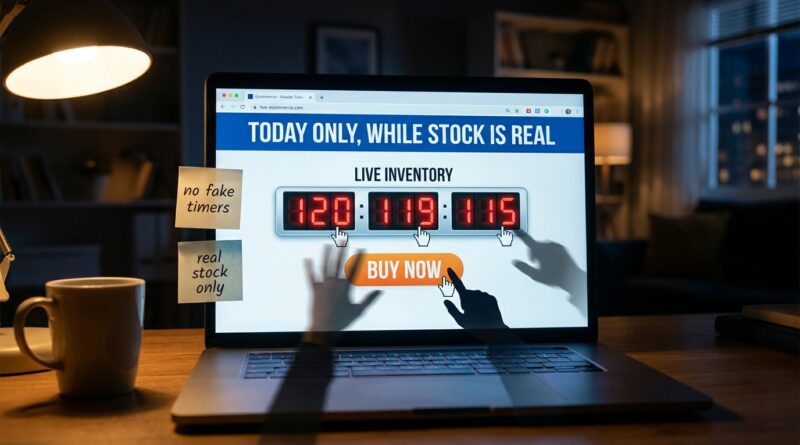
The ‘True-Limit Flash’ Strategy: Use Real Stock Transparency To Turn Skeptics Into High‑Intent Buyers
People are not dumb. They notice when “Only 3 left” turns into “Only 3 left” again tomorrow, and then again next week. That kind of fake urgency might win a few impulse clicks in the short term, but it chips away at trust fast. Then the damage shows up where it hurts. Lower click-throughs, slower checkouts, and shoppers who wait because they assume your deadline is flexible anyway. If that sounds familiar, the fix is not louder hype. It is honesty you can actually show. A strong ecommerce flash sale strategy with real inventory scarcity uses limits that are visible and believable. Think exact unit counts, a sold meter that moves in real time, and a plain promise that the sale ends when the stock is gone or the clock hits zero. When shoppers can see the limit is real, skeptics stop rolling their eyes and serious buyers start moving.
⚡ In a Hurry? Key Takeaways
- Real scarcity beats fake scarcity. Show actual stock limits if you want urgency that still feels trustworthy.
- Use exact item counts, a visible sold meter, and a clear no-extension rule on every flash sale.
- If you fake urgency too often, conversions can drop over time because shoppers learn not to believe you.
Why fake scarcity stops working
Flash sales depend on one simple idea. Buy now, not later. But that only works if “now” feels real.
Once shoppers suspect your countdown will restart or your stock warning is made up, the sale loses its bite. They do not feel urgency anymore. They feel marketing.
And when people feel manipulated, they slow down. They compare more. They leave tabs open. They tell themselves they can always come back later.
That is why trust is not some soft, fuzzy bonus here. It is the engine. Without it, urgency becomes wallpaper.
What the True-Limit Flash strategy actually is
The idea is simple. Do not just claim scarcity. Prove it.
A true-limit flash sale is built around hard limits customers can understand at a glance:
- Exact quantity available, like “47 units left”
- A sold counter or progress bar, like “183 of 250 claimed”
- A fixed end time that does not get extended
- A clear rule for what happens first, time runs out or stock sells out
This works because it answers the silent question in the shopper’s head. “Is this real, or are they trying it on?”
If the answer looks real, hesitation drops.
Why this turns skeptics into high-intent buyers
Skeptical shoppers are not always cheap shoppers. Often, they are your best buyers. They just need a reason to trust you.
When they see real limits, three things happen.
1. The decision gets simpler
If someone knows there are 22 units left and 178 already sold, they do not need to decode your promo language. The situation is clear.
2. Serious buyers act faster
People who were already interested stop waiting for a better signal. The live stock number becomes the signal.
3. Future sales get stronger
This is the part many brands miss. Honest urgency helps the next sale too. If people learn that your deals are real, they pay attention sooner next time.
How to build a believable flash sale
Show exact inventory, not vague warnings
“Limited stock” is better than nothing, but it is weak. “Only 12 left” is stronger because it gives the brain something concrete to react to.
If possible, tie the number to the specific variant being sold. Size M in blue may be running out while other options are fine. That level of detail feels honest.
Use a visible sold meter
A sold meter gives context to the stock number. “34 left” means more when shoppers also see that 216 of 250 are already gone.
It turns a static claim into a moving story. People can tell the sale is active. That makes the pressure feel earned, not staged.
State your rules in plain English
Do not bury the important part in tiny text. Say it clearly.
For example: “Sale ends at 9 PM or when 250 units are sold. No extensions.”
That last bit matters. A lot.
Do not extend the sale behind the scenes
This is where many brands ruin the whole thing. They create urgency, then backtrack because they want one more day of revenue.
Bad move.
You may get a small bump in the moment, but you teach shoppers that your deadline is soft. Next time, fewer people rush.
If you want better long-term performance, keep your word.
What to put on the product page
If you want this strategy to work, the message needs to be impossible to miss without turning the page into a circus.
A good setup usually includes:
- A stock line near the price or buy button
- A progress bar showing sold units
- A timer only if the timer is real
- A short line explaining the rule, like “Ends when 100 units are claimed or at midnight, whichever comes first”
- An optional timestamp for transparency, like “Inventory updated 2 minutes ago”
Notice what is missing. No flashing red panic banners. No nonsense popups every five seconds. No fake “35 people are viewing this now” if you cannot support it.
When this works best
The True-Limit Flash strategy is especially good for products where inventory naturally feels finite.
- Limited runs
- Seasonal products
- Bundles with capped quantities
- Clearance units
- Special colorways or editions
It can also work on bigger catalog stores, but only if the stock signal is accurate. If your inventory system lags or oversells often, fix that first.
Common mistakes that quietly hurt trust
Using rounded or suspicious numbers
“Only 100 left” can feel made up. “Only 93 left” often feels more believable because real inventory is messy.
Resetting the sale without explanation
If you do another promotion later, frame it as a new event. Do not pretend the old one never ended.
Mixing real scarcity with fake urgency widgets
If your stock count looks serious but your site still shows cheesy popups and suspicious timers, the whole thing can feel less credible.
Making every sale a crisis
If everything is always urgent, nothing is urgent. Use true-limit sales for moments that deserve them.
If you want to get more nuanced about who should see which kind of urgency, this piece on The ‘Segmented Scarcity Flash’ Strategy: Turn One Sale Into Three Different Urgencies That Actually Convert is a smart next read. It pairs well with real inventory limits because not every shopper responds to the same trigger.
How to measure whether it is working
Do not just watch revenue. Look at the behavior around the sale.
Useful metrics include:
- Product page to cart rate
- Checkout completion speed
- Conversion rate during the first hours of the sale
- Return visitor conversion on later flash sales
- Customer support complaints about misleading promos
If trust is going up, you will often see shoppers deciding faster and questioning the offer less.
Who should avoid this until their setup is ready
If your stock data is messy, slow, or split across systems that do not sync well, be careful.
The worst version of this strategy is showing “8 left” when you actually have 80, or worse, when you have 0 and still take orders. That is not just clumsy. It can create refunds, support headaches, and real damage to your reputation.
Start with a smaller campaign if needed. Pick one product or one bundle. Make sure the numbers are right. Then expand.
At a Glance: Comparison
| Feature/Aspect | Details | Verdict |
|---|---|---|
| Fake scarcity claims | Vague “selling fast” messages, recycled countdowns, and stock warnings that reset | Short-term attention, long-term trust damage |
| Real inventory scarcity | Exact stock counts, visible sold meter, clear end rules, and no extensions | Best choice for believable urgency and stronger buyer intent |
| Operational readiness | Requires accurate inventory sync, honest campaign setup, and discipline after launch | Worth it, but only if your numbers are trustworthy |
Conclusion
Shoppers have seen every trick in the book, and most of them are tired of it. The good news is that you do not need more hype to make a flash sale work. You need proof. Right now, the smartest brands are learning that urgency only works if people trust it. By anchoring your next flash sale to hard limits you can prove, exact item counts, a visible sold meter, and a zero-BS promise not to extend the offer, you cut through promo fatigue, trigger faster decisions from serious buyers, and rebuild long-term trust in your deals so the next sale performs better instead of worse.