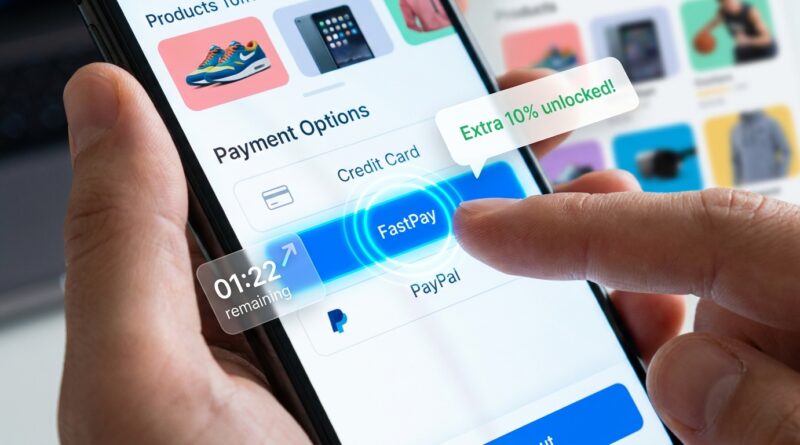
The ‘Payment Power Flash’ Strategy: Turn One Checkout Choice Into A High‑Margin Stampede
You are not imagining it. Flash sales can start to feel like a tax on your own business. You push 15% off, then 20%, then 25%, and by the time the orders come in, the margin is gone and your best customers barely blink. Worse, everyone gets trained to wait for the next coupon instead of buying at full price. There is a smarter move. Instead of cutting prices across your whole store, tie the deal to one checkout choice. That is the heart of a flash sale payment method discount strategy. You offer a short, sharp bonus only when shoppers use a payment option that helps your business, like bank transfer, ACH, debit, wallet pay, or a lower-fee local processor. The customer still gets urgency and a real reason to act now. You keep more control, protect profit, and make the promotion feel special instead of routine.
⚡ In a Hurry? Key Takeaways
- A payment-powered flash sale gives the discount only when shoppers choose a specific payment method, which creates urgency without marking down everything.
- Start with one low-risk offer, like 10% off today only when paying by ACH, bank transfer, or your lowest-cost processor.
- Check card network rules, local laws, and your payment provider terms first so the promo stays compliant and does not confuse buyers.
Why this works better than another storewide discount
Most flash sales look the same now. A countdown timer. A sitewide code. A flood of emails. Shoppers have seen it all before.
That is why a plain discount often stops feeling exciting. It turns into background noise. People either ignore it, or they assume a better sale is coming next week.
A flash sale payment method discount strategy changes the trigger. The urgency is not just “buy before midnight.” It becomes “buy before midnight, and use this checkout option to unlock the deal.”
That small shift matters. It gives the offer a reason to exist. It feels more like an event and less like a clearance panic.
What “Payment Power Flash” actually means
Think of it as a one-day promo built around payment behavior instead of blanket markdowns.
A simple example
Let’s say your store normally pays higher processing fees on credit cards, but bank payments cost less and settle more reliably. For one day only, you offer:
- 10% off when customers pay by ACH
- A free gift when customers use your preferred wallet
- Early access pricing when shoppers choose debit instead of credit
You are not discounting every order. You are guiding customers toward the payment option that works better for your business.
Why margins hold up better
If your usual sitewide sale gives 20% off to everyone, you eat that cost on every basket. If your payment-based offer gives 10% off only to shoppers who use a cheaper payment rail, the math can look much better.
You may save on processing fees, reduce failed payments, lower fraud risk, or improve cash flow. Even if the savings are not massive on each order, the promotion is narrower and easier to control.
Where smaller stores get the biggest advantage
Big brands can burn margin for attention. Smaller stores usually cannot. That is why this strategy is so useful.
It helps you do three things at once:
- Create real urgency
- Protect more profit
- Train customers toward checkout options that are cheaper or more dependable
That last point is easy to miss. Every promotion teaches shoppers something. A sitewide coupon teaches them to wait. A payment-powered sale teaches them how to buy in a way that helps both sides.
Best payment methods to build a flash sale around
Not every store will use the same setup. The right choice depends on fees, customer trust, and how your checkout already works.
Bank transfer or ACH
This is often the cleanest choice for stores selling higher-ticket items, B2B products, memberships, or services. Fees can be lower than cards, and the savings can support a modest but meaningful discount.
Debit card
If your processor charges you less for debit than credit, a debit-only flash promotion can be a simple test. It is familiar to customers, which cuts friction.
Digital wallets
Apple Pay, Google Pay, PayPal, Shop Pay, and similar options can boost conversion because checkout is faster. Even if the fee savings are small, speed and convenience alone can lift completion rates.
Local or alternative payment methods
In some markets, local bank apps, instant transfer systems, or cash-based digital vouchers are more trusted than cards. If one method has better reliability or lower chargeback risk, it can be a smart anchor for a one-day sale.
How to build the offer without confusing customers
This is where many stores trip up. The idea is good, but the message gets messy.
Keep the rule very simple
Use one condition. Not three.
Good example: “Today only. Get 12% off when you pay by bank transfer.”
Bad example: “Save up to 18% on selected products when using eligible payment methods in participating regions before 9 p.m. while supplies last.”
If people need to study the offer, they will leave.
Show the payment option early
Do not spring the requirement on them at the final click. Mention it on the homepage, product page, cart, and checkout.
The smoother path looks like this:
- Hero banner explains the offer
- Product page repeats it briefly
- Cart reminds them what to choose
- Checkout highlights the qualifying method
Use a reward people can feel
The discount does not need to be huge. It just needs to feel clear and worth acting on. That might be:
- 8% to 12% off
- Free expedited shipping
- A bonus product
- Loyalty points multipliers
- Exclusive access to a limited item
Sometimes a value-add beats a bigger price cut, especially if your margins are tight.
How to choose the right discount amount
Start with your numbers, not your guess.
Look at the full cost picture
Do not compare payment fees alone. Also look at:
- Chargeback rates
- Fraud screening costs
- Failed payment rates
- Payout timing
- Customer support time tied to payment issues
A method with slightly lower fees but much better reliability may be more valuable than it first appears.
Set a profit floor
Before you launch, decide the minimum gross margin you are willing to accept. Then work backward. That keeps the sale from turning into another “great revenue, bad profit” day.
Test one category first
You do not need to run this across your whole catalog. Start with products that have healthy margin, predictable inventory, and low return rates.
What to say in your marketing
The best copy makes the offer feel exclusive, not desperate.
Try language like:
- “One-day checkout bonus”
- “Pay by bank transfer today, save 10%”
- “Preferred payment flash deal. Ends tonight”
- “Use instant bank pay for a members-only price”
Notice the difference. You are not shouting “Everything must go.” You are inviting shoppers into a specific action that unlocks a reward.
Common mistakes that ruin the idea
Making the checkout feel like a trick
If customers only discover the payment restriction after they fill out their details, they will feel baited. Be upfront early and often.
Choosing a payment method shoppers do not trust
The business benefit means nothing if buyers hesitate. If the option feels unfamiliar, explain it in plain English and show that it is secure.
Discounting too hard
This strategy is supposed to protect margin. If you offer the same giant discount you use for a sitewide sale, you lose most of the upside.
Running it too often
Scarcity works because it is rare. If every Friday becomes a payment flash day, the effect fades fast.
Legal and payment-rule checks you should not skip
This part is boring, but important.
Some payment discounts are allowed. Some payment surcharges are restricted. Those are not the same thing. The rules can vary by country, state, card network, and processor agreement.
Before launching, check:
- Your payment provider terms
- Card brand rules
- Local pricing and consumer protection laws
- How taxes and shipping are handled with discounts
If needed, ask your payment rep or legal adviser to review the setup. A clean promo is better than a clever one that creates trouble later.
How to measure whether it actually worked
Do not judge it on sales alone. Look at the whole picture.
Track these numbers
- Conversion rate during the promo
- Average order value
- Gross margin after discount and fees
- Payment method share before and after
- Refund and chargeback rates
- Repeat purchase rate from shoppers who used the offer
If more people adopted your preferred payment option and your margin stayed healthier than with a normal flash sale, that is a real win.
Who should use this strategy first
This works especially well for:
- Niche ecommerce brands with loyal audiences
- Stores with one or two strong payment alternatives
- Merchants hurt by high card fees
- Brands that want urgency without training customers to expect constant markdowns
It is less useful if your audience only trusts one payment method and refuses anything else. In that case, adding friction may cost more than it saves.
A smart first test you can run this month
Keep it small and easy to measure.
- Pick one product category with solid margin.
- Choose one preferred payment method.
- Run a 24-hour offer only.
- Use a simple reward, like 10% off or a free add-on.
- Message it clearly across site, email, and SMS.
- Compare profit and payment mix against your last regular flash sale.
That one test will tell you more than another round of blanket discounting.
At a Glance: Comparison
| Feature/Aspect | Details | Verdict |
|---|---|---|
| Storewide flash sale | Easy to explain, but cuts margin across every qualifying order and can train shoppers to wait for the next coupon. | Good for clearance. Weak for long-term pricing power. |
| Payment-powered flash sale | Discount or bonus only appears when shoppers choose a specific payment method that is cheaper, faster, or more reliable for the merchant. | Best balance of urgency, margin protection, and checkout steering. |
| Loyalty-only payment promo | Adds exclusivity by limiting the offer to members or repeat buyers who use a preferred payment option. | Strong for retention and making repeat customers feel special. |
Conclusion
If your usual sale plan is starting to eat profit and wear out your audience, this is a smart reset. Shoppers are drowning in generic 20% off, 72-hour flash sales and endless countdowns. The brands that stand out now are the ones that connect urgency to a specific action, not just a lower price. A payment-powered flash sale lets smaller stores protect margin, guide customers toward cheaper or more reliable processors, and still create a one-day moment that feels exciting and exclusive. You do not need a bigger discount. You need a better reason to buy now.