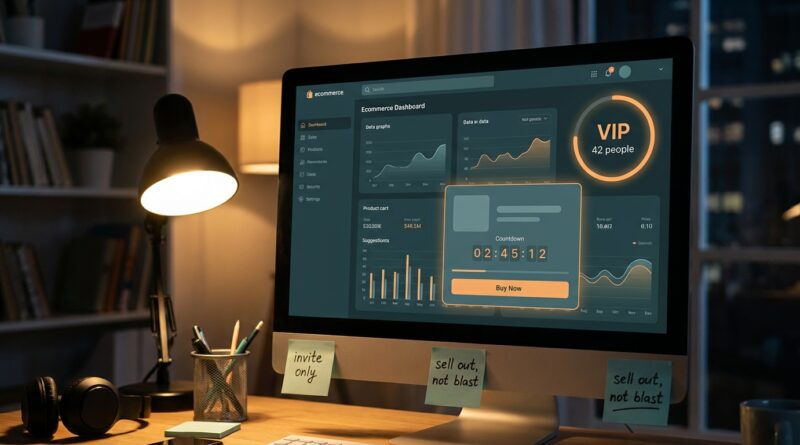
The ‘Micro-List Flash’ Strategy: Turn 50 VIP Subscribers Into A Sell‑Out Sale (Without Blasting Your Whole List)
You can feel it when a flash sale stops working. You send the same “24 hours only” email to your whole list, watch opens sag, clicks flatten, and sales come in softer than they used to. Worse, some customers start acting like full-price products do not exist anymore. They just wait for your next discount. That is the trap. If you run a small store, you do not need a bigger blast. You need a tighter one. A better email flash sale strategy for small ecommerce list owners is often to stop emailing everyone and start emailing the 50 people most likely to buy right now. That is the micro-list flash. It is simple. Pick your hottest segment, give them a short window, keep the offer real, and let urgency come from access, not noise. Done right, it protects your sender reputation, feels more exclusive, and can sell out inventory faster than a broad, tired blast.
⚡ In a Hurry? Key Takeaways
- A micro-list flash sends your sale to a small VIP segment first, often 50 to 200 high-intent subscribers, instead of blasting your whole list.
- Start with recent buyers, frequent clickers, or back-in-stock shoppers, and give them a short, clear offer with limited units.
- This can protect deliverability and long-term engagement because you are not training your full list to ignore every “urgent” email.
Why broad flash sales start to lose their punch
Most stores do not notice the problem right away. One sale underperforms. Then another. Then you start sending more reminders to make up for weaker results.
That usually makes things worse.
When too many people on your list do not open or click, inbox providers notice. Your future emails can land lower in the inbox, or miss it entirely. On top of that, customers get used to the pattern. If every week feels like a sale week, nothing feels special.
That is why the micro-list flash works. It flips the goal. Instead of trying to squeeze a little attention from everybody, you start with the people most likely to act today.
What a micro-list flash actually is
A micro-list flash is a short, limited-time offer sent to a very small segment of your email list. Think 50 VIP subscribers, not 5,000 casual names gathered over three years.
The segment should be built around buying intent, not vanity metrics.
Good candidates for your first micro-list
Use a group like this:
- Customers who bought in the last 30 to 90 days
- Subscribers who clicked one of your last 3 to 5 campaigns
- People who viewed a product category you need to move
- VIP customers with two or more orders
- Shoppers who joined a waitlist or clicked back-in-stock alerts
These are not just “subscribers.” They are warm buyers. That matters.
Why 50 people can outperform 5,000
It sounds backward until you think about what email platforms reward.
They reward engagement. Opens. Clicks. Replies. Purchases after a send.
If your 50-person VIP segment opens at 60 percent and clicks at 20 percent, that signal is stronger than a 5,000-person blast that gets ignored by most of the list. And from a business angle, a small store does not always need hundreds of orders. Sometimes you just need to clear 30 units of a slow-moving product without torching your margins or annoying your whole database.
That is where this approach shines.
How to build your first micro-list flash
1. Pick one narrow inventory goal
Do not start with “increase revenue.” That is too fuzzy.
Start with something concrete:
- Sell 24 leftover holiday bundles
- Move 18 units of a seasonal color
- Clear one size run before a new drop
- Turn dead stock into cash this week
The more specific the target, the easier it is to write the email.
2. Choose your most likely buyers
This is the heart of the email flash sale strategy for small ecommerce list growth and sales. Pull a segment based on recent action, not old list size.
If you are not sure where to begin, use this simple rule:
Recent buyers plus recent clickers beats everyone else.
Even a basic Shopify, Klaviyo, Mailchimp, or ConvertKit setup can usually filter for this.
3. Make the offer feel earned
The message should sound like access, not desperation.
Try language like:
- VIP first access
- Private 3-hour flash
- Small-batch clearance before we open it wider
- Reserved pricing for our best customers
That feels better than shouting “LAST CHANCE!!!” at everyone.
4. Keep the window short
A micro-list flash should feel quick. Usually 2 to 6 hours is enough. Sometimes 24 hours works, but shorter tends to feel more exclusive.
Pair the short timer with a real reason:
- Only 32 units available
- Offer ends at 3 p.m.
- After VIP access, remaining stock goes public
Urgency works best when it is true.
5. Send one strong email, maybe one reminder
You do not need a whole parade of messages.
Try this simple flow:
- Email 1: Launch the VIP flash
- Email 2: 60 to 90 minutes before it ends, only to non-buyers in the segment
That is enough for most small campaigns.
What to write in the email
Keep it short. Your best buyers do not need a five-act play.
Simple structure that works
- Subject line: Clear and specific
- Opening line: Why they are getting this first
- Offer: Discount, bundle, or bonus
- Limit: Time or units
- Call to action: One button, one job
Example:
Subject: VIP first access. 3 hours only.
Body: You are getting this before the rest of our list because you have shopped with us recently. We have 27 units left of our winter lounge set, and for the next 3 hours it is 25% off. Once these are gone, they are gone.
Button: Shop the private flash
That is clean. No fluff. No fake drama.
What not to do
This strategy is powerful, but it is easy to overdo it.
Do not turn every sale into a micro-list flash
If everything is exclusive, nothing is. Save this for moments when you need speed, control, or a quiet inventory push.
Do not include cold subscribers just to make the list bigger
A list of 50 hot buyers is better than 500 random names. Bigger is not the point.
Do not use fake scarcity
If you say there are 12 units left, there should be 12 units left. Customers can smell fake urgency, and trust is hard to win back.
Do not blast the whole list right after
If the VIP sale did not fully sell out, wait a bit before opening the same exact offer to everyone. Otherwise your “exclusive” claim starts to look thin.
When to open it to a wider audience
There are times when a broader send still makes sense.
If your micro-list flash moves half the inventory but not all of it, you can use the results to guide a public version. You now know:
- Which subject line pulled best
- Which product got the clicks
- Whether the discount was strong enough
- How much stock really had demand
That makes the wider send smarter and less risky.
Pair it with other short-form sales channels
If your audience also hangs out on social, this gets even better. A private email flash can warm up demand before you do a fast live sell-through on video.
That is where The ‘Micro-Live Flash’ Strategy: Turn 20-Minute TikTok Lives Into Your Highest-Converting Sale of the Week fits nicely. The idea is similar. Smaller window. Higher intent. Less noise. You do not need to be everywhere. You just need to show up where buying energy is already high.
How to measure if it worked
Do not judge this only by top-line revenue. That misses the point.
Track these numbers
- Open rate versus your normal sale emails
- Click rate versus your normal sale emails
- Conversion rate from email traffic
- Revenue per recipient
- Units sold in the first hour
- Unsubscribes and spam complaints
A good micro-list flash often wins on efficiency, not just total dollars. If 50 subscribers produce a strong conversion rate with almost no unsubscribes, that is a healthy sign.
A simple test plan for your next sale
If you want to try this without much risk, here is an easy version:
- Pick one product with limited stock.
- Create a 50-person segment of recent buyers and recent clickers.
- Run a 3-hour VIP-only offer.
- Send one launch email and one last-call reminder.
- Compare results to your last full-list flash sale.
That is it. You do not need a giant automation setup to test the idea.
At a Glance: Comparison
| Feature/Aspect | Details | Verdict |
|---|---|---|
| Audience size | Micro-list flash targets 50 to 200 high-intent subscribers instead of your full database. | Best for small stores that need efficient sales, not maximum reach. |
| Urgency style | Uses true exclusivity, short timing, and limited stock rather than constant list-wide discounting. | Feels more credible and usually gets better engagement. |
| Long-term list health | Fewer broad sale blasts can mean less inbox fatigue, fewer unopens, and less discount training. | Safer for deliverability and better for future campaigns. |
Conclusion
If your usual flash sales are starting to feel tired, that does not mean email is broken. It usually means your targeting is too broad. Inbox fatigue is real, and broad flash sale emails are quietly hurting future engagement, especially when every brand is screaming at once. A micro-list flash gives smaller stores a practical, low-risk way to protect deliverability, create real exclusivity, and move inventory fast by focusing on the people most likely to buy now, not everyone who ever signed up. For The Deal readers, that is the real upside. You do not need a giant list to get a sell-out result. You need the right 50 people, a real offer, and the discipline to keep it tight.