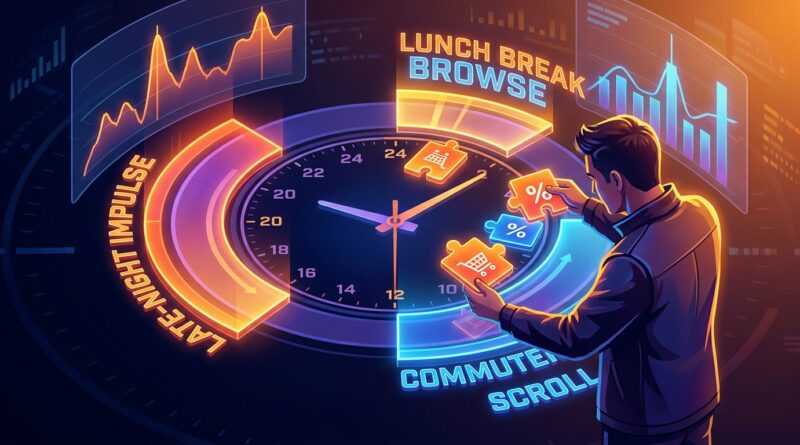
The ‘Time‑Band Flash Sale’ Strategy: Match Your Deals To When Your Buyers Actually Shop
Running a flash sale can feel weirdly random. You use the same product, the same discount, even the same email list, and one sale flies while the next one barely gets a shrug. That is frustrating, especially when you are cutting margin and still not getting a clear answer. The problem is often not the offer. It is the timing. A smart ecommerce flash sale timing strategy starts by looking at when your buyers already tend to browse, click, and buy, then matching your sale windows to those habits instead of guessing. Think of it as selling when your customers are already in shopping mode, not interrupting them when they are busy making dinner, commuting, or ignoring their inbox. For smaller stores, that can mean fewer wasted discounts, tighter campaigns, and a sale that actually feels urgent because it appears at the right moment, not just for a random 24-hour block.
⚡ In a Hurry? Key Takeaways
- Time-band flash sales work by splitting the day into 3 to 5 buying windows and running offers only when your customers are most likely to convert.
- Start with your own store data. Check order times, email click times, and traffic spikes from the last 30 to 90 days before planning your next sale.
- Shorter sale windows often protect margin better than all-day discounts, because they cut dead hours and make urgency feel real.
Why your flash sales feel hit or miss
Most stores treat timing like an afterthought. The discount gets all the attention. Then someone picks a day, sends the email, posts on social, and hopes for the best.
But buyers do not shop in a steady, even stream all day long. They bunch up. Some browse over morning coffee. Some buy at lunch. Others click through after the kids are asleep. If your sale goes live in the wrong window, even a good offer can look weak.
That is why a time-band approach is useful. It takes the same flash sale idea and makes it more precise.
What a time-band flash sale actually is
A time-band flash sale breaks the day into a few clear shopping windows. Usually that means 3 to 5 bands, not dozens.
A simple example
Your store might discover these patterns:
- 7:00 a.m. to 9:00 a.m. for mobile browsing
- 12:00 p.m. to 2:00 p.m. for quick lunch-break buys
- 8:00 p.m. to 11:00 p.m. for your highest conversion rate
Instead of running one flat 24-hour coupon, you run short bursts inside those windows. Maybe 15 percent off from noon to 2:00 p.m., then a stronger offer from 8:00 p.m. to 10:00 p.m. when your audience is more ready to buy.
Same day. Better fit.
Why this ecommerce flash sale timing strategy works
It works because it respects real buyer behavior. People are tired of fake urgency. They have seen too many “ends tonight” banners that quietly roll into tomorrow.
When your sale pops up only during a short, believable window, it feels more real. And when it appears during a time your customer already tends to shop, you are not forcing attention. You are catching momentum.
You also waste less discount. That matters. If your slowest hours almost never convert, why offer your best deal during them?
How to find your best time bands using data you already have
You do not need new software for this. Most stores can do a first pass with Shopify, WooCommerce reports, Google Analytics, Klaviyo, Mailchimp, or whatever email platform they already use.
Step 1: Pull your order-time report
Look at the last 30 to 90 days. Find out when orders were placed by hour of day. If weekends behave differently, separate them from weekdays.
You are looking for clusters, not perfection. If orders spike at noon and again at night, that is useful already.
Step 2: Compare traffic versus conversions
High traffic hours are nice, but conversion hours matter more. A lot of stores find that one time band gets attention, while another time band gets actual purchases.
That distinction is gold. Your early band might be for teasers. Your later band might be where the real discount drops.
Step 3: Check email and SMS engagement by hour
Open rates are not everything, but click times can tell you when your audience is most responsive. If your SMS clicks jump in the evening, do not waste your best sale at 10:00 a.m.
Step 4: Build 3 to 5 time bands
Keep it simple. For example:
- Morning: 7:00 a.m. to 10:00 a.m.
- Midday: 12:00 p.m. to 2:00 p.m.
- Afternoon: 3:00 p.m. to 5:00 p.m.
- Evening: 8:00 p.m. to 11:00 p.m.
Then rank them by likely value.
What to send in each window
Not every band needs the same message. This is where smaller brands can get clever.
Band 1: Warm-up
Use a teaser. Show the product. Mention that a short sale is coming later. Keep the ask light.
Band 2: Main push
This is your strongest buy window. Use your clearest offer, shortest deadline, and best product selection.
Band 3: Last-call close
Remind shoppers the window is closing soon. Keep the copy honest. If it ends at 10:00 p.m., let it end at 10:00 p.m.
If you want to increase confidence during these windows, pair timing with social proof. A good example is The ‘Real-Time Proof’ Flash Sale: Turn Live Purchase Signals Into Instant Trust On Every Page, which shows how live buying signals can help unsure shoppers feel safer about acting now.
How to test it in one weekend
You do not need a huge campaign calendar. Run a small test.
Try this setup
- Pick one product collection
- Choose 2 or 3 likely strong time bands
- Keep the discount the same across bands
- Change only the timing and message framing
For example, run one sale from 12:00 p.m. to 2:00 p.m. on Saturday, then another from 8:00 p.m. to 10:00 p.m. on Sunday. Measure conversion rate, revenue per visitor, and average order value.
That will tell you much more than another all-day sale ever could.
Common mistakes to avoid
Using too many bands
If you create eight mini-sales in one day, it gets messy fast. Start with 3 to 5. Enough to spot patterns, not enough to confuse people.
Changing the offer and the timing at once
If the discount, product mix, and send time all change together, you will not know what caused the result.
Ignoring time zones
If you sell nationally or globally, your “evening” sale may hit some shoppers at dinner and others at bedtime. Segment when you can.
Faking urgency
This is a big one. If your “2-hour only” deal quietly comes back tomorrow, customers notice. Trust drops. Future sales get weaker.
When this strategy is especially useful
A time-band approach shines when:
- You have a smaller list and need better efficiency
- Your flash sale results swing wildly from campaign to campaign
- You want to protect margin instead of discounting all day
- Your audience has visible buying routines
It is also handy if your team is stretched thin. You can use email, SMS, and on-site banners you already have. No fancy rebuild required.
At a Glance: Comparison
| Feature/Aspect | Details | Verdict |
|---|---|---|
| Traditional 24-hour flash sale | One broad offer runs all day, including low-intent hours when buyers are less likely to act. | Easy to set up, but often wastes discount and weakens urgency. |
| Time-band flash sale | The day is split into 3 to 5 buying windows based on actual customer behavior and response data. | Best choice for smarter timing, tighter urgency, and better use of margin. |
| Testing and rollout effort | Can be tested with current reports, email tools, SMS, and on-site banners over a single weekend. | Low-risk and practical for scrappy ecommerce teams. |
Conclusion
When flash sales feel random, the fix is often simpler than it looks. Stop treating the whole day like one giant buying moment. Your customers already have shopping rhythms. Use them. Right now everyone is tired of fake deals and endless “limited time offers” that never end, so blasting another 24 hour coupon at random is starting to backfire. A time-band flash sale gives smaller brands a smarter edge: you use your own data to carve the day into 3 to 5 buying windows, then drop short, sharp offers exactly when your specific customers are most likely to act. That means less discount waste, fewer dead hours, and a higher chance your sale actually feels special, because it shows up right when your buyer is already in shopping mode. It is a simple shift that can be tested in a weekend and scaled across email, SMS and on-site banners without new tools, which makes it especially valuable for scrappy stores that need meaningful wins from every promotion this month, not just more noise.