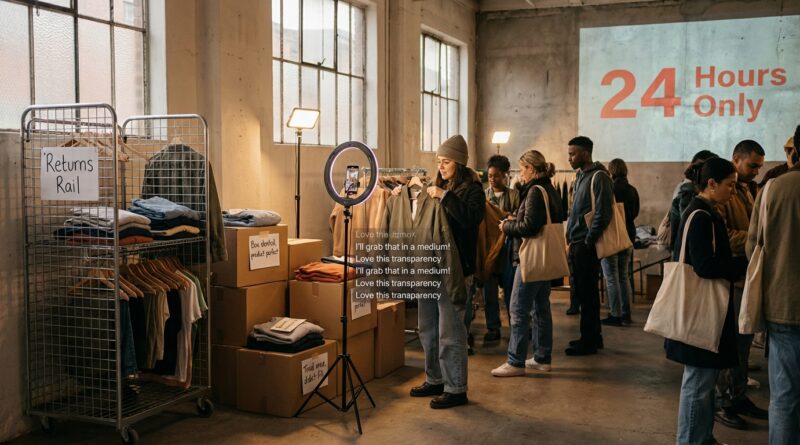
The ‘Returns Rail’ Flash Sale: Turn Dead Stock And Refunds Into Your Most Profitable 24 Hours
Returned stock has a nasty habit of hiding in plain sight. It sits in bins, back rooms and warehouse corners, quietly eating cash while your team avoids talking about it. That is frustrating, especially when your normal flash sales barely touch the problem and marketplace dumping chips away at your pricing. A better fix is taking shape right now. Brands on live streams, TikTok Shop and Instagram are turning returns, packaging scuffs and end-of-line leftovers into a named event people actually look forward to. The trick is not pretending these items are perfect. It is doing the opposite. Give the sale a clear frame, explain what each item is, set honest grades, and put the whole thing inside a short, energetic window. That is the core of a smart returns rail flash sale strategy. It moves awkward stock fast, keeps your main range cleaner, and can make shoppers trust you more because you are being straight with them.
⚡ In a Hurry? Key Takeaways
- A returns rail flash sale strategy works best when returned and oddball stock is sold as a curated, time-boxed event with clear condition notes.
- Start with simple grading like “as new,” “opened box,” and “minor cosmetic mark,” then sell in a 12 to 24 hour window through live and social channels.
- Honesty matters more than heavy discounts. Clear photos, blunt descriptions and final-sale rules help protect trust and reduce repeat returns.
Why standard discounting fails with returned stock
A normal sale says, “Here is money off.” That is fine for healthy inventory. It is weak for the odd stuff.
Returned items are mixed. One box is unopened. Another has a torn sleeve. Another is a customer return that works perfectly but cannot go back into full-price stock. If you throw all of that into the same old promotion, shoppers get confused. Worse, your best customers start wondering why your regular prices exist at all.
This is where a returns rail flash sale strategy earns its keep. You are not running a blanket discount. You are creating a separate lane with its own story, rules and expectations.
What a “returns rail” event actually is
Think of it like the sale rail at a well-run shop, but built for live, social and ecommerce.
You collect returns, samples, discontinued variants, old packaging, slight cosmetic defects and single-size leftovers into one tightly managed event. Then you present them openly.
The key ingredients
There are four of them.
First, a time limit. Usually 12 to 24 hours.
Second, a clear category or theme. For example, “Returns Rail Friday” or “Backroom Rescue Drop.”
Third, visible condition grading.
Fourth, an honest host voice that explains what shoppers are buying and why it is cheaper.
That last point matters most. People do not mind imperfect stock nearly as much as brands think. They hate surprises. Remove the surprise, and many will buy happily.
Why shoppers say yes to this now
Customer behavior has changed. People are used to seeing behind the scenes clips, warehouse tours, “pack orders with me” videos and live product demos. A polished, too-perfect storefront is no longer the only thing that sells.
In fact, a bit of reality can help. Shoppers like feeling they got access to something insiders see first. A returns rail event taps that instinct.
It also fits the current budget mindset. Many buyers want a deal, but they do not always want bargain-bin chaos. They want a reason the item is cheaper. If the reason is clear and fair, conversion can be surprisingly strong.
How to build a returns rail flash sale strategy that does not damage your brand
1. Separate it from your main assortment
Do not scatter returned stock all over your normal product pages. Give it a dedicated collection, landing page or live event slot.
This protects your main pricing and keeps the sale feeling intentional rather than desperate.
2. Grade every item simply
Do not use vague language. “May show signs of wear” is too slippery.
Try a simple system like this:
Grade A: unopened or like new.
Grade B: opened box, tested, fully working.
Grade C: minor cosmetic marks or damaged packaging.
Add one-sentence notes where needed. “Missing outer sleeve.” “Tiny mark on left side.” “Tried once, sanitized, repacked.”
3. Show the item that will ship
If stock levels are low and condition varies, use real photos or quick live video. This is especially useful for fashion, beauty tools, homeware and electronics accessories.
Shoppers are far more forgiving when they can see the exact scuff, crease or packaging dent.
4. Write rules that are easy to understand
Returns rail purchases usually need different terms. That is fine. Just say so plainly.
Example: “All Returns Rail items are checked before sale and priced for condition. These purchases are final unless faulty on arrival.”
Short. Human. Clear.
5. Put a real person in front of it
This format comes alive when a host explains the context. Live selling works well because it turns odd inventory into a guided shopping moment instead of a dusty clearance page.
The host can say, “This one came back because the customer changed colour preference. It is unused. Box is slightly torn. We have three.” That kind of detail builds confidence fast.
Pricing without training customers to wait for discounts
This is the balancing act.
You want the stock gone, but you do not want shoppers learning that patience always gets them a giant markdown.
The answer is not always deeper discounts. It is tighter framing.
Discount based on condition and scarcity, not broad storewide logic. An unopened return might be 15 to 20 percent off. A dented-box item might be 25 percent off. An odd end-of-line bundle might go further.
Keep the event rare and named. Once or twice a month is often enough. If it becomes constant, it stops feeling special and starts rewriting your price architecture.
Best channels for running the event
Live video
This is ideal for one-off units and mixed conditions. You can hold up the item, answer questions and create urgency naturally.
Instagram Stories and TikTok
Great for teasers, condition walk-throughs and countdowns. These platforms are built for quick, candid selling.
Email and SMS
Use these to tell existing customers when the rail opens. Your warm audience is often the best buyer for imperfect stock because they already know the brand.
Dedicated site section
You still need a tidy landing page. Social creates attention. The page closes the sale.
What to include in the product listing
Keep it boring in the best way. Shoppers should not have to decode anything.
Include:
Product name.
Condition grade.
What is wrong, if anything.
What is included in the box.
Testing status.
Discount versus regular price.
Return policy for this event.
If you are selling apparel, add fit notes and whether tags are attached. If you are selling beauty or personal care devices, note sanitation and whether any item that cannot be hygienically resold has been excluded. Common sense counts here.
How this can increase trust, not reduce it
It sounds backwards, but shoppers often trust a brand more when it is open about imperfections.
Why? Because the brand is showing its working.
Instead of acting like every item comes from a spotless fantasy world, you are saying, “Retail is messy. Here is what happened. Here is the price. Here is the truth.” That feels refreshingly adult.
The same logic sits behind other smart event formats. If you like the idea of turning unusual inventory into a story-driven sale, it is worth reading The Mystery‑Bundle Flash Sale: How One-Click ‘Blind’ Deals Turn Scrollers Into High‑AOV Buyers. It tackles a different stock problem, but the shared lesson is simple. Packaging the offer well matters as much as the markdown.
Mistakes that can sink the event
Overselling quality
If a product has a visible issue, say it. The sale is only profitable if customers do not feel misled and come back angry.
Mixing too much stock together
A giant pile of random leftovers is not a curated event. It is digital jumble sale chaos. Group products by category, use case or condition.
Forgetting operational prep
Your warehouse team needs labels, grading rules and pick-pack instructions before you go live. Otherwise, the event becomes an expensive mess.
Using your main homepage too heavily
Give the event its own space. Let customers opt in rather than making your full-price storefront feel like a discount outlet.
A simple 24-hour playbook
The day before
Sort stock. Grade items. Photograph edge cases. Build the landing page. Prep email and SMS. Brief customer support.
Launch hour
Open with a short live session or social video. Explain what the returns rail is, how grading works and why the event is limited.
Mid-event
Post quick updates. “Five unopened units left.” “Homeware rail nearly gone.” “Last chance on Grade B beauty tools.”
Final two hours
Use urgency, but keep it real. No fake countdown games. Just say what is left and when the event closes.
After the sale
Review sell-through by category, grade and channel. This is where the strategy gets better each time.
At a Glance: Comparison
| Feature/Aspect | Details | Verdict |
|---|---|---|
| Brand protection | A dedicated returns rail event isolates markdowns from your main range and gives discounts a clear reason. | Strong option for keeping full-price perception intact. |
| Sell-through speed | Live demos, short time windows and visible condition notes help awkward stock move faster than standard clearance pages. | Best for 12 to 24 hour bursts. |
| Customer trust | Clear grading, real photos and blunt copy reduce disappointment and can make the brand feel more honest. | Excellent if descriptions are precise and policies are clear. |
Conclusion
A good returns rail flash sale strategy does not hide the mess. It organizes it. That is why it works. Live and social commerce leaders are showing that customers will happily buy returns and misfits when you present them as a curated, time-boxed event with honest context instead of something embarrassing. For The Deal readers in April 2026, this is a smart way to free up frozen cash, protect brand pricing by keeping discounts inside one clear story, and meet shoppers where they already are, on TikTok, Instagram and QVC-style streams that reward candor. Smaller brands do not need a big-box liquidation partner to make this pay. They need clear grading, good hosting and a tight window. Done right, a returns rail event can clear dead stock, bring money back into the business and leave customers feeling better about your brand, not cheaper about it.