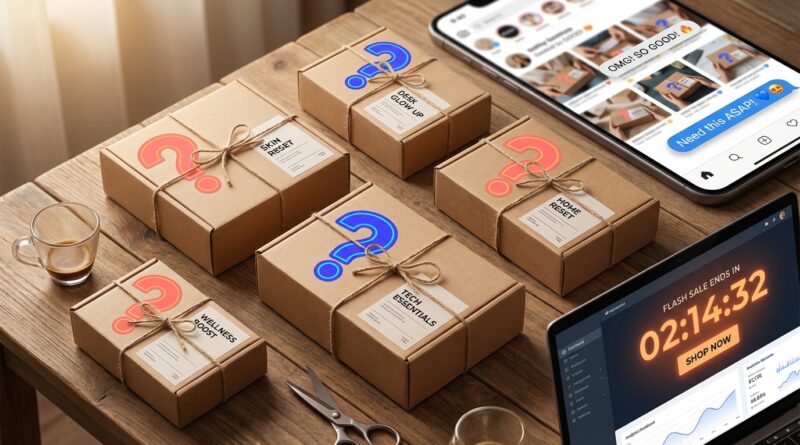
The Mystery‑Bundle Flash Sale: How One-Click ‘Blind’ Deals Turn Scrollers Into High‑AOV Buyers
You can feel the trap, can’t you. You run another discount on a single product, orders trickle in, and the average cart still looks disappointingly small. Then the math hits. Revenue goes up a bit, but margin gets thinner and thinner. That is why the mystery bundle flash sale strategy is getting so much attention. It changes the shopper’s question from “Do I want this one item?” to “What might I get if I jump in right now?” That tiny shift matters. People are tired of the same old 20 percent off code. They still respond to surprise, bragging rights, and anything fun enough to post online. A well-built blind bundle can help you raise average order value, clear slow-moving stock, and create reveal videos customers make for you. Best part, you do not need a huge dev team or a new product line to test it. Most stores can set one up this week.
⚡ In a Hurry? Key Takeaways
- A mystery bundle flash sale strategy can raise AOV by selling the thrill of discovery instead of discounting one item at a time.
- Start with 2 to 4 clear bundle tiers, honest value ranges, and a short sale window so customers know the game and feel safe buying.
- Do not make it feel like a junk drawer. Protect trust with category rules, minimum value promises, and no truly dead inventory.
Why blind deals work when normal discounts stop working
Shoppers get numb. That is the core problem.
If they have seen “Save 20%” ten times this month, the eleventh time barely registers. A mystery bundle feels different because it taps into emotion instead of pure price comparison. It mixes urgency, surprise, status, and curiosity. That is powerful.
Think of it like a lucky dip for grown-ups. People know they are buying products, but the reveal becomes part of the value. They are not only purchasing items. They are purchasing an experience.
That is what makes the mystery bundle flash sale strategy useful for stores that want higher average order value without building an entirely new offer from scratch.
What a good mystery bundle flash sale actually looks like
This is not just tossing random leftovers into a box and hoping people bite. The best versions are tightly framed.
It has a clear theme
Customers need some guardrails. “Mystery skincare bundle” is better than “random store bundle.” “Mystery streetwear box under $75” is better than “surprise deal.”
The buyer should know the category, the general style, and the value floor.
It has simple tiers
Do not overcomplicate it. Usually three tiers is enough.
For example:
- $29 Starter Mystery Bundle
- $59 Premium Mystery Bundle
- $99 VIP Mystery Bundle
That structure nudges people upward. A customer who would have bought one $24 item now starts comparing perceived value across tiers. That is where AOV begins to climb.
It has a real deadline
Flash sales work because they create a decision point. If the bundle is always available, it loses its spark. Run it for 24 hours, 48 hours, or over a weekend. Keep the frame tight.
If you want to push urgency even harder, pair the blind bundle with a rotating deal format like The ‘Hourly Swap’ Flash Sale: How Rotating Deals Every 60 Minutes Turns One Day Into 24 Revenue Spikes. That kind of structure works well when you want each bundle tier or bonus item to change throughout the day.
Why this format lifts AOV so well
Single-item discounts often keep the customer thinking small. They came for one thing, so they buy one thing.
Mystery bundles do the opposite.
They encourage customers to buy into a package. And packages naturally raise cart size because the comparison shifts from item price to perceived total value. A shopper might skip a $32 candle, but say yes to a $69 mystery home bundle that promises $110 in value and a chance at a limited scent.
That is the sweet spot. You are not only lowering resistance. You are increasing the size of the “yes.”
How to build a mystery bundle flash sale strategy without annoying customers
This part matters more than the promotion itself. Blind deals can go really well, or they can feel scammy fast.
1. Promise a minimum value and keep it believable
Say something like, “Pay $49, receive at least $85 worth of products.” That gives shoppers confidence.
Do not claim fake inflated values. If your store normally sells those items at those prices, fine. If not, customers will smell nonsense immediately.
2. Set category expectations
Be specific about what can be inside. Size range. Product type. Style family. Whether shades or scents vary. Whether accessories are included.
The less guesswork around the basics, the more fun the surprise feels.
3. Keep bad inventory out of the box
Yes, this format is great for moving slow stock. No, it is not a license to dump junk.
Every box should still feel like a win. If people open it and think, “Ah, so this is where the unwanted stuff went,” you lose repeat buyers and any user-generated content dries up overnight.
4. Add one “story item”
Include something customers will talk about. A limited color. A retired design. A bonus sample. A hidden golden-ticket perk. Not every box needs a huge jackpot, but every campaign needs a reason people want to film the reveal.
5. Make fulfillment easy on your team
Do not create 50 tiny bundle variations if your warehouse can barely handle five. Group bundles into simple packing rules. For example, each $59 box gets:
- 1 hero product
- 2 mid-tier products
- 1 bonus item
That keeps the offer exciting for customers and manageable for staff.
What to say on the product page
A lot of stores lose the sale here by being vague in the wrong places.
You want mystery, not confusion.
Your page should answer these questions fast:
- What category is this bundle for?
- What is the minimum guaranteed value?
- How long is the sale live?
- Are there size, color, or style choices?
- Are returns allowed, or is it final sale?
- What makes this reveal fun enough to share?
Good copy sounds like a person, not a legal memo. For example, “You will not know the exact items until your box arrives, but every Premium Bundle includes at least one full-size best seller and total value above $90.”
Best platforms for launching this fast
You do not need a giant rebuild.
Shopify
Create a product for each tier. Use variants for size or category where needed. Add a countdown app if you want urgency on the page. Most stores can get this live in a day.
WooCommerce
Same general idea. Use simple or variable products, then explain the rules clearly in the description. If inventory is messy, use a spreadsheet before you touch the site so your packing logic is not chaos.
TikTok Shop
This format is a natural fit because reveal culture already lives there. Short videos showing packing, shipping stacks, and customer reactions can drive the sale without needing polished ad creative.
How to market it so it feels exciting, not suspicious
People buy mystery bundles when they trust the store and understand the boundaries.
Show examples, but do not spoil everything
Use phrases like “examples of past bundles” or “possible items include.” That gives people a feel for quality without giving away the exact pack.
Use social proof early
If you have past bundle screenshots, unboxings, or customer comments, put them front and center. Blind offers need reassurance.
Give it a name
Names matter. “Mystery Box” is okay. “Midnight Drop Bundle” or “Vault Pull Flash Bundle” is stronger. It feels like an event, not leftover clearance.
Push the reveal angle
Ask buyers to post their unboxings. Offer a small store credit giveaway for reveal videos. Now your customers become your ad campaign.
Common mistakes that kill the idea
Making it too random
The sale should feel surprising, not reckless.
Using fake urgency
If the timer resets every day, people notice. Keep the deadline real.
Stuffing in low-value filler
A couple of bonus items can be fun. A pile of filler makes the bundle feel cheap.
Forgetting margin math
Before launch, map out the floor and ceiling of each box. Know your average cost per tier. The whole point is to improve order economics, not create a prettier way to lose money.
How to measure if your test worked
You do not need fancy analytics to judge the first run.
Watch these numbers:
- Average order value before and during the sale
- Units per order
- Sell-through of slow-moving SKUs
- Conversion rate on the bundle page
- Customer service complaints or confusion
- UGC volume from unboxings and tags
If AOV rises, slow stock moves, and customers share their reveals without backlash, you have something worth repeating.
At a Glance: Comparison
| Feature/Aspect | Details | Verdict |
|---|---|---|
| Revenue impact | Bundles shift shoppers from buying one discounted item to buying a higher-priced package with stronger perceived value. | Strong for raising AOV fast |
| Operational effort | Easy to launch on Shopify, WooCommerce, or TikTok Shop if tiers are simple and packing rules are planned in advance. | Low to moderate effort |
| Customer trust risk | Trust drops fast if bundles feel random, padded with junk, or unclear about value and returns. | Safe if rules are honest and tight |
Conclusion
If your usual discount playbook is getting weaker, this is a smart format to test. Shoppers are tired of another plain coupon, but they still get excited by surprise, status, and stories worth sharing. A tightly framed mystery bundle flash sale gives your community that lottery-ticket feeling while you move slow stock at full perceived value, raise AOV, and spark unboxing content for TikTok, Reels, and Shorts. Keep it clear, fair, and fun. If you do that, this is one of the few low-dev, high-impact promos that almost any Shopify, WooCommerce, or TikTok Shop store can ship this week.