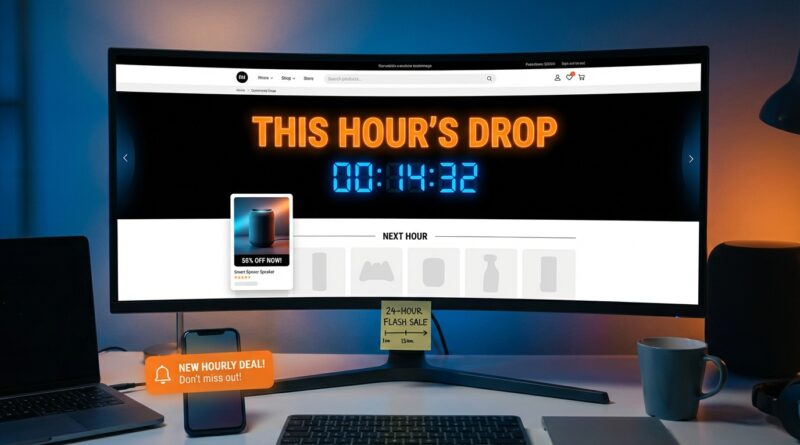
The ‘Hourly Swap’ Flash Sale: How Rotating Deals Every 60 Minutes Turns One Day Into 24 Revenue Spikes
Flash sales can be weirdly disappointing. You do all the setup, send the emails, post on social, and for a brief moment it feels like the plan is working. Then the rush fades. Early buyers check out, everyone else gets distracted, and your “one-day event” turns into a long, slow countdown. If that sounds familiar, the fix is not always a bigger discount. Often, it is a better rhythm. That is where an hourly flash sale ecommerce strategy comes in. Instead of running one offer for a full day, you rotate deals every 60 minutes. Each hour becomes its own mini-event, with a fresh reason to visit, browse, and buy. It keeps energy up, gives you more chances to spotlight different products, and creates urgency without cutting prices across your whole store. Done well, one sale day stops being one spike and starts acting more like 24 smaller revenue surges.
⚡ In a Hurry? Key Takeaways
- An Hourly Swap flash sale turns one promotion into a series of timed mini-offers, which helps keep traffic and sales active all day.
- Start with 6 to 12 planned deal changes, not 24 if your team is small. Rotate product focus, not just deeper discounts.
- This approach protects margin better than a blunt sitewide sale, as long as you choose products carefully and keep inventory tight.
Why the usual flash sale loses steam so fast
Most flash sales are front-loaded. Your most engaged customers buy early. Casual shoppers say they will “come back later,” then forget. By afternoon, the sale page feels stale because nothing has changed except the timer.
That is the core problem. A static offer asks people to care once. An Hourly Swap gives them a reason to care again and again.
This matters even more on mobile-first stores and social platforms. People are not browsing in long, focused sessions. They pop in between other things. If the offer is exactly the same every time they look, there is no real reason to return.
What an Hourly Swap flash sale actually is
An Hourly Swap flash sale ecommerce strategy is simple. Every 60 minutes, you rotate the featured deal. That could mean a new product, a new bundle, a category switch, a limited bonus, or a fresh discount on a small set of items.
The important part is this. The whole store is not on deep discount all day. The urgency moves. The spotlight moves. The shopper has to check back to see what is live now.
What changes each hour
You have options:
- A different hero product each hour
- A rotating category, such as skincare at 10, accessories at 11, bundles at 12
- A bonus gift that changes by hour
- A limited stock drop with a timed price
- A “mystery hour” for surprise offers
You do not need all of these. In fact, you probably should not use all of them at once. The cleaner the structure, the easier it is for shoppers to follow.
Why this works better than one flat discount
People respond to novelty. They also respond to deadlines. The Hourly Swap gives you both.
Every deal rotation creates a new trigger:
- A new email or SMS hook
- A fresh TikTok or Instagram Story update
- A reason to reopen the app or revisit the site
- A new decision point for shoppers who were on the fence
Instead of one launch moment at 9 a.m., you get repeated attention peaks through the day. That is the real magic. You are not stretching one announcement thinner. You are creating multiple mini-events inside a single promotion.
The margin benefit most brands miss
A lot of stores hear “flash sale” and go straight to broad markdowns. That is risky. It can train shoppers to wait for discounts and eat into profit fast.
Hourly rotation is smarter because you can be selective. Put discount pressure only where it helps.
Use discount depth like a dimmer switch, not an on-off button
Some hours can feature strong discounts on high-margin items. Other hours can focus on bundles, gifts with purchase, or low-cost add-ons that raise average order value.
If you are unsure how aggressive your pricing should be, this is where competitor data matters. A useful companion read is Stop Guessing Your Flash Sale Price: How To Use Live Competitor Tracking To Set Discounts That Actually Win. It is a smart reminder that the best sale price is not always the biggest cut. It is the one that still feels compelling next to what shoppers can find elsewhere.
How to structure an Hourly Swap without making it chaotic
This is the part where many brands overdo it. They hear “hourly” and imagine 24 dramatic deal flips, each with custom graphics, custom copy, and custom landing pages. That is a fast route to team exhaustion.
Keep it tidy.
Start smaller than the name suggests
You can run an “hourly” concept with 6, 8, or 12 meaningful swaps during your best traffic windows. For example, if most of your customers shop from noon to 8 p.m., focus there.
Group offers into a clear pattern
Try a schedule people can understand at a glance:
- 12 p.m. Beauty picks
- 1 p.m. Best seller bundle
- 2 p.m. Under-$25 steals
- 3 p.m. TikTok favorite
- 4 p.m. Free gift hour
- 5 p.m. VIP SMS exclusive
That kind of rhythm is easier to market than random deal drops.
Pre-build the creative
Do not make your team design assets live unless you absolutely have to. Build your landing page sections, product blocks, social stories, and SMS templates ahead of time. Then schedule what you can and assign one person to monitor the rest.
What products are best for hourly rotation
Not every item belongs in this kind of sale. The best picks usually fall into a few buckets:
- Best sellers that can pull traffic
- Impulse-buy products with simple appeal
- Bundles that raise basket size
- Inventory you want to move without discounting the whole catalog
- Newer products that need extra visibility
Be careful with products that need lots of explanation. If an item takes five paragraphs to understand, it may not suit a one-hour push. Hourly deals work best when customers can decide quickly.
How to promote it so people actually come back
The return visit is the point. If shoppers only hear about your sale once, you are back to the same old pattern.
Tell people the format before the event starts
Do not just say “big one-day sale.” Say what makes it different. Example: “New deal every hour from 12 to 8. Limited stock each round.”
That one sentence changes shopper behavior. Now they know waiting might mean missing something, but checking back might reveal a better fit.
Use channels that fit short attention spans
This strategy works especially well with:
- SMS reminders
- Instagram Stories
- TikTok Shop live callouts
- Push notifications
- Email for the schedule and top hourly moments
You are not trying to write a novel each hour. You are sending short nudges with a clear action.
Create one or two tentpole hours
Not every slot needs equal weight. Pick one early “traffic builder” hour and one late “last chance” hour. Give those stronger products or stronger perks to keep momentum from fading in the middle and end of the day.
Common mistakes that sink the idea
Changing too much at once
If the homepage, navigation, sale page, promo code, and shipping rules all change every hour, customers get confused. Keep the frame stable. Swap the offer, not the entire shopping experience.
Using the same discount on weaker items
If every hour is “20% off something random,” shoppers catch on fast. The deal needs to feel curated. Think relevance, not just rotation.
Forgetting stock planning
If your best hourly deal sells out in six minutes and nothing replaces it, the excitement can flip into annoyance. Limited stock is fine. Dead pages are not. Have a backup product or fallback offer ready.
Ignoring measurement
You need to know which hours earned attention and which ones just filled space. Track traffic, conversion rate, average order value, units sold, and return visits by hour. The second event should be smarter than the first.
A simple playbook for your first test
If you want to try this without turning your team inside out, start here:
- Choose a 6-hour window when your audience is most active.
- Pick 6 offers, each with a different purpose.
- Assign one “traffic hour,” three “conversion hours,” one “AOV hour,” and one “final push hour.”
- Build one landing page that updates featured products by time slot.
- Write all SMS, email subject lines, and story frames in advance.
- Set inventory caps so you do not accidentally oversell your winners.
- Review results by hour, not just for the full day.
That is enough to test the concept properly. You do not need a giant production to prove whether it works for your audience.
At a Glance: Comparison
| Feature/Aspect | Details | Verdict |
|---|---|---|
| Traditional one-day flash sale | Big opening spike, then traffic and urgency often fade because the offer stays the same. | Easy to run, but usually weaker at sustaining momentum. |
| Hourly Swap format | Deals rotate every 60 minutes, creating repeated reasons to revisit and buy throughout the day. | Best choice if you want more engagement without a blanket sitewide markdown. |
| Margin control | You can limit deep discounts to chosen items, bundles, or key hours instead of discounting everything. | Stronger for profit protection when planned carefully. |
Conclusion
If your flash sales keep peaking once and then dragging, the answer may not be “discount more.” It may be “change the tempo.” An Hourly Swap flash sale helps the community win in three practical ways right now. First, it stretches a single promotion into multiple micro-moments, which fits perfectly with short attention spans and feed-based shopping. Second, it gives you structured urgency without scary sitewide discounts that wreck margin. Third, it builds a habit of return visits within the same day, which is exactly the behavior you want if your store is trying to compete for attention on TikTok Shop and other mobile-first channels. Start small, keep the rules clear, and make each hour feel worth checking. One day can absolutely become 24 revenue spikes, or at least a lot more than one.