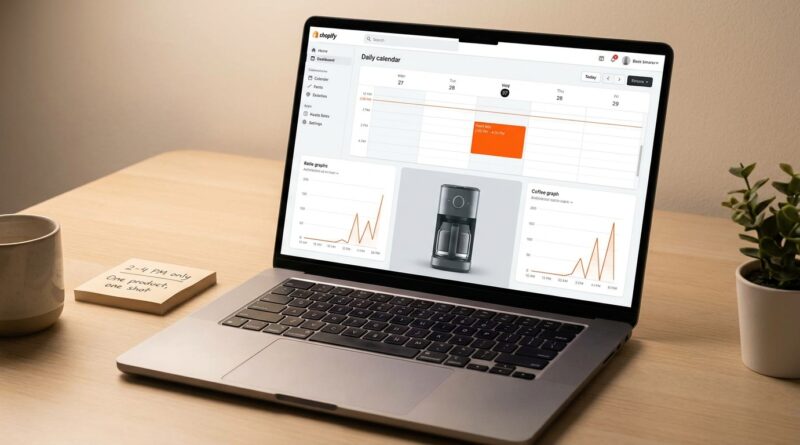
The ‘One-Slot Flash’ Strategy: Turn A Single Calendar Gap Into Your Highest-Converting Micro Sale
You are not failing at flash sales. You are probably just trying to copy a version built for giant teams with giant calendars. That is frustrating when your week already looks like a traffic jam of launches, customer support, inventory checks, creator approvals, and paid ad tweaks. The idea behind the ecommerce micro flash sale strategy is much simpler. Stop waiting for a full day you can dedicate to a big event. Start using one clean slot on your calendar, even 60 to 180 minutes, as a focused sales window with one offer, one audience, and one job to do. That tiny gap can outperform a messy all-day promo because it feels urgent, stays easy to set up, and does not drain your list. If you have ever looked at a two-hour opening between meetings and thought, “That is too small to matter,” this approach is for you. Small windows can sell. They just need a tighter plan.
⚡ In a Hurry? Key Takeaways
- A strong ecommerce micro flash sale strategy turns a short calendar gap into a focused sale, often in 1 to 3 hours.
- Pick one product group, one message, and one audience segment instead of trying to run a storewide event.
- Keep the setup light and the pricing honest, or you risk tiring out shoppers and training them to ignore you.
Why the one-slot flash works better than the “perfect” flash sale
Most independent brands do not need a blockbuster event. They need repeatable wins.
A one-slot flash works because it fits real life. You spot a gap on Tuesday afternoon, or a quiet Thursday morning, and you build a sale around that opening instead of trying to rebuild your week around the sale.
It also forces better decisions. When you only have a short window, you cannot throw ten products, four discount codes, and three audience segments into the mix. You simplify. That usually helps conversions.
Shoppers feel that clarity too. A tight offer is easier to understand. A short deadline feels more believable. And your team is less likely to make mistakes.
What a micro flash sale actually looks like
Think smaller than a holiday promo. Bigger than a random coupon.
The basic format
A micro flash sale usually includes:
- One short time window, often 1 to 3 hours
- One clear offer, such as 15% off a specific collection or a gift with purchase
- One main channel, usually email or SMS first
- One goal, such as moving slow stock, boosting afternoon revenue, or testing demand
That is it. No homepage takeover required. No all-hands meeting required.
Good examples
- “From 1 PM to 3 PM, our travel-size bundle is 20% off”
- “For the next 90 minutes, orders over $60 get a free refill pouch”
- “VIP text subscribers get early access to 25 units of a returning favorite”
Each one is specific. Each one is easy to explain in a subject line.
How to choose the right calendar gap
Not every empty slot is useful. You want the kind of gap that gives you enough time to launch, monitor, and wrap up without chaos.
Look for a slot with three things
- A little setup room before it starts
- An audience that is likely to be active during that time
- No competing campaign that will muddy the message
If your email is going out at noon, do not run a totally different promo at 12:30 unless you enjoy confusion.
Best times to test first
Start with times when your audience already tends to open or click. For many brands, that means late morning, lunch hour, or early evening. Use your actual data, not generic best-practice charts.
If your customers buy during school pickup hours or after bedtime, trust that pattern.
Build the offer around one job
This is where many flash sales go sideways. The brand wants to clear old inventory, grow average order value, wake up cold subscribers, and attract new customers all at once.
Pick one job.
Match the goal to the offer
- Need quick cash flow? Use a simple percentage discount on proven products.
- Need to move stale stock? Use a limited bundle or bonus item.
- Need higher order values? Use a spend threshold offer.
- Need to reward loyal shoppers? Use subscriber-only access.
The cleaner the goal, the easier it is to measure whether the slot worked.
Keep the setup almost boring
Boring is good here. Boring means repeatable.
Your micro flash checklist
- Create one landing page or collection page
- Write one email and one SMS
- Set one start time and one end time
- Check inventory and fulfillment limits
- Test the discount or auto-applied offer
- Prepare one follow-up message for “ending soon”
You do not need a site redesign. You need a page that loads, a message that makes sense, and an offer that works exactly as promised.
Why trust matters more in a short sale
When you compress a sale into a short window, shoppers decide fast. If the pricing feels slippery, they leave fast too.
That is why honest framing matters. If you say something is limited, it should actually be limited. If you show a discount, it should be real and easy to verify.
If your audience has become cynical about deals, read The ‘Price-Proof Flash’ Strategy: Turn Deal Skeptics Into Your Highest-Converting Shoppers. It does a good job of explaining why careful shoppers are not being difficult. They are protecting themselves from fake urgency and fuzzy pricing.
How to write the message
Your message should do three things fast. Tell people what the offer is. Tell them when it ends. Tell them who it is for.
Simple email structure
Subject line: 2-hour flash: 20% off travel kits
Opening: Quick heads-up. From 1 PM to 3 PM today, our travel kits are 20% off.
Why now: Perfect if you have been waiting to restock before summer trips.
Call to action: Shop before 3 PM.
Simple SMS structure
2-hour flash is live. Travel kits are 20% off until 3 PM. Shop now: [link]
Short beats clever. Especially when the clock is ticking.
Who should get the sale first
You do not need to blast everyone.
In fact, one of the smartest parts of an ecommerce micro flash sale strategy is that it can stay selective. That protects your list and keeps the offer feeling special.
Best audience segments for early tests
- Recent site visitors who did not buy
- Past buyers of the same category
- VIP customers
- SMS subscribers who respond well to urgency
Start narrow. If the slot performs well, you can expand later.
What to watch while the sale is live
You do not need a war room. But you do need to keep an eye on a few numbers.
- Traffic to the sale page
- Conversion rate
- Average order value
- Units sold
- Support issues or checkout errors
If conversions are weak but clicks are strong, the page or offer may be the problem. If traffic is weak, the audience or message may need work.
How to know if the micro flash was worth it
Do not judge it only by total revenue. A small sale can still be a strong win if it was quick to set up and did not eat the next three days of your team’s life.
Ask these four questions
- Did it hit the main goal?
- Did it produce profit after discount and fulfillment costs?
- Was the setup light enough to repeat?
- Did engagement stay healthy, or did unsubscribes spike?
If the answers are mostly yes, you have something useful. Not glamorous. Useful.
Common mistakes that kill one-slot flashes
Trying to make it too big
If the sale needs custom graphics, five approvals, and a new homepage hero, it is no longer a one-slot flash. It is a project.
Using weak products
Do not assume any item can carry urgency. Pick something with proven interest, decent margin, or obvious seasonal fit.
Running them too often
If every week has a “flash,” none of them feel special. Keep some space between them.
Forgetting operations
Nothing ruins a fast win like overselling stock or sending support into a panic. Always check inventory and fulfillment capacity first.
A repeatable template you can use this month
Here is a simple version you can adapt:
- Find one 2-hour gap in next week’s calendar.
- Choose one goal, like moving 50 units of a product line.
- Pick one audience segment, like recent browsers.
- Create one offer, such as 15% off until 2 PM.
- Send one launch email and one last-chance reminder.
- Track results and note what felt easy or messy.
That is enough to get a clean test. And once you have one clean test, you can start building a small playbook around it.
At a Glance: Comparison
| Feature/Aspect | Details | Verdict |
|---|---|---|
| Time commitment | A micro flash sale can be planned around a 1 to 3 hour live window with light prep. | Best for busy teams that cannot clear a full day. |
| Offer complexity | Works best with one product focus, one audience, and one simple incentive. | Keep it tight for better conversions and fewer mistakes. |
| Customer impact | Feels urgent without exhausting your full list when used selectively and honestly. | High potential value if you protect trust and do not overuse it. |
Conclusion
The big mid-year blowout gets all the attention. Fine. Let the giant retailers have their marathon promo days. Most independent brands need something more practical. The ecommerce micro flash sale strategy helps you win with the time you actually have, not the fantasy schedule some marketing playbook assumes. When you turn one real calendar gap into one focused offer, you create a revenue spike that is easier to run, easier to measure, and much less likely to burn out your list, your team, or your ad budget. Start small. Keep it honest. Repeat what works. That is how small windows start pulling real weight.