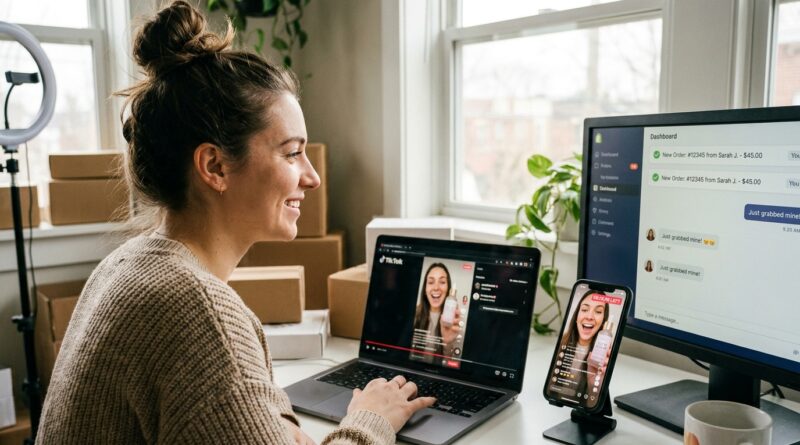
The ‘Micro-Influencer Flash’ Strategy: Turn One Live Collab Into A 30‑Minute Sellout
You line up a creator. You send the product. They post. Then you stare at your dashboard waiting for the flood, and all you get is a small ripple. Maybe a few clicks. Maybe a couple of discount-code sales. Mostly, though, it feels like you paid for “awareness” and got no clean way to repeat it. That is the frustrating part. The creator did their job, your product may even be good, but the post lands like a flyer pinned to a wall instead of a live shopping moment people want to join right now.
That is where the micro influencer flash sale strategy changes the setup. Instead of asking one creator to make a static post and hoping people circle back later, you build a short live event around urgency, limited stock, and a simple buying window. Done right, one affordable live collab can create a concentrated 30-minute burst of attention, traffic, sign-ups, and high-intent orders without cutting your prices into the floor.
⚡ In a Hurry? Key Takeaways
- Use one creator like a host for a timed live drop, not like a one-off ad slot.
- Keep the sale window short, the offer simple, and the stock limited so shoppers act fast.
- Protect your margins by using a bundle, bonus, or capped quantity instead of a deep storewide discount.
Why the usual influencer post falls flat
Most small stores run creator campaigns like this. Send product. Approve a post. Hand over a code. Wait.
The problem is timing. A follower sees the post while standing in line for coffee, thinks “maybe later,” and never comes back. The creator’s trust is real, but the buying moment is weak.
That is why a micro influencer flash sale strategy works better. It turns attention into an event. People know when to show up, what is available, and why they should buy now instead of next week.
What the “Micro-Influencer Flash” strategy actually is
It is a tightly planned, short live collab between your store and one micro influencer. Usually 15 to 30 minutes. Sometimes 45 if the creator is especially good on camera.
The creator does not just mention your brand. They host a mini shopping event.
The basic formula
Here is the simple version:
- Pick one creator with a loyal niche audience, not just big follower counts.
- Choose one hero product, bundle, or limited drop.
- Set a short sale window, often 30 minutes.
- Cap stock or cap bonuses so urgency feels real.
- Drive viewers to one clear checkout page or in-app product listing.
- Use one trackable code, link, or landing page.
That concentration is the whole point. You are not trying to be everywhere. You are trying to create a buying spike that is easy to see and easy to repeat.
Why this works better in 2026
People are already trained by short-form video and social shopping to make quick buying decisions. They trust creators they follow. They like live demos. And they are comfortable buying inside apps or from a mobile landing page.
So instead of fighting that behavior, use it.
Small and mid-sized stores have an edge here too. You can move faster than bigger brands. You can set limited stock. You can test a creator partnership without a six-figure campaign.
How to build a 30-minute sellout without blowing your margins
1. Pick the right creator, not the biggest one
Follower count can fool you. A creator with 12,000 highly engaged followers in your exact niche often beats someone with 200,000 broad, sleepy followers.
Look for:
- Strong comments, not just likes
- Followers asking for recommendations
- A clear niche fit with your product
- Comfort on live video
- A track record of getting people to click, save, or reply
If they are awkward live, the event drags. This strategy depends on energy and clarity.
2. Sell one thing, not your whole catalog
This is where many stores lose the thread. They invite people to a flash event and then throw 40 products at them.
Do the opposite.
Choose one hero item, one starter kit, or one bundle with a clear promise. Think “the creator’s favorite setup,” “limited summer pack,” or “live-only starter bundle.”
Too many choices slow people down. A flash sale needs speed.
3. Use a reason to buy now that is not just “20% off”
You do not need to hack your margins apart. A smart flash offer often works better than a deep discount.
Good options include:
- Bonus gift for the first 50 orders
- Limited edition bundle only available during the live
- Free shipping during the 30-minute window
- Buy one, get a small add-on free
- Locked price on a product that is normally sold separately
This keeps the offer exciting while protecting profit.
4. Pre-stage the audience before the live starts
The sale does not begin when the creator goes live. It begins 24 to 72 hours earlier.
You want reminders, not one lonely announcement.
Have the creator post:
- A teaser video
- A countdown story
- A “set your reminder” post
- A quick behind-the-scenes preview of the item
On your side, send:
- An email alert
- An SMS reminder if you use text marketing
- A site banner
- A waitlist or sign-up page for early access
That sign-up page matters. Even if some people do not buy live, you still collect high-intent leads you can use later.
5. Make the live itself simple and fast
A good live shopping session is not a long brand speech. It is a guided buying moment.
A useful 30-minute shape looks like this:
- Minute 1 to 3. Quick intro and what the offer is
- Minute 4 to 10. Product demo in real use
- Minute 11 to 18. FAQs, objections, sizing, fit, ingredients, setup, whatever matters
- Minute 19 to 25. Social proof, creator results, customer reaction
- Minute 26 to 30. Final countdown and stock reminder
That is enough time to build trust without letting the room cool off.
6. Create real urgency, not fake urgency
People can smell fake scarcity from a mile away. If you say “only 20 left” every week, they stop believing you.
Be honest. Cap the number of bundles. Cap the bonus. Limit the live-only version. Then stick to it.
Real urgency makes people move. Fake urgency damages trust.
7. Give every click one destination
Do not send live viewers hunting around your homepage. That is where momentum goes to die.
Use one dedicated landing page or product page with:
- The creator’s name or campaign name
- The exact offer
- A visible countdown if appropriate
- Clear product photos
- Fast checkout on mobile
- Email or SMS capture for people who hesitate
If checkout takes too many steps, your flash becomes a fizz.
How to measure whether it worked
This is one of the biggest benefits of the micro influencer flash sale strategy. It is much easier to track than vague awareness campaigns.
Watch these numbers:
- Live viewers and peak viewers
- Clicks during the live window
- Conversion rate on the landing page
- Orders in the first 30 minutes
- Email or SMS sign-ups collected
- Average order value
- Sell-through rate on the featured stock
After the event, ask a few plain questions. Did the creator bring buyers, not just watchers? Did the offer protect margin? Could you run the same format again next month?
Common mistakes that kill the flash
Using a generic code with no event
A code alone is not a strategy. It is just a coupon floating in the wind.
Letting the creator improvise everything
You want the creator to sound natural, but the structure should be planned. Key talking points, stock limits, link placement, and timing need to be set in advance.
Running the sale too long
If the “flash” lasts two days, urgency disappears. Short works because it feels different.
Featuring low-demand products
Do not use the live to clear dead stock unless the creator can tell a believable story around it. Start with something people already tend to want.
Forgetting the follow-up
Not everyone buys during the live. Some need one nudge after. Send a follow-up email or text to non-buyers who clicked but did not check out. A short “last units left” message can pick up extra revenue without widening the discount.
A smart next step if you want to scale this
If one creator flash works, you can repeat it with different niches, product bundles, or creator styles. You can also stack several small creators over a longer promo window.
That is where The ‘Creator Stack Flash’ Strategy: Turn 5 Small TikTok Creators Into One Relentless 48‑Hour Sale Machine is worth a look. It is a useful next move once you have proved that one live event can convert.
At a Glance: Comparison
| Feature/Aspect | Details | Verdict |
|---|---|---|
| Traditional influencer post | One static post, broad timing, loose tracking, discount code often used later or ignored | Easy to run, but usually weak for urgency and attribution |
| Micro influencer flash sale strategy | Short live event, one featured offer, limited stock or bonus, one clear buying window and landing page | Best for measurable spikes in traffic, sign-ups, and high-intent orders |
| Deep storewide discount | Can drive volume, but often cuts margins, attracts low-loyalty buyers, and trains customers to wait | Use carefully. Good for clearance, not ideal as your main creator play |
Conclusion
If you are tired of paying for influencer posts that create noise but not sales, this is a much sharper way to work. Right now the strongest ecommerce growth is coming from social commerce and micro-influencer driven discovery, but most brands still treat those creators like static ad inventory instead of live event partners. A micro influencer flash sale strategy lets small and mid-sized stores use what is already working in 2026, short-form video, creator trust, and in-app impulse buying, while keeping tight control over stock and discount levels. More importantly, it gives you something repeatable. One affordable creator relationship can turn into a clean burst of traffic, new email or SMS sign-ups, and serious orders you can actually track, instead of another fuzzy campaign that “got attention” and told you almost nothing.