The ‘Prime Halo Flash’ Strategy: Turn Big-Retailer Deal Weeks Into Your Own 2‑Hour Traffic Spike
You can feel it when Prime Day week starts. Your store goes quiet, your ads get more expensive, and shoppers who were ready to buy suddenly wander off to Amazon, Walmart, or Target “just to compare.” It is frustrating because you are not only competing on price. You are competing with noise, urgency, and giant homepages screaming about deals every five seconds. Quietly knocking 10 percent off and hoping somebody notices usually does not work.
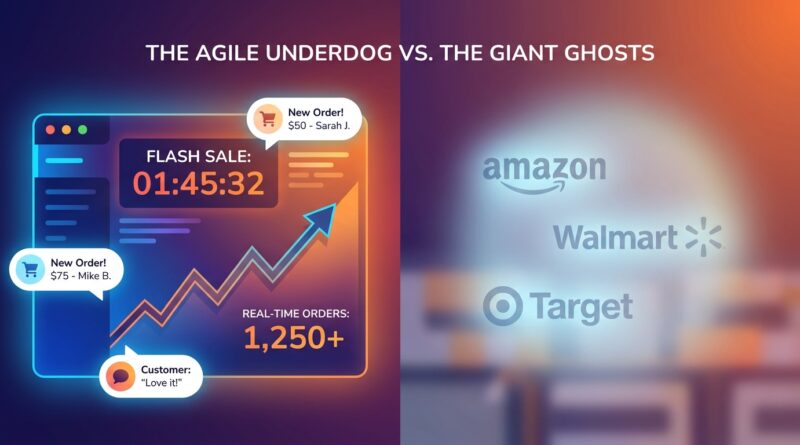
The good news is you do not need to outspend the big retailers. A smarter ecommerce flash sale strategy during prime day is to ride the attention wave they create. Think smaller. Run a tightly timed 2-hour “Prime Halo Flash” during the hours people are already in deal mode, send one focused campaign to past visitors and cart abandoners, and frame your offer as the simpler, more personal alternative to a crowded big-box cart. Done right, this gives you a short, controllable burst of traffic, protects your margins, and helps you win shoppers who are already hunting for a better deal.
⚡ In a Hurry? Key Takeaways
- The best move during Prime Day week is not a store-wide panic discount. It is a 2-hour flash sale timed to peak comparison shopping hours.
- Start with past visitors, cart abandoners, and recent customers. One segmented email and SMS push is often enough for a lean team.
- Keep the offer narrow so it feels special and does not crush margins. Use bundles, gifts, or a hero product instead of slashing everything.
Why the big sale week hurts smaller stores
When the mega retailers all run summer deal events in the same week, shopper behavior changes fast. People stop browsing casually and start hunting. They open ten tabs. They compare shipping times. They search for coupon codes. They look for “better than Amazon” options.
That sounds bad at first, but there is an opening here. During these deal-heavy days, shoppers are not loyal. They are alert. If your offer hits at the right moment, you can pull some of that attention your way.
That is the whole idea behind the Prime Halo Flash. You are not trying to beat Amazon at being Amazon. You are giving shoppers a quick, appealing reason to buy from a smaller store while they are already primed to spend.
What the “Prime Halo Flash” strategy actually is
It is a short sale window, usually 2 hours, placed right in the middle of peak comparison shopping. Think late morning, lunch break, or early evening, depending on when your audience tends to click and buy.
The structure is simple:
1. Pick one tight time window
Do not run all day. A short window feels real. It creates urgency without looking desperate. Two hours is enough time to drive action and short enough to keep your discount under control.
2. Use a narrow offer
Choose one of these:
- A best-selling hero product
- A category bundle
- A gift-with-purchase
- Free shipping plus a modest discount
A narrow offer is easier to explain, easier to promote, and less likely to eat your margins.
3. Send it to warm audiences first
Your best targets are people who already know you. That means:
- Past 30 to 90 day site visitors
- Cart abandoners
- Email subscribers who clicked recently
- Past customers who bought related items
This is not the week to spend days building a giant campaign from scratch. Use the audience you already have.
4. Position it as the easier alternative
Your message is not “we are cheaper than Amazon on everything.” That is a losing game. Your message is “Skip the crowded carts. Here is a smart, fast deal from a brand you already like.”
When to run your 2-hour sale
Timing matters more than people think. You want your flash sale to show up when shoppers are already checking prices and filling carts elsewhere.
Good windows often include:
- Late morning, around 10 a.m. to noon local time
- Lunch break, when people browse on phones
- Early evening, around 6 p.m. to 8 p.m.
If you have past email and store data, use it. Look at when your audience usually opens, clicks, and converts. If you do not, start with late morning or early evening. Those are common comparison-shopping windows.
The trick is to feel like part of the deal rush, not an afterthought sent at 11:47 p.m. when everyone is tired.
How to build the offer without hurting your margins
This is where smaller stores often get into trouble. They panic, go store-wide, and cut too deep. Then they work hard for a traffic bump that barely makes money.
A better plan is to create a small, sharp offer.
Smart options
- Bundle two items together. The perceived value is high, but your discount is spread across products.
- Add a free gift. This often feels more special than taking another 5 percent off.
- Discount one proven seller. Use the item that already converts well.
- Offer free shipping for the 2-hour window. This is simple and easy to understand.
What you want is clarity. If a shopper has to read your email three times to understand the deal, you are already losing them.
The one-campaign setup for lean teams
You do not need a ten-email sequence. For most brands, one segmented push across email and SMS is enough.
Your basic campaign stack
- Email 1: Starts 15 to 30 minutes before the flash window opens. Subject line should mention the short time limit.
- SMS: Sent right when the sale opens, but only to people who opted in.
- Email 2: Sent about 60 to 75 minutes into the sale as a reminder.
Keep the creative light. Strong headline. Product image. Clear end time. Big button. Done.
If you like this kind of tight, high-intent promotion, it is worth reading The ‘Waitlist Surge Flash’ Strategy: Turn One VIP Queue Into Your Highest‑Intent 24‑Hour Sale. It covers a similar idea from a different angle, using urgency and audience quality instead of broad discounting.
Messaging that works better than “Huge Prime Day Sale”
Do not borrow the giant retailer voice. It sounds fake coming from a smaller store. Your advantage is that you can sound human and specific.
Try message angles like these
- “Before you check out on Amazon, take 2 hours to grab our summer bundle.”
- “A simpler deal. Two hours only. No crowded cart required.”
- “Prime week is noisy. Here is one deal actually worth opening.”
- “Your local alternative to big-box deal week.”
This framing works because it meets shoppers where their head already is. They are comparing. They are second-guessing. They are looking for a reason to switch.
Who to target first
Not every shopper is worth chasing during a busy retail week. Start with the people most likely to convert quickly.
Best segments
- Cart abandoners: They already showed buying intent.
- Recent product viewers: Especially if they viewed the item in your flash offer.
- Past customers: Focus on buyers of related products.
- Engaged subscribers: Anyone who opened or clicked in the last month.
If your ad budget is limited, retarget these groups with a simple reminder ad during the same 2-hour period. Keep frequency low and the message consistent with the email.
What to put on the landing page
Your landing page should do one job. Close the sale fast.
Include these basics
- A headline with the exact offer
- A visible countdown or clear end time
- Only the products included in the flash
- Simple shipping and return info
- Social proof, like reviews or star ratings
Remove clutter. This is not the moment to send people to your general homepage and hope they figure it out.
Common mistakes to avoid
Running the sale too long
If it lasts all day, it stops feeling special. You also train shoppers to wait.
Discounting the whole store
This hurts margins and muddies the message. Pick one lane.
Targeting cold traffic first
Warm audiences give you the fastest return. Start there.
Making the offer too complicated
“Buy three, choose from seven tiers, code applies only to certain SKUs” is not a flash sale. It is homework.
Ignoring fulfillment reality
Do not create a spike you cannot ship. If inventory is tight, cap the offer or limit it to what you can handle well.
At a Glance: Comparison
| Feature/Aspect | Details | Verdict |
|---|---|---|
| Sale length | A 2-hour flash window creates urgency and keeps discount exposure limited. | Best for lean teams and margin control |
| Audience targeting | Past visitors, cart abandoners, and recent buyers are the fastest group to react during deal week. | Start with warm traffic first |
| Offer style | Hero products, bundles, or gifts beat broad store-wide discounts for clarity and profit. | More sustainable than panic markdowns |
Conclusion
When Prime Day and the rival summer deal events all land in the same week, smaller e-commerce brands can feel invisible for four straight days. But you do not have to sit there and watch your traffic drain away. A smart ecommerce flash sale strategy during prime day is to use the bargain-hunting mood that is already in the air, then shape it into a short, controllable burst of your own. Time a micro flash sale for peak comparison hours, re-engage past visitors with one segmented campaign, and present your offer as the local alternative to the giant, noisy carts. That gives even a lean team something practical they can set up quickly. It feels special, protects margins, and helps you steal back some of the halo traffic swirling around the big platforms. Sometimes you do not need a bigger sale. You just need a better-timed one.