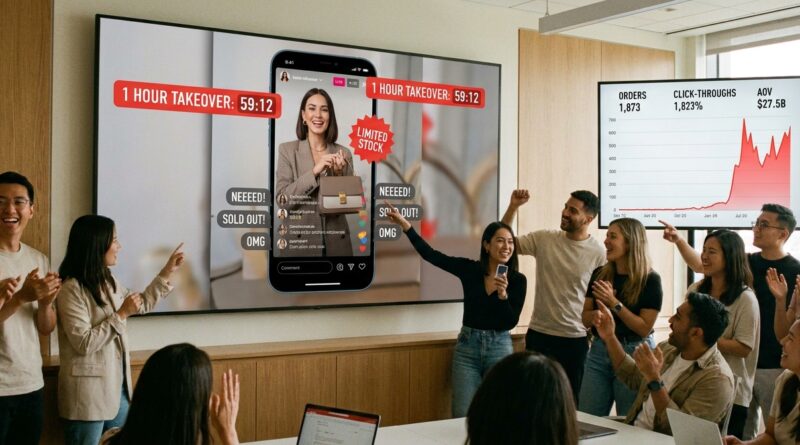
The ‘Creator Takeover Flash Sale’ Strategy: Let Influencers Run Your Store For One Hour
Flash sales can feel oddly lonely. You cut prices, send the emails, post the countdown, and then watch traffic barely move. Meanwhile, your customers are not sitting in their inbox waiting for your discount code. They are scrolling, watching creators, asking questions in comments, and buying from people they already trust. That gap is the whole problem. A creator led flash sale strategy closes it by putting a familiar face at the center of the buying moment for one focused hour. Instead of treating an influencer like a one-off ad, you let them host the sale, pick the angle, answer objections, and guide shoppers to checkout in real time. It is simpler than building a full live commerce team, and it is much easier to measure than a vague “awareness” campaign. Done right, one mid-tier creator can turn a slow promo into a compact sales event you can repeat every month.
⚡ In a Hurry? Key Takeaways
- A creator led flash sale strategy works best when one creator owns a tight, one-hour buying event instead of just posting a generic promo.
- Start with one mid-tier creator, one product bundle, one landing page, and one clear deadline to keep the sale easy to run and easy to measure.
- Give the creator room to sell in their own voice, but set guardrails on pricing, timing, stock, customer support, and tracking links before you go live.
Why your usual flash sale keeps falling flat
Most flash sales are built like emergency broadcasts. Big discount. Loud graphics. Lots of posts. Very little connection.
The problem is not always your offer. It is often the setting. People do not buy just because a banner says “ends tonight.” They buy when the product makes sense, when someone answers their hesitation, and when the moment feels social instead of corporate.
That is why a creator led flash sale strategy is worth a serious look. You are moving the sale from a static store event into a live, trust-based moment. The creator is not just driving traffic. They are hosting the store for an hour.
What a creator takeover flash sale actually is
Think of it like handing the microphone to someone your audience already likes.
For one hour, a creator becomes the face of the promotion. They announce the deal, explain why the product is worth buying, show how it works, answer questions, push urgency, and send people straight to a dedicated product page or collection.
This can happen on TikTok, Instagram Live, YouTube, or even through a sequence of stories and short videos linked to a fast checkout page. It does not need a polished studio. It needs a creator who can hold attention and a brand that knows how to keep the offer tight.
What makes it different from regular influencer marketing
Most influencer campaigns stop at attention. The creator posts. Your team hopes for clicks. Then everyone moves on.
A takeover flash sale goes further. The creator is involved from the top of the funnel to the sale itself. They are not a billboard. They are the host, the explainer, and the closer.
Why this works better than another discount blast
Live and social commerce are growing because they match how people actually shop now. They discover products while being entertained. They want proof. They want context. They want to feel like they are part of something happening right now.
A one-hour takeover creates that feeling without asking you to launch a huge production. You get:
- Built-in attention from the creator’s audience
- Real-time product education
- Natural urgency because the event is short
- Clearer tracking than a broad awareness campaign
- A repeatable format you can run every month
If your audience is active on TikTok, it also pairs well with fast-moving trend-based selling. That is where pieces like The ‘TikTok Shop Trend-Jack’ Flash Sale: How To Sell Out In 24 Hours By Riding What’s Hot Today fit nicely. Trend-jacking catches momentum. A creator takeover gives that momentum a trusted voice and a focused checkout path.
How to set up a creator led flash sale strategy without making it complicated
1. Pick the right creator, not just the biggest one
You do not need a celebrity. In fact, a mid-tier creator is often the sweet spot.
Look for someone with:
- Strong comment activity, not just follower count
- A clear niche that matches your product
- A history of explaining and demonstrating products well
- Audience trust that feels real, not forced
A creator with 50,000 highly engaged followers can easily beat a much larger account with weak interaction.
2. Give the sale one job
Do not try to move twenty random products. That is where brands lose the plot.
Pick one hero product, one bundle, or one category. The simpler the message, the easier it is for the creator to build excitement around it.
Good examples:
- A skincare starter set for one night only
- A limited color drop with a bonus gift
- A “creator favorites” bundle with special pricing
3. Build a dedicated landing page
Send traffic to a page made for the event, not your homepage.
That page should include:
- The creator’s name or branding
- The countdown timer
- The exact offer details
- Short product benefits
- Fast checkout options
- Clear stock or time limits
If shoppers have to hunt for the offer, you will lose them.
4. Script the structure, not every word
This is a common mistake. Brands over-control the message and flatten the creator’s personality.
You want a run-of-show, not a robotic script.
Map out:
- Opening hook
- Product intro
- Demo points
- Offer reveal
- FAQ prompts
- Mid-event urgency reminder
- Final ten-minute push
Then let the creator deliver it naturally.
5. Plan the support before the event starts
If the creator is live and comments start flying, somebody from your team should be there too.
You need support for:
- Stock checks
- Link issues
- Promo code problems
- Shipping questions
- Customer service follow-up
You do not need a giant crew. One person on chat and one person watching store performance can be enough for a small brand.
A simple format you can repeat every month
Here is a practical version that keeps things manageable.
The 7-day setup
Day 1: Choose the creator, product, and offer.
Day 2: Build the landing page and tracking links.
Day 3: Agree on talking points, content plan, and event time.
Day 4: Creator posts teaser content.
Day 5: Brand emails and posts the countdown.
Day 6: Final stock check and tech test.
Day 7: Go live for one hour. Clip the best moments for retargeting later.
That is the beauty of this model. It is compact. You are not building a year-long influencer machine. You are building a repeatable revenue event.
What to pay the creator
Keep this fair and simple.
A solid setup is usually:
- A flat fee for hosting and pre-event promotion
- A sales commission tied to tracked revenue
- Free product so they can use it honestly before the event
This gives the creator real upside while protecting you from paying purely for vague exposure.
Why commission matters
If you want the creator to act like a true sales partner, their deal should reflect that. A commission turns the event into a shared goal, not just a sponsored post.
What to measure after the hour ends
This is where a creator led flash sale strategy gets especially useful. It is measurable.
Track:
- Live viewers or story views
- Clicks to the landing page
- Conversion rate
- Total revenue during the event window
- Average order value
- New customer percentage
- Cost per acquisition
- Post-event sales within 24 hours
Then ask one simple question. Did this creator produce a buying moment, not just an audience moment?
If yes, you have something valuable. Run it again. Improve the offer. Tighten the timing. Turn it into a monthly play.
Common mistakes to avoid
Choosing a creator who looks good on paper but cannot sell
Some creators are great at aesthetics and weak at persuasion. You need someone who can explain, react, and handle live questions.
Making the offer too broad
A giant storewide sale feels messy. A focused offer feels urgent.
Forgetting checkout speed
You can win attention and still lose the sale if checkout is clunky on mobile.
Giving no guardrails
Freedom is good. Chaos is not. Set rules around discount levels, approved claims, stock limits, and customer promises.
Skipping the follow-up
After the event, use clips, testimonials, and urgency leftovers to catch people who watched but did not buy. A lot of sales happen just after the hour ends.
Who this works best for
This is especially good for brands that:
- Already get some sales from social traffic
- Have one or two products that are easy to demo
- Want a faster test than building a full ambassador program
- Need more predictable promo spikes each month
It is also ideal if you are tired of treating creators like rented ad space. The whole point is partnership. The creator is helping run the buying experience, not just renting you their feed for a day.
At a Glance: Comparison
| Feature/Aspect | Details | Verdict |
|---|---|---|
| Audience attention | A creator-hosted one-hour event meets shoppers where they already spend time, on social platforms and live content. | Stronger than a standard email-led flash sale |
| Setup effort | Needs a clear offer, tracking links, a landing page, and light coordination, but not a full studio or large internal team. | Very manageable for small and mid-sized brands |
| Revenue predictability | Because the event is short and measurable, winning formats can be repeated monthly with the same creator or new partners. | Excellent as a repeatable revenue lever |
Conclusion
There is a reason old-school flash sales feel tired. They ask customers to care on your terms, in your channels, with very little human connection. Live and social commerce work better because they feel like shopping with someone, not being shouted at by a banner. That is why a focused creator takeover is such a smart move. It lets you use one strong relationship with a mid-tier creator to create a compact, measurable sales spike without building a studio, a huge team, or a year-long program. If you treat the creator like a real partner, keep the offer tight, and make checkout painless, this can become more than a one-off experiment. It can become a monthly revenue habit. And for a lot of brands right now, that is much more useful than another forgettable “48-hour sale” graphic.