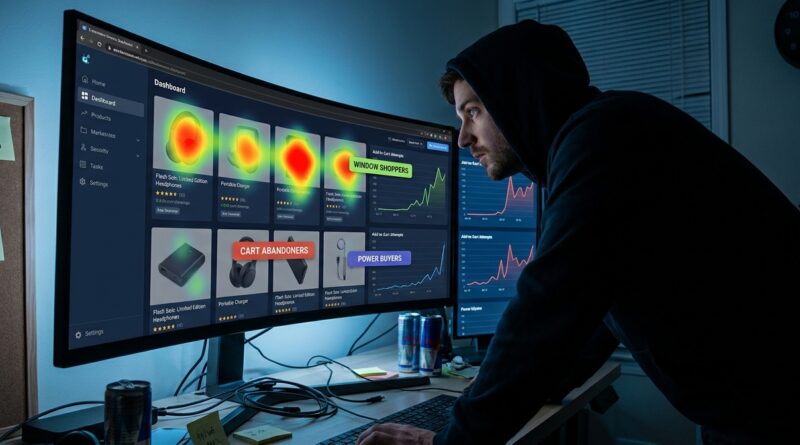
The ‘Behavior Loop Flash’ Strategy: Turn 24 Hours of Clicks Into Your Next 90 Days of Sales
Flash sales can feel exciting while they are happening, then a little depressing the morning after. You see the spike. You count the orders. Then traffic drops, revenue cools off, and it feels like you have to start all over again. That is the trap. Too many small brands treat a flash sale like a quick cash grab instead of a live lab packed with shopper signals. Every click, product view, cart add, bundle choice, and discount response is telling you what people want next. If you ignore that behavior data, you waste the most concentrated learning window you may get all quarter. A smarter ecommerce flash sale strategy behavior data approach turns one intense 24-hour sale into a 90-day plan. The sale makes money now, sure. But the real win is using what shoppers did during the event to shape your follow-up emails, retargeting ads, homepage, bundles, pricing tests, and even your next product drop.
⚡ In a Hurry? Key Takeaways
- Your flash sale should collect buying behavior, not just same-day revenue.
- Segment shoppers by what they clicked, viewed, added to cart, and bought, then build 30, 60, and 90-day follow-up campaigns.
- You do not need a huge team or fancy tools. Even basic store, email, and ad data can give you a practical roadmap.
Why most flash sales underperform after the first day
The usual pattern is painfully familiar. A brand runs a flash sale, pushes hard on email and social, gets a burst of traffic, and celebrates the revenue number. Then everyone moves on.
No one stops to ask better questions. Which products got attention but did not convert? Which bundle got the highest cart rate? Which discount level moved first-time shoppers without crushing margin? Which visitors looked three times and needed a different nudge?
That is where the money is hiding.
Think of a flash sale as compressed shopper behavior. In one or two days, you can see patterns that might normally take weeks to show up. This is especially true during major deal periods, when people are in shopping mode already. If you want to piggyback on those moments, it is worth reading The ‘Prime Halo Flash’ Strategy: Turn Big-Retailer Deal Weeks Into Your Own 2‑Hour Traffic Spike, which pairs nicely with this idea.
What the “Behavior Loop Flash” really means
The idea is simple. Run the flash sale to trigger action, then feed that action back into the next 90 days of selling.
That loop looks like this:
1. Trigger behavior
Use a time-limited sale, focused offer, or bundle push to get people clicking and comparing.
2. Capture signals
Track who viewed which products, who added to cart, who bought, who abandoned, and which offer each group responded to.
3. Segment fast
Sort shoppers into useful groups while the event is still fresh.
4. Follow up with intent
Send different messages based on actual behavior, not generic “still thinking about it?” blasts.
5. Feed your next launch
Use the data to choose future promos, homepage placement, bundles, pricing, and product development.
That is the loop. Not complicated. Just disciplined.
The behavior data you should actually care about
You do not need to track everything under the sun. You need the signals that help you sell smarter later.
Product views by traffic source
If paid social visitors all land on one SKU but email subscribers flock to another, that matters. Your channels may need different hero products and offers.
Add-to-cart rate by SKU
A product with lots of views but weak cart adds may have a pricing problem, weak product copy, or poor fit for the audience you sent.
Cart abandonment by bundle or price point
If shoppers happily add a two-item bundle but bail on a three-item bundle, you just learned where friction starts.
First-time buyer versus repeat buyer response
These groups often need different offers. New customers may need a cleaner entry product. Repeat customers may respond better to exclusives or higher-value bundles.
Time-to-purchase
Some buyers convert in 10 minutes. Others come back 12 hours later. That tells you when reminder emails and retargeting ads should fire.
Discount sensitivity
Did 10 percent off move the needle, or did people only react at 20 percent? This helps you avoid giving away margin next time for no reason.
How to turn 24 hours into a 90-day sales plan
This is where the ecommerce flash sale strategy behavior data approach pays off.
Days 1 to 7: Clean up the hottest intent
Start with the easiest wins.
- Send cart abandonment emails based on the exact products or bundles left behind.
- Retarget product viewers with the SKU they spent time on, not a generic brand ad.
- Message “almost bought” shoppers differently from casual browsers.
- Feature your highest-converting flash products on the homepage for another week.
The goal here is to catch people while the shopping memory is still fresh.
Days 8 to 30: Build the first follow-up wave
Now you are moving from cleanup to campaign planning.
- Create an email flow for people who clicked a category but did not buy.
- Push the top flash-sale SKU as a full-price social proof product if conversion stayed strong.
- Offer a lighter, margin-friendly incentive to visitors who engaged but ignored the original discount.
- Test bundles based on what people commonly viewed together.
This is also the time to refresh product pages. If one item got tons of clicks but weak conversion, the page probably needs better photos, stronger reviews, clearer sizing, or simpler copy.
Days 31 to 60: Use the patterns for merchandising
Your flash sale data should now shape what shoppers see on site.
- Move proven click magnets higher on category pages.
- Create “bought during the flash” collections for repeat exposure.
- Feature high-interest, low-conversion items with a clearer reason to buy.
- Use top-performing pairings to build starter kits or gift sets.
You are not guessing anymore. You are using what people already told you with their clicks.
Days 61 to 90: Feed the next launch or promo
This is where the loop closes.
- Choose your next campaign hero product based on proven demand.
- Set discount levels based on actual shopper response, not gut feel.
- Build pre-launch email segments from people who showed category interest.
- Develop new bundles around products people repeatedly explored together.
Your next launch starts warmer because it is built on behavior, not hope.
A simple segmentation map for lean teams
If you are small, do not overcomplicate this. Start with five groups.
1. Buyers
They already trusted you. Sell them replenishment, accessories, premium versions, or member-style perks.
2. Cart abandoners
They wanted the product. Something stopped them. Try urgency, social proof, shipping clarity, or a smaller nudge.
3. Product viewers with high time on page
These people were interested but uncertain. They often need comparison help, FAQs, reviews, or a better product fit explanation.
4. Deal clickers who bounced
Your offer pulled them in, but the page did not finish the job. Review landing page speed, headline clarity, and mobile checkout friction.
5. Repeat browsers across similar SKUs
This group is gold for bundle offers and buying guides. They are telling you they are choosing between options.
What to do before your next flash sale
The secret is not just what happens after the sale. It is setting things up before the sale starts.
Decide your learning goals
Ask two or three questions you want the sale to answer. For example:
- Which skincare set gets more carts, the 2-step or 3-step?
- Do new customers respond better to free shipping or 15 percent off?
- Which hero SKU should lead next month’s campaign?
Use tagged links and clean campaign naming
If your data is messy, your insights will be shaky. Make sure email, SMS, social, influencer, and paid traffic can be separated clearly.
Limit the number of offers
Too many discounts create noise. One or two clean offers make it easier to see what worked.
Prepare your post-sale automations in advance
Build the buyer flow, abandonment flow, and viewer retargeting audiences before launch day. You will be too busy to do it well later.
Common mistakes that waste flash-sale data
These are the big ones.
Only reporting revenue
Revenue is the headline, not the whole story. A lower-revenue flash with better margin and stronger repeat-purchase signals may be more valuable.
Retargeting everyone with the same ad
A person who bought and a person who bounced after five seconds should not get the same message.
Discounting your bestsellers too deeply
If people were ready to buy anyway, you may be training them to wait for lower prices.
Ignoring non-buyers
The people who did not purchase still gave you useful behavior data. Often more useful than buyers, because they show where friction lives.
Waiting too long to act
Behavior data cools quickly. If your follow-up starts three weeks later, you miss the momentum.
How this helps without raising ad spend
This is the part many founders need to hear. You do not always need more traffic. You often need better use of the traffic you already paid for.
A behavior-loop approach improves what happens after the click. It helps you make more from your existing visitors through better segmentation, stronger product positioning, smarter bundles, and cleaner follow-up.
That means higher-margin repeat sales. Not just another expensive top-of-funnel push.
At a Glance: Comparison
| Feature/Aspect | Details | Verdict |
|---|---|---|
| Traditional flash sale | Measures success mostly by 24-hour revenue and order count. | Good for short-term cash, weak for long-term planning. |
| Behavior Loop Flash | Tracks views, carts, buyers, bundles, pricing response, and follow-up segments. | Best choice if you want 90 days of smarter selling from one event. |
| Team workload | Needs a bit more setup before the sale, but much less guessing after it. | Worth it for lean brands that need efficiency, not more chaos. |
Conclusion
If your flash sale ends when the countdown timer hits zero, you are leaving a lot on the table. This helps the community right now because Prime-style events and retailer deal weeks are compressing a quarter’s worth of shopper behavior into a couple of intense days, but most small brands are only looking at revenue. Shift the goal from “max cash in 24 hours” to “build a behavior dataset you can sell to for 90 days.” That one change can help even lean teams pull more repeat sales without ramping ad spend. You stop guessing which SKUs, bundles, and price points to push next month. Your flash sale becomes a live-tested roadmap for retargeting, email flows, onsite merchandising, and even your next product drop. That is the real payoff. Not just a busy day, but a smarter next quarter.