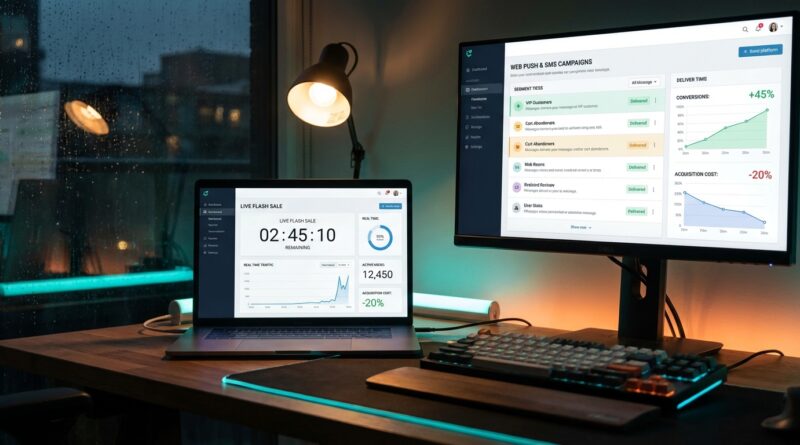
The ‘Tiered Push + SMS’ Flash Sale: How To Cut Costs And Still Sell Out In 24 Hours
Flash sales are great right up until the SMS invoice lands and your unsubscribe rate jumps. That is the ugly tradeoff a lot of stores are stuck with. You know text messages can drive fast sales, but sending every promo to everyone gets expensive fast. It also trains shoppers to tune you out. Meanwhile, web push and app notifications often get treated like backup channels, even though they are cheap, instant, and perfect for warming people up before you pay for a text.
A smarter ecommerce flash sale push notifications and sms strategy is to tier your outreach. Start broad with push. Watch who clicks, browses, adds to cart, or opens the app. Then send SMS only to those high-intent shoppers who already raised their hand. You cut messaging costs, protect margins, and still create that flash sale urgency. Better yet, this is not some huge rebuild. Most stores can set it up with tools they already have and use the same playbook again and again.
⚡ In a Hurry? Key Takeaways
- Use push first and SMS second. Let shopper behavior decide who gets the text.
- Set simple trigger tiers like clicked push, viewed product, or abandoned cart within the sale window.
- This cuts SMS spend and reduces list fatigue, while still giving your hottest prospects the nudge that closes sales.
Why the old flash sale blast is starting to fail
The classic approach is simple. Send an email. Send an SMS. Post on social. Hope for the best.
It still works sometimes. But it is getting more expensive every season. Paid acquisition costs keep climbing. Discount pressure is brutal. And if you text your whole list every time you run a sale, you are paying premium rates to annoy people who were never going to buy.
That is why tiering matters. It gives each channel a job.
Push notifications handle reach and speed. SMS handles urgency and conversion. When you use them in that order, each one does what it is best at.
What a tiered push + SMS flash sale actually looks like
Think of it as a funnel over 24 hours, not one giant blast at 9 a.m.
Tier 1: Push goes to the broad audience
Start with web push and app push. These are cheap to send, quick to launch, and perfect for the first wave.
Your goal here is not to close every sale in one shot. Your goal is to identify who is paying attention.
Send push to:
- Recent site visitors
- App users
- People who clicked a promo in the last 30 to 60 days
- Category-specific subscribers if the sale is focused
Keep the message short. Lead with urgency. Make the offer easy to understand in two seconds.
Example: “Flash sale is live. 25% off for the next 6 hours. Tap to shop.”
Tier 2: Behavior filters out the casual from the serious
Now watch what people do after the push lands.
The best SMS candidates are not just “subscribed.” They are active during the sale. Good signals include:
- Clicked the push
- Visited a sale page
- Viewed product pages
- Added an item to cart
- Started checkout but did not finish
This is the step a lot of brands skip. They send SMS to everyone instead of using intent to narrow the field. That is where the waste lives.
Tier 3: SMS goes only to the hottest segment
Once you know who engaged, send SMS to that smaller group.
This is where texting really shines. You are not using it as a fishing net. You are using it like a closing tool.
Examples:
- “Still thinking it over? Your cart is on sale for 4 more hours: [link]”
- “Flash sale ends tonight. The item you viewed is still in stock: [link]”
- “Last call. Extra 10% ends at midnight. Shop now: [link]”
That one shift can cut your SMS volume hard while keeping most of the revenue benefit.
Why this works better than a send-to-everyone text blast
There are three big reasons.
1. Push is cheap enough to use for discovery
Push lets you cast a wide net without watching your costs spike. If half your audience ignores it, fine. That data still helps you decide who deserves the more expensive follow-up.
2. SMS gets stronger when it feels earned
Text messages work because they feel immediate and personal. But when every sale gets the same generic blast, that feeling disappears. A text after someone clicked a push or left a cart feels more relevant. Relevance is what lifts conversion.
3. Your list stays healthier
People usually do not hate SMS. They hate too much SMS. Tiering reduces fatigue because shoppers who are cold or inactive do not keep getting hard-sell texts. That helps with unsubscribes, complaints, and long-term list value.
A simple 24-hour playbook you can copy
You do not need a giant automation team to pull this off. Here is a practical setup for a one-day sale.
12 to 24 hours before the sale
- Send an email teaser
- Schedule web push and app push audiences
- Set the SMS audience rule, such as “clicked push or visited sale page in the last 12 hours”
Hour 0: Sale starts
- Send first push to your broader eligible audience
- Drive traffic to a dedicated sale landing page
Hour 2 to 4
- Build the engaged segment from clickers, browsers, and cart creators
- Send first SMS only to that engaged group
Hour 8 to 12
- Send a second push with a fresh angle, such as top sellers or low stock
- Refresh your engaged audience
Final 3 to 4 hours
- Send final SMS to high-intent non-buyers
- Exclude recent purchasers so you do not waste sends
If you want to make the day feel even more active without increasing SMS volume, the structure pairs nicely with The ‘Hourly Swap’ Flash Sale: How Rotating Deals Every 60 Minutes Turns One Day Into 24 Revenue Spikes. Rotating offers give you fresh reasons to send push updates, while SMS stays reserved for people showing real intent.
How to segment without making this too complicated
This is where some teams overthink it. You do not need 17 micro-segments. Start with three.
Cold audience
These are subscribers who have not clicked or bought lately. Use push if they are opted in. Usually skip SMS unless the sale is huge and your economics still work.
Warm audience
These shoppers opened, clicked, browsed, or bought in the last 30 to 60 days. They should get your first push wave and possibly your second one too.
Hot audience
These are the people who engaged during the sale itself. They clicked a push, viewed products, added to cart, or started checkout. This is your main SMS group.
That is enough to get real results. Fancy scoring models can come later.
Message tips that keep push and SMS from stepping on each other
The biggest mistake is sending the same copy in every channel. If the push and the text say the exact same thing, the text feels redundant.
What push should do
- Announce the sale
- Create urgency
- Highlight categories or product drops
- Pull shoppers back to the site or app
What SMS should do
- Close the sale
- Remind people about carts or viewed items
- Warn about expiry or low stock
- Give a direct path back to checkout
In plain English, push gets attention. SMS gets action.
Metrics to watch so you know it is working
Do not judge this strategy only by click-through rate. The full point is better profit efficiency.
Track:
- Revenue per SMS sent
- Total SMS volume versus past flash sales
- Push click rate and assisted revenue
- Unsubscribe rate for SMS
- Conversion rate for engaged shoppers who got SMS
- Margin after discount and messaging cost
If revenue holds steady while your SMS count drops, that is a win. If revenue rises and unsubscribes fall, that is a very good win.
Common mistakes to avoid
Sending SMS too early
If you text everyone at launch, you lose the cost-saving part of the system. Let push do the first round of sorting.
Ignoring purchase suppression
Do not keep texting people who already bought. It wastes money and makes your brand look sloppy.
Using vague push copy
“Big savings inside” is weak. Tell people what is happening and when it ends.
Not setting a frequency cap
Even during a flash sale, there is a limit. A couple of push sends and one or two well-timed texts is usually enough for a 24-hour event.
At a Glance: Comparison
| Feature/Aspect | Details | Verdict |
|---|---|---|
| Push notifications | Low cost, fast to send, ideal for broad flash sale reach and early engagement signals | Best first wave channel |
| SMS | High urgency and strong conversion, but more expensive and easier to overuse | Best reserved for high-intent shoppers |
| Tiered push + SMS setup | Push identifies engaged shoppers, then SMS follows based on clicks, browsing, cart, or checkout behavior | Best balance of reach, cost control, and revenue |
Conclusion
You do not need to out-discount giant brands or burn through your SMS budget to win a flash sale. A tiered push + SMS flash sale is a practical way to compete when costs keep climbing. You reach more people quickly with push, save your texts for the shoppers most likely to buy, and protect your margins by cutting wasted sends. Just as important, your list stays happier because not everyone gets every hard-sell message. It is a low-lift system you can set up this week, refine after one or two campaigns, and keep using for every major promo window in 2026.