The ‘Post‑Purchase Power Hour’ Flash Sale: Turn Every Order Into An Instant Second Sale
You paid for the click, fought for the conversion, and finally got the order. Then what happens? Most stores send shoppers to a dull thank you page and let the hottest buying moment of the whole journey go cold. That is painful, especially when ad costs keep climbing and every sale feels harder to win. The good news is you do not need more traffic to grow revenue. You need to make better use of the buyer you already have, right after checkout, while their trust is high and their wallet is still open. That is where a smart post purchase flash sale strategy comes in. Give the customer a tightly matched, time-limited add-on offer in the first 60 minutes after purchase, and you can raise average order value, improve repeat behavior, and do it without blasting your whole store with discounts that eat your margin.
⚡ In a Hurry? Key Takeaways
- A post purchase flash sale strategy works best when you offer one highly relevant add-on within 60 minutes of checkout.
- Start with accessories, refills, upgrades, or protection items that naturally fit the original order.
- Keep the offer narrow and exclusive so you lift order value without training shoppers to wait for blanket discounts.
Why the hour after checkout matters so much
The first sale is the expensive one. You paid for ads, email tools, creative, maybe an agency, maybe your own late nights. By the time someone clicks “Confirm order,” you have already done the hard part.
That makes the next hour unusually valuable. The buyer has trust. They already entered payment details. They are still thinking about your product. If there is ever a time when a second purchase feels natural, this is it.
A good post purchase flash sale strategy is not a random discount. It is a fast, well-timed follow-up offer that feels helpful, not pushy. Think of it like the cashier asking, “Do you want the matching case while it is still on special?” Simple. Relevant. Easy to say yes to.
What a post-purchase flash sale should actually look like
Keep it focused. One to three products at most. A short time window. A clear reason why this buyer is seeing it now.
Best format
The easiest version looks like this:
- Customer completes checkout
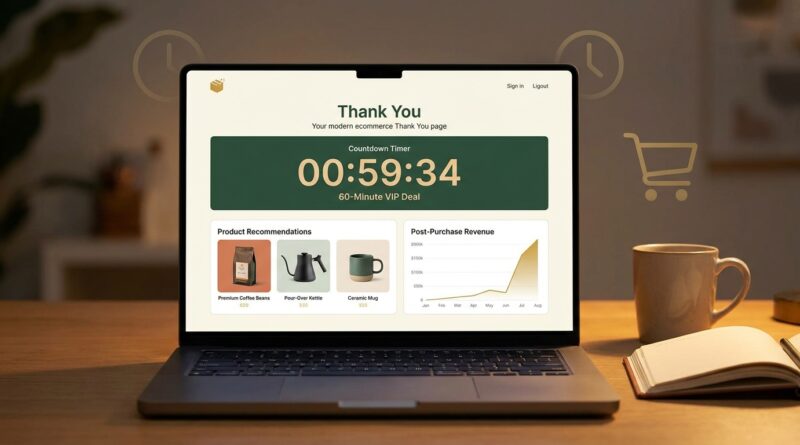
- Thank you page shows a special add-on offer
- Offer is available for 30 to 60 minutes
- The item is directly related to what they just bought
- Checkout is quick, with as little friction as possible
That is it. You do not need a giant funnel map taped to the wall. You need a useful extra offer and a timer that gives the moment some urgency.
What to offer
The best offers usually fit one of these buckets:
- Accessories, like cases, chargers, straps, lids, covers
- Refills or consumables, like filters, pods, supplements, skincare basics
- Upgrades, like a larger size or premium version
- Protection plans or setup help
- Bundles that complete the job the customer started
If somebody buys hiking boots, offer socks or waterproof spray. If they buy a coffee machine, offer descaler or a starter pack of beans. If they buy a desk lamp, offer the matching bulb or cable organizer. The offer should feel obvious in hindsight.
Why this works better than a site-wide sale
Broad discounts are easy to understand, but they create bad habits. Shoppers learn to wait. Margins shrink. You end up cutting prices for people who would have bought anyway.
A post purchase flash sale strategy avoids a lot of that damage because it is:
- Shown only to buyers, not everyone browsing
- Built around one order context
- Available for a short time only
- Useful, not generic
That makes it feel more like a VIP thank-you than a desperate markdown.
If your brand also experiments with faster-moving promos tied to social demand, it is worth looking at The ‘TikTok Shop Trend-Jack’ Flash Sale: How To Sell Out In 24 Hours By Riding What’s Hot Today. That approach is great for catching outside attention. Post-purchase offers do a different job. They turn existing buyer momentum into extra revenue.
How to build one without heavy tech
This is a lot simpler than many store owners think. You do not need a custom app project to get started.
Step 1: Pick one hero product pair
Start with your most common order and the easiest add-on. Do not overthink it. Find the item people most often need next.
Ask yourself, “What would make the first purchase work better, last longer, or feel more complete?” That is usually your winner.
Step 2: Set a real reason for the offer
Do not just say “10% off because reasons.” Give it context.
- “Add this in the next 45 minutes and we will ship it with your current order.”
- “New customer thank-you price, available only after checkout.”
- “Complete your setup today and save before your order is packed.”
This feels more honest than a mystery coupon floating in space.
Step 3: Keep the discount tight
You are not trying to run a clearance event. The point is to increase order value while protecting margin. Often 10% to 20% is enough if the product fit is strong. Sometimes free shipping on the added item works even better.
Step 4: Make checkout painless
The best post-purchase offers are easy to accept. Fewer clicks. No need to re-enter a pile of details. If the process feels like starting over, your conversion rate will fall fast.
Step 5: Use clear copy
Skip clever slogans. Say what the item is, why it matches the order, what the deal is, and when it expires.
Good example: “Add a second filter pack in the next 60 minutes for 15% off. It ships with your order.”
That is better than: “Exclusive elevated savings opportunity for valued customers.” Nobody talks like that.
Common mistakes that kill results
Offering too many choices
Choice sounds nice until it becomes work. If your thank you page looks like a mini department store, people will skip it.
Showing unrelated products
This is the big one. If someone buys a phone case and you offer a hoodie, you are asking them to switch mental gears. That hurts momentum.
Making the deal too cheap, too often
If every order triggers a giant discount, customers notice. They may start buying the first item just to reach the second deal. Keep your offer specific and measured.
Forgetting fulfillment reality
Do not offer items with stock issues, long delays, or weird shipping rules. The point of the extra sale is to make the customer happier and raise profit. It should not create support tickets.
What small teams should track first
You do not need a giant analytics stack to tell if this is working. Start with a few basic numbers:
- Take rate, meaning how many buyers accept the post-purchase offer
- Lift in average order value
- Profit per order after discount and shipping
- Refund rate on the add-on item
- Repeat purchase rate after 30 or 60 days
If take rate is weak, the usual problem is fit. The offer may not match the original purchase closely enough. If take rate is solid but profit is poor, your discount may be too rich or the item may be too expensive to fulfill.
Who should use this first
This works especially well for:
- Consumable brands
- Beauty and skincare shops
- Pet products
- Electronics accessories
- Home and kitchen brands
- Stores with clear “complete the set” products
It can still work in fashion, but you need to be more careful. Size and style choices can add friction. In that case, focus on lower-risk extras like care kits, belts, socks, or storage items.
At a Glance: Comparison
| Feature/Aspect | Details | Verdict |
|---|---|---|
| Timing | Shown within 30 to 60 minutes after checkout, when buyer intent is still high | Best window for an easy second sale |
| Offer Type | One relevant add-on, refill, upgrade, or accessory tied to the original purchase | More effective than a random discount |
| Margin Protection | Targets existing buyers only, so you avoid store-wide markdown damage | Strong choice for small teams that need profit discipline |
Conclusion
Right now, ad costs are brutal and everybody is shouting about top-of-funnel tricks. Fine. But one of the easiest wins in 2026 ecommerce is still sitting quietly after checkout. A smart post purchase flash sale strategy helps you squeeze more value from orders you already earned. It can lift average order value, improve repeat rate, and do it without chasing fresh traffic, training shoppers to wait for broad discounts, or building some giant technical project. For small teams, that matters. Start with one strong product match, one clear time limit, and one honest VIP-style offer. Keep it useful. Keep it simple. The boring thank you page has had a good run. Now it is time to make that hour pay you back.